What to Look for in Baby Shoes for First Steps
Stride Rite’s Soft Motion Jazzy Sneaker is the top pick for new walkers, pairing a rounded flexible sole with a memory foam footbed. Robeez Soft Soles lead the pre-walker stage, and Ikiki squeaky shoes teach tiptoe walkers a proper heel strike. Stage fit matters more than brand.
Flexible soles and roomy toe boxes matter more than looks for developing feet, and the Stride Rite Soft Motion Jazzy delivers both in an outdoor-ready sneaker. Robeez Soft Soles cover the pre-walker months, while Ikiki squeakers help toddlers who walk on their toes.
Shopping is tricky because baby feet gain roughly a half size every two to three months, and each walking stage needs different support. We compared sole flex, closure design, width options, materials, and parent sizing feedback to match seven real shoes to real stages.
Before you buy
What to look for in baby shoes at any stage Flexibility comes first: a good baby shoe bends easily at the ball of the foot and twists slightly through the middle. Check the toe box next, since toes need room to spread inside a rounded front. Closures shape daily life, and wide-opening hook and loop straps beat laces on a squirming child. Breathable leather, canvas, or mesh keeps fast-growing feet healthy. Skip stiff arches and heavy cushioning, because developing feet do not need either.
Which baby shoes fit each stage, from crawler to runner Pre-walkers and cruisers need warmth and grip rather than structure, which is where Robeez and BirdRock moccasins belong. First independent steps call for thin, flexible outdoor soles like the Stride Rite Soft Motion Jazzy or Ikiki. Once a child runs confidently, sturdier sneakers such as the New Balance 574 or See Kai Run Stevie II handle playgrounds. Buying a stage ahead wastes money, because the design no longer matches the gait.
Best baby shoes for wide feet and tricky fits Chubby, wide feet are the norm in babies, not the exception. Brands cut differently: See Kai Run and Stride Rite’s wide widths accommodate splayed toes and high insteps, while Ikiki and Converse run narrower. Press for a thumb’s width of space beyond the longest toe every month. Growth of about a half size every two to three months means tight shoes become a problem within weeks.
How to keep baby shoes usable through daily wear Toddlers drag toes, splash puddles, and kick everything, so daily shoes need rubber toe coverage and washable materials. Machine-washable pairs like the Soft Motion Jazzy simplify cleanup. Rotating two pairs lets each dry fully between wears, which limits odor and material breakdown. Hand-me-downs work for occasional outings, but a shoe molded to one child’s gait makes a poor daily shoe for the next.
What we recommend
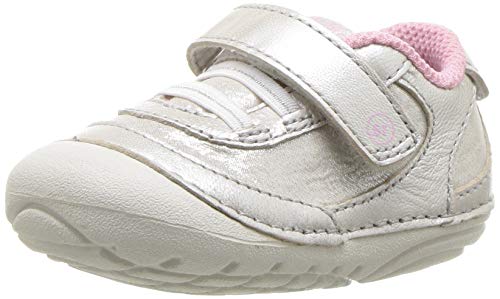
Stride Rite Soft Motion Jazzy Sneaker
Rounded Soft Motion outsole edges mimic barefoot mechanics while shielding toes outdoors. Memory foam in the footbed cushions wobbly landings. A hook and loop strap opens wide for chunky feet, and Stride Rite sells medium, wide, and extra wide widths, a rarity in baby sizes.
Pros
- Sole geometry built around new-walker gait
- Three width options fit chubby feet
- Machine washable after muddy days
Cons
- Costs more than basic canvas shoes
- Popular colors sell out quickly

Robeez Soft Soles
Suede soles let pre-walkers grip the floor with their toes, close to the barefoot movement podiatric guidance favors at this stage. Elasticized ankles hold the leather moccasins on without pinching. Worn over socks, they double as warm indoor footwear through winter.
Pros
- Barefoot-style flexibility supports development
- Stay on kicking feet better than socks
- Dozens of prints and colors
Cons
- Suede wears through with regular outdoor use
- No structure for daily outdoor walking

Ikiki Squeaky Shoes for Toddlers
A heel squeaker chirps only on a heel-first landing, turning proper gait into a game. Flip the switch and the shoes go silent for quiet outings. Flexible rubber soles with grippy tread suit new independent walkers, and parents of tiptoe walkers report the audio cue genuinely changes stepping habits.
Pros
- Rewards heel-to-toe walking with sound
- Squeaker switches off completely
- Bright designs toddlers ask to wear
Cons
- Squeak wears on some households
- Runs narrow for very wide feet

New Balance 574 Core Infant Sneaker
New Balance shrinks its proven 574 silhouette to infant sizes, swapping laces for a hook and loop strap. An EVA midsole absorbs playground impact once running starts. Suede and mesh panels keep air moving, so this pair suits confident walkers rather than first steppers.
Pros
- Handles daily outdoor play
- Breathable upper limits sweaty feet
- Matches family-size 574s for photos
Cons
- Stiffer sole than first-walker shoes
- Suede scuffs show quickly

See Kai Run Stevie II Sneaker
A naturally wide last gives toes room to splay, which matters during foot development. Stevie II carries acceptance from the American Podiatric Medical Association for its flexible outsole and padded collar. Double hook and loop straps fine tune the fit over high insteps.
Pros
- Fits wide feet and high insteps
- Podiatric association accepted design
- Stitching survives repeated washing
Cons
- Too roomy for narrow feet
- Fewer color options than big brands

BirdRock Baby Moccasins
Genuine leather at a lower cost than Robeez keeps soft sole benefits within reach for crawlers and cruisers. Elastic openings slide on in seconds during diaper bag scrambles. Each pack includes a sizing chart, which helps with the notoriously tricky moccasin fit.
Pros
- Undercuts name-brand moccasins
- Quick on and off
- Stays put on kicking feet
Cons
- Leather quality varies by batch
- Not suited to wet pavement

Converse Chuck Taylor All Star Cribster
Soft canvas and faux laces recreate the classic Chuck look while a wide hook and loop strap does the actual fastening. Its infant-specific sole flexes far more than any adult Chuck. Treat it as an outing and photo shoe rather than an all-day walker.
Pros
- Timeless style scaled to baby sizes
- Strap does the work behind the laced look
- Canvas wipes clean easily
Cons
- Less toe room than developmental brands
- Minimal cushioning for long wear
The lineup, side by side
| # | Model | Sole | Best for | Score | Price |
|---|---|---|---|---|---|
| 1 | Stride Rite Soft Motion Jazzy Sneaker | Rounded, flexible Soft Motion | Best overall | 9.4 | Check price |
| 2 | Robeez Soft Soles | Leather upper, suede sole | Best for pre-walkers | 9.2 | Check price |
| 3 | Ikiki Squeaky Shoes for Toddlers | Heel-strike squeaker with on/off switch | Best for gait training | 9.0 | Check price |
| 4 | New Balance 574 Core Infant Sneaker | Cushioning EVA | Best everyday sneaker | 8.8 | Check price |
| 5 | See Kai Run Stevie II Sneaker | Extra wide, splay friendly | Best for wide feet | 8.6 | Check price |
| 6 | BirdRock Baby Moccasins | Genuine leather | Best value soft sole | 8.3 | Check price |
| 7 | Converse Chuck Taylor All Star Cribster | Soft canvas, faux laces | Best for style | 8.0 | Check price |
Good to know
When should a baby start wearing shoes?
Only once outdoor walking begins. Before that, barefoot time or soft-sole moccasins support development best. Indoors, barefoot remains ideal even for confident walkers whenever floors are safe and warm.
What kind of shoes are best for babies learning to walk?
Thin, flexible soles with grip, a wide toe box, and a secure strap. Shoes like the Stride Rite Soft Motion Jazzy protect feet outside while staying close to barefoot mechanics.
How do I measure my baby’s shoe size?
Measure the foot while your baby stands, then add about a thumb’s width of growing room. Recheck monthly, since feet gain roughly a half size every two to three months. Sizing varies by brand, so follow each brand’s chart.
Are soft sole shoes better than hard sole for babies?
For pre-walkers and early steps, yes, because soft soles let foot muscles and balance develop naturally. Structured soles earn their place later, once a toddler runs on rough playgrounds.
Do babies need arch support in their shoes?
No. Flat feet are normal in babies, and arches form over years of barefoot-style movement. Podiatric guidance favors flexible, flat shoes over built-up support at this age.
Can baby shoes go in the washing machine?
Canvas and engineered-mesh shoes, including the Soft Motion Jazzy line, wash on a gentle cycle and air-dry. Leather moccasins like Robeez should be spot-cleaned instead to protect the hide.
Are squeaky shoes good for toddlers?
Good for gait, with a caveat. Heel squeakers like Ikiki’s reward heel-first steps and help tiptoe walkers. Pick a pair with an off switch so the sound stays a training tool rather than a nuisance.
How many pairs of shoes does a baby need?
Two per size is plenty: one daily pair matched to the walking stage and one backup or occasion pair. Rapid growth makes larger collections wasteful before most pairs wear out.
Is it OK for a baby to wear hand-me-down shoes?
For occasional wear, yes, if the soles show little wear. Daily use is different, because a sole and footbed compressed by one child’s gait no longer support the next child’s feet correctly.
Our pick
Match the shoe to the stage and the choice gets easy: Robeez before walking, the Stride Rite Soft Motion Jazzy for first steps, and the New Balance 574 or See Kai Run Stevie II once running starts. Ikiki squeakers are the smart add-on for tiptoe walkers. Budget-minded parents can start with BirdRock moccasins and upgrade when walking begins.