Which Home Backup Battery Handles a Real Power Outage
EcoFlow DELTA Pro balances capacity and expansion for most homes. Anker SOLIX F2000 recharges from empty faster than any unit here. Jackery Explorer 2000 Plus suits buyers who want a lighter unit that still runs a fridge overnight. Match watt hours and surge rating to your actual appliances.
EcoFlow DELTA Pro stores 3600Wh and expands past 25kWh with add-on batteries, the strongest pick for households planning around a multi-day outage. Its base unit is heavy to reposition between rooms, and Anker SOLIX F2000 answers a different need by recharging from empty in under an hour for frequent short brownouts. Jackery Explorer 2000 Plus trades some of that capacity for a body one person can actually carry.
Manufacturers list watt hours prominently, but a compressor starting up can spike well past a unit’s continuous rating and trip it anyway. We compared stated capacity against surge specs and owner reports on how long each system actually ran appliances during outages.
Before you buy
What to look for in a home backup battery Watt hours set how long appliances run, but continuous output and surge rating decide which appliances can start at all. A fridge compressor can spike three or four times its running wattage for a second or two. Undersized surge handling trips a unit right when you need it most. Compare both numbers against your actual appliance list before ranking units by capacity alone.
Sizing a system for a whole-home outage Multi-day grid failures call for expandable systems, since add-on batteries stack capacity without buying a second full unit. EcoFlow DELTA Pro and Jackery Explorer 2000 Plus both grow this way. Solar panels extend runtime indefinitely when daylight is available. Rural homes running a well pump need the higher surge ratings that Renogy Lycan 5000 or DELTA Pro provide.
Best fit for short, frequent brownouts Frequent short outages reward fast AC recharge over raw capacity, since a unit tops off between drops instead of running flat. Anker SOLIX F2000 recovers from empty in under an hour on wall power. That speed matters more than a few hundred extra watt hours when outages rarely stretch past a few hours. Generac GB2000 fits a similar short-outage role at a lower capacity and cost.
When a portable battery is not the right tool Automatic whole-house switching during an outage needs a hardwired system with a transfer switch, which none of these portable units provide. Portable batteries require manually plugging in appliances and cannot power hardwired circuits like a well pump’s own wiring. Anyone wanting seamless, automatic backup should look at a permanently installed home battery instead.
Our top picks
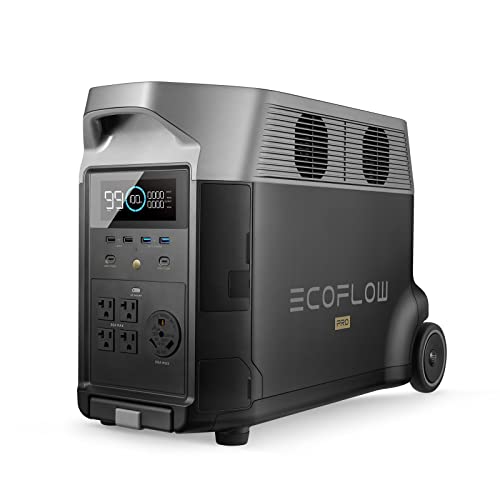
EcoFlow DELTA Pro Portable Power Station
A single EcoFlow DELTA Pro stores 3.6 kWh, enough for a fridge, router and several lamps through a multi-day outage. Add-on battery packs push total capacity past 25 kWh for whole-home coverage. Solar panels recharge the system during daylight hours when the grid stays down for days.
Pros
- Expands into whole-home coverage over time
- Handles a fridge compressor’s startup surge
- Accepts solar input during extended outages
Cons
- Base unit is heavy to move between rooms
- Expansion batteries add significant cost
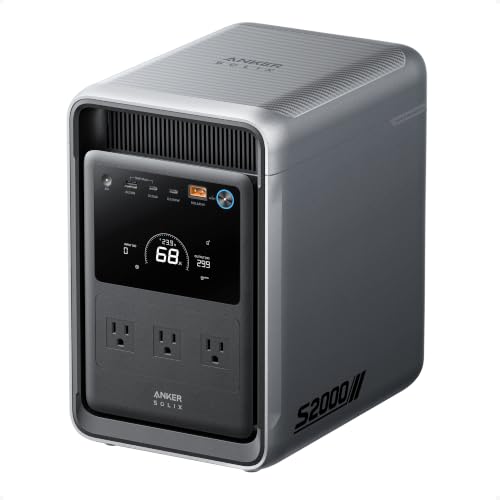
Anker SOLIX F2000 Portable Power Station
Plugging into a wall outlet fills this unit from empty in under an hour, useful when outages arrive in short bursts between grid drops. Its 2400W output runs a fridge, modem and space heater at the same time. LiFePO4 cells here tolerate the deep daily cycling that rolling backup use demands.
Pros
- Fastest AC recharge time in this group
- LiFePO4 cells tolerate deep daily cycling
- Covers a full kitchen circuit at once
Cons
- No solar panels included in the base kit
- Fan noise rises under heavy load

Jackery Explorer 2000 Plus Portable Power Station
Its 2042Wh cell runs a fridge and a lighting circuit through the night without approaching the DELTA Pro’s base capacity. Modular battery packs stack on later if a household’s needs grow. One person can reposition it more easily than the larger units in this group.
Pros
- Lighter body than most units at this capacity
- Modular expansion for growing power needs
- Runs quietly under moderate loads
Cons
- Base kit needs add-ons for multi-day outages
- Solar panels sold separately

Bluetti AC200MAX Portable Power Station
Two separate MPPT solar inputs accept panels from different angles at once, speeding recharge on partly shaded days. A built-in wireless charging pad handles phones and small devices without extra cables. Many owners run it as a daily solar bank that doubles as outage backup.
Pros
- Dual solar input speeds cloudy-day recharge
- Expansion batteries are widely available
- Wireless pad covers phones without cables
Cons
- App connectivity is inconsistent for some owners
- Heavier than the Jackery at similar capacity
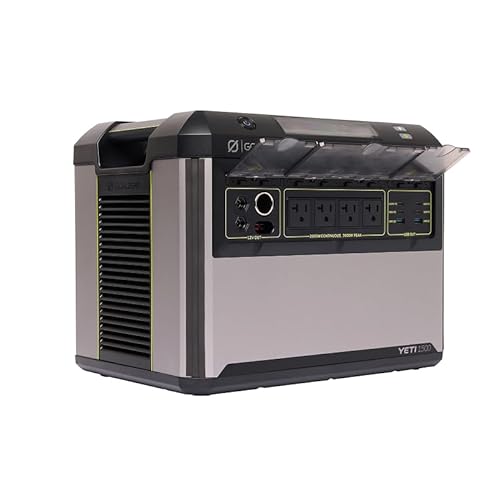
Goal Zero Yeti 3000X Portable Power Station
WiFi connectivity lets owners check charge level and running appliances from another room during an outage. Its 3032Wh cell covers a fridge and medical equipment together for an extended stretch. Owners in areas with frequent grid drops cite its long track record.
Pros
- App tracks charge and load from another room
- Long-standing reliability track record
- Multiple recharge paths for extended outages
Cons
- Lower continuous output than similarly priced rivals
- Heavier body limits portability

Renogy Lycan 5000 Portable Power Station
A well pump or sump pump starts without tripping this unit, thanks to a high surge rating. Its built-in solar charge controller ties directly into a rooftop array. Rural households lean on it for well water during multi-day grid failures.
Pros
- High surge rating handles pump startup loads
- Direct solar panel wiring without extra hardware
- Long cycle life from LiFePO4 cells
Cons
- Bulkier footprint than portable-focused rivals
- Display lacks the detail of app-based competitors

Generac GB2000 Portable Power Station
A router, a few lamps and phone charging cover the realistic use case for this smaller unit during short outages. Generac’s home backup reputation carries into a simpler, more affordable box. Many buyers treat it as an entry point before stepping up to whole-home batteries.
Pros
- Lower cost entry into the Generac ecosystem
- Enough surge headroom for small appliances
- Straightforward controls with no app required
Cons
- Capacity falls short of a full fridge cycle overnight
- Recharge speed trails the faster units here
How they stack up
| # | Model | Capacity | Best for | Score | Price |
|---|---|---|---|---|---|
| 1 | EcoFlow DELTA Pro Portable Power Station | 3600Wh, expandable with add-on batteries | Best overall | 9.4 | Check price |
| 2 | Anker SOLIX F2000 Portable Power Station | 2048Wh | Best for fast recharge | 9.2 | Check price |
| 3 | Jackery Explorer 2000 Plus Portable Power Station | 2042Wh, expandable to 12kWh with add-ons | Best value | 9.0 | Check price |
| 4 | Bluetti AC200MAX Portable Power Station | 2048Wh, expandable to over 8kWh | Best for solar pairing | 8.8 | Check price |
| 5 | Goal Zero Yeti 3000X Portable Power Station | 3032Wh | Best for app monitoring | 8.6 | Check price |
| 6 | Renogy Lycan 5000 Portable Power Station | 4838Wh | Best for large appliances | 8.3 | Check price |
| 7 | Generac GB2000 Portable Power Station | 2001Wh | Best budget | 8.0 | Check price |
Good to know
How many watt hours does a home need for backup power?
A fridge alone draws roughly 1 to 2 kWh per day depending on age and size. Add lighting, a router and phone charging, and most households need 2000 to 3000Wh at minimum for an overnight outage.
Can a portable power station run a whole house?
Not without a transfer switch and careful load management. These units power individual appliances plugged in directly, not a full electrical panel, so prioritize a fridge, medical equipment and lighting.
Is solar charging worth it for a home battery?
Yes for outages longer than a day, since panels let a unit recharge without grid power or fuel. Cloudy weather slows this considerably, so treat solar as a supplement to AC charging.
How long do LiFePO4 home batteries last before replacing?
Most units here use LiFePO4 cells rated for 3000 or more charge cycles before capacity drops meaningfully. That works out to a decade or more of occasional outage use.
What is the difference between surge and continuous watts?
Continuous watts is what a unit sustains indefinitely. Surge watts is a brief higher number for the moment an appliance motor starts. Undersized surge capacity trips a unit even when continuous output looks sufficient on paper.
Which battery can run a sump pump or well pump?
Units with high surge ratings, like Renogy Lycan 5000 or EcoFlow DELTA Pro, handle pump startup reliably. Check the pump’s starting wattage against a battery’s surge spec before relying on it.
Are expandable battery systems worth the extra cost?
For homes expecting to outgrow their initial setup, yes, since adding a battery pack costs less than replacing the whole unit later. Households with steady, modest needs may never need to expand.
How noisy are portable power stations during use?
Most run silent at low load and switch on a cooling fan under heavy draw, similar to a laptop fan. None approach the noise of a fuel generator.
What is the best backup battery for a fridge and medical equipment?
Goal Zero Yeti 3000X and EcoFlow DELTA Pro both offer enough continuous output and capacity to run a fridge alongside medical devices for an extended stretch.
Portable power station vs whole-home battery, which is better?
Portable units cost less and move between rooms, but need manual plugging in. Whole-home batteries wire into the panel and switch automatically, at a higher upfront cost and a permanent install.
Final word
Households wanting one system that grows with future needs should buy the EcoFlow DELTA Pro, since its expansion batteries avoid a second full purchase down the line. Anyone dealing with short, frequent brownouts is better served by the Anker SOLIX F2000 and its fast recharge. Buyers who only need to cover a fridge and some lights, and want to save weight, should start with the Jackery Explorer 2000 Plus.