Which Waterproof Action Camera Handles Real Water?
GoPro HERO13 Black leads for balanced water use, rated to 33 feet bare with 5.3K60 video and HyperSmooth 6.0. DJI Osmo Action 5 Pro doubles that depth to 20 metres for divers. Insta360 X4 suits reframable 360 footage underwater.
GoPro HERO13 Black stands as the strongest all-round waterproof action camera right now. DJI Osmo Action 5 Pro goes deeper without a case, while Insta360 X4 captures the whole scene in 360 degrees.
Depth numbers alone mislead buyers, since a camera rated to 10 metres can still fog, drain fast in cold water, or refuse touch input once the screen gets wet. Published depth ratings, sensor size, stabilisation behaviour, mounting hardware and battery capacity all factored into this ranking, alongside patterns in owner feedback about leaks and condensation.
The top picks, ranked
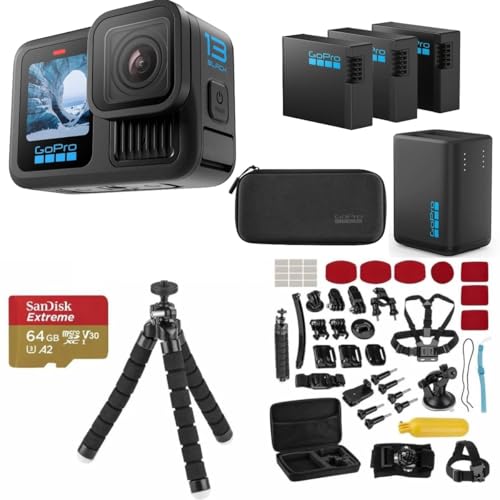
GoPro HERO13 Black
No housing is required up to 33 feet, and this model records 5.3K at 60fps. HyperSmooth 6.0 with horizon lock keeps handheld surf and kayak clips level. Magnetic latch mounting speeds up rig changes between sessions.
Pros
- Horizon lock holds the frame level in choppy water
- Swappable HB-Series lenses add macro and ultra wide reach
- Front screen makes self framing quick
Cons
- Touchscreen ignores input while beaded with water
- Body runs warm during long 5.3K takes

DJI Osmo Action 5 Pro
Twenty metres of bare waterproofing puts this ahead of most rivals for snorkelling and shallow dives. A 1/1.3 inch sensor pulls usable detail from green lake water and dusk sessions. Dual OLED touchscreens stay readable in glare.
Pros
- Deepest bare depth rating in this group
- Magnetic quick release swaps mounts in seconds
- Long runtime suits full snorkel sessions
Cons
- Colour science leans cooler than GoPro output
- Lens guard scratches easily on sand

Insta360 X4
Two lenses capture everything around you, so framing happens later in the app rather than in the moment. Waterproofing runs to 33 feet, and the invisible selfie stick trick works well over water. Video tops out at 8K in 360 mode.
Pros
- Nothing gets missed, since reframing happens in edit
- Removable lens guards protect the exposed glass
- Large battery covers long paddle days
Cons
- Stitching seams show on close underwater subjects
- Editing 360 files needs a capable phone or laptop

GoPro HERO12 Black
This previous flagship keeps the same 33 foot rating and 5.3K60 ceiling as the newer model. Heat handling improved over earlier bodies, so extended takes are less likely to stop early. Every standard GoPro mount fits, though it skips the magnetic latch.
Pros
- Handles long sessions without early shutdowns
- Works with the huge existing GoPro mount ecosystem
- 10-bit HDR video helps in bright surf glare
Cons
- No GPS overlay data for speed graphics
- Older lens mount skips the newer optional lenses
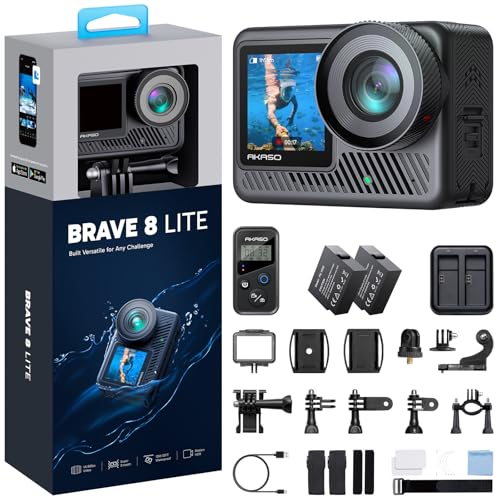
AKASO Brave 8 Lite
Waterproofing here depends on the bundled housing, rated to 131 feet. That case makes reef snorkelling a sensible use case where knocks are likely. Two batteries ship in the box, offsetting the shorter per charge runtime.
Pros
- Bundled housing shrugs off reef and rock contact
- Second battery included for back to back dives
- Voice control works with wet hands
Cons
- Not waterproof once the housing is removed
- Stabilisation softens detail at 4K60
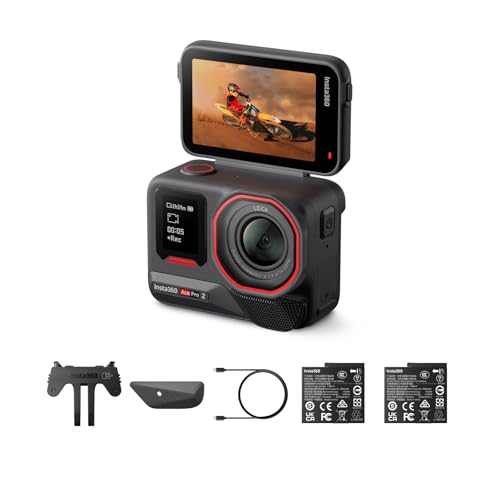
Insta360 Ace Pro 2
A 1/1.3 inch sensor paired with Leica optics gives this camera an edge in murky water and evening light. Depth rating sits at 12 metres bare. The flip up screen helps when the camera sits chest mounted or low to the surface.
Pros
- Cleaner shadows in tannic and low visibility water
- Flip screen solves awkward mounting angles
- Removable battery swaps fast between runs
Cons
- Shallower bare depth than the DJI rival
- Flip hinge adds a spot to rinse after salt water
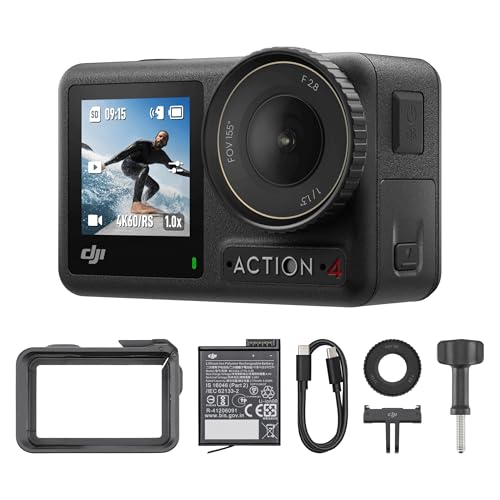
DJI Osmo Action 4
Winter paddling and snow still suit this older DJI body, rated to 18 metres bare. Its battery is specified to work down to minus 20 Celsius, which matters when sessions run long. A 1/1.3 inch sensor matches newer models for daylight clips.
Pros
- Cold weather battery rating suits winter use
- Magnetic mount clips on with gloves
- Strong bare depth rating for the money
Cons
- Lower resolution ceiling than 5.3K rivals
- Fewer accessory options than GoPro
Compared at a glance
| # | Model | Waterproof depth | Best for | Score | Price |
|---|---|---|---|---|---|
| 1 | GoPro HERO13 Black | 33 ft without housing | Best overall | 9.4 | Check price |
| 2 | DJI Osmo Action 5 Pro | 20 m without housing | Best for diving depth | 9.2 | Check price |
| 3 | Insta360 X4 | 33 ft without housing | Best for 360 footage | 9.0 | Check price |
| 4 | GoPro HERO12 Black | 33 ft without housing | Best for long recording | 8.8 | Check price |
| 5 | AKASO Brave 8 Lite | 131 ft with bundled housing | Best budget | 8.6 | Check price |
| 6 | Insta360 Ace Pro 2 | 12 m without housing | Best for low light | 8.3 | Check price |
| 7 | DJI Osmo Action 4 | 18 m without housing | Best for cold conditions | 8.0 | Check price |
What to look for
What a waterproof rating on an action camera actually means Depth figures assume a sealed, undamaged body at rest. Movement adds pressure, so swimming at 8 metres stresses a 10 metre seal more than floating there. Bare ratings run from 10 to 20 metres across current models, and housings extend that to 40 metres or more at the cost of muffled audio. Rinse in fresh water after every salt session, since dried salt crystals are the usual cause of a failed door gasket.
How much stabilisation matters once you are in the water Small vibrations that stabilisation fixes on land disappear underwater, but roll takes their place. Horizon lock is the feature that counts here, because a surfboard or kayak tilts constantly. GoPro calls it HyperSmooth, DJI calls it RockSteady with HorizonSteady, and both crop the frame slightly. Handheld shooting from a moving boat calls for lock left on, with the narrower field of view accepted as a trade off.
Choosing between snorkelling, surf and river use Sensor size and colour handling matter most for snorkelling, since red light drops away within a few metres. A 1/1.3 inch sensor and a red filter go further than raw resolution here. Surf and whitewater favour mounting hardware and a fast latch instead, since cold hands mean frequent repositioning. Reef work where the camera may strike rock justifies a hard housing despite the audio penalty.
Keeping batteries and mounts working through a full water day Cold water drains cells fast, so plan on two or three spares for a morning session and keep them warm in a pocket until needed. Sticky mounts fail on wet or waxed surfaces, so clean and dry the spot, then let the adhesive cure overnight. Floaty handles are cheap insurance, since a dropped camera in a lake is gone for good. Silica packets inside a housing stop the fogging that ruins otherwise good footage.
Frequently asked questions
Can you use an action camera underwater without a case?
Yes, within the rated depth. GoPro HERO13 Black and Insta360 X4 handle 33 feet bare, and DJI Osmo Action 5 Pro is rated to 20 metres. A dive housing becomes necessary past those figures.
GoPro vs DJI, which is better for underwater video?
DJI wins on bare depth rating and low light detail thanks to its 1/1.3 inch sensor. GoPro wins on mount availability, colour consistency and lens accessories. Divers usually favour DJI, while surfers favour GoPro.
What is the best waterproof action camera for snorkelling?
DJI Osmo Action 5 Pro suits snorkelling best, since 20 metres of bare rating covers free diving depth and the larger sensor holds detail as red light drops. A red filter adds back reef colour.
Do action cameras need a red filter underwater?
Below about 3 metres, water strips red wavelengths and footage turns blue or green. A red filter restores balance without heavy editing. Filters are lens specific, so match the model rather than buying a generic clip on.
How deep can an action camera go with a dive housing?
Most bundled housings are rated to 40 metres or 131 feet, including the case supplied with the AKASO Brave 8 Lite. Dedicated dive cases from GoPro reach 60 metres. Check the housing rating rather than the camera rating.
Why does my action camera touchscreen stop working when wet?
Capacitive screens read water droplets as fingers, so input becomes erratic. Physical shutter and mode buttons still work regardless. Setting your recording preset before entering the water avoids the problem entirely.
Is 360 video worth it for water sports?
Insta360 X4 makes sense if you are alone and cannot aim a camera while paddling, since you reframe after the fact and never miss the moment. More editing time and visible stitch lines on close subjects are the trade off.
How long do action camera batteries last in cold water?
Owners report runtimes dropping by a third or more in water under 15 Celsius. DJI Osmo Action 4 rates its cell to minus 20 Celsius, which helps. Carrying spares and warming them before swapping is the usual workaround.
Which action camera is best for surfing specifically?
GoPro HERO13 Black suits surf best, since its magnetic latch and horizon lock handle quick mount changes and a tilting board. Its wide mount ecosystem also covers surfboard specific accessories DJI and Insta360 lack.
The bottom line
GoPro HERO13 Black is the safest pick for most water use, pairing a 33 foot bare rating with the widest mount ecosystem. Choose DJI Osmo Action 5 Pro when 20 metres of depth and better low light detail matter more. Insta360 X4 is the outlier worth considering if reframing 360 footage later suits how you shoot.


