Barbell Sets Compared for Home Gyms on a Budget
CAP Barbell Olympic Set is the strongest all round buy, bundling a 7 foot bar, cast iron plates and collars. Signature Fitness Olympic Bumper Plate Set suits lifters who drop the bar. Yes4All Olympic Weight Plate Set lets you build a collection two plates at a time.
CAP Barbell Olympic Set covers most home lifters straight out of the box, with a 7 foot bar and enough cast iron for the main lifts. Signature Fitness Olympic Bumper Plate Set is the pick when weight gets dropped. Yes4All Olympic Weight Plate Set works if you would rather add pairs over time.
Two sets can weigh the same and train completely differently. Bar steel decides whether a loaded 7 foot shaft whips or bends, and plate material decides whether you can drop it. We compared published tensile ratings, sleeve and bore diameters, knurl patterns, collar type and total loadable weight, alongside recurring owner reports about sleeve spin and paint chipping.
The shortlist, ranked

CAP Barbell Olympic Set
Bar, plates and spring collars arrive together, which removes the guesswork of matching parts. Sleeves are the standard 2 inch Olympic diameter, so any Olympic plate you buy later drops straight on. Owners report the cast iron holds its shape well across squats, presses and rows.
Pros
- Bar, plates and collars in one box
- Standard sleeves accept any Olympic plate
- Wide choice of total weight configurations
Cons
- Cast iron is loud on a bare floor
- Bar rating trails dedicated strength bars

Signature Fitness Olympic Bumper Plate Set
Rubber bumpers share one outside diameter, so the bar sits at the same height whether you load 55 pounds or 300. Steel inserts keep the bore true after repeated drops onto rubber matting. Several kit sizes are offered, and most bundle an Olympic bar rather than leaving you to source one.
Pros
- Bar height stays constant across loads
- Rubber absorbs dropped deadlifts and cleans
- Kit sizes scale with your training
Cons
- Bumpers eat sleeve length as you add weight
- New rubber gives off an odour for weeks

Yes4All Olympic Weight Plate Set
Plates ship in pairs and bundles, which lets you grow a collection in small increments instead of one large purchase. Bores are cut to the 2 inch Olympic standard and fit any matching bar. Painted cast iron stacks tightly, useful when floor space is measured in feet rather than rooms.
Pros
- Add weight in pairs as you progress
- Thin profile stacks in a small footprint
- Fits any standard Olympic bar
Cons
- Bar is usually not included
- Paint chips where plates knock together

Rogue Ohio Bar
Rogue builds the Ohio Bar around a 28.5 mm shaft rated at 190,000 PSI tensile strength, which is well beyond what a home lifter will ever load. Composite bushings give sleeves enough spin for cleans without the rattle of cheap bearings. Dual knurl marks let you set grip width for both powerlifting and Olympic positions.
Pros
- Steel rating you will never outgrow
- Dual marks suit two lifting styles
- Bushings spin smoothly under load
Cons
- Sold as a bare bar, no plates
- Bare steel finishes need oiling

Titan Fitness Olympic Barbell
Titan pitches this bar as the middle ground between bundled starter shafts and competition steel. Knurling is aggressive enough to hold a heavy deadlift without shredding your palms on high rep sets. It handles cast iron and bumper plates equally, so it fits whichever direction your training takes.
Pros
- Knurl grips without tearing skin
- Loads cast iron or bumpers equally
- Solid anchor for a growing plate collection
Cons
- Plates bought separately
- Sleeve spin trails bushing bars

Fringe Sport Bumper Plate Set
Dense virgin rubber gives these bumpers a low bounce, so a dropped bar settles instead of skipping across the floor. A steel insert bonded into the centre stops the bore widening after months of drops. Bundles with a matching bar are available if you want everything to arrive at once.
Pros
- Low bounce on dropped lifts
- Steel insert keeps the bore true
- Even loading height across all weights
Cons
- Thicker than cast iron of the same weight
- Needs matting to protect a concrete slab
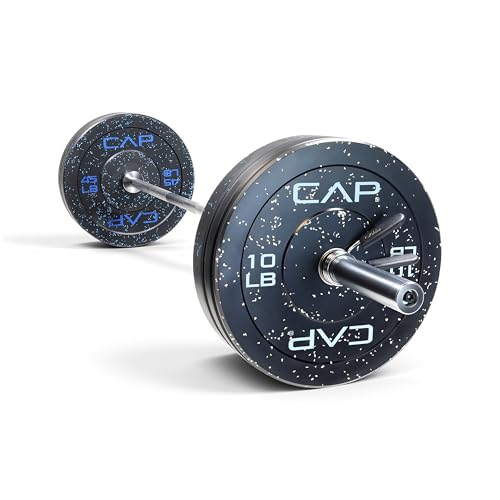
Weider Olympic Hammertone Bar Set
Hammertone finish on the shaft hides handling marks that show up quickly on plain painted bars. Cast iron plates and spring collars come in the box, so nothing else is needed before the first session. Loads suit foundational squats, presses and rows rather than heavy singles.
Pros
- Nothing else needed to start lifting
- Finish hides scuffs and handling marks
- Collars included rather than extra
Cons
- Not built for heavy top end loads
- Basic knurl and limited sleeve spin
What to look for
What to look for in a barbell set Four numbers describe almost any set: bar length, sleeve diameter, steel tensile rating and total loadable weight. A 7 foot bar with 2 inch sleeves is the standard that keeps upgrade paths open. Tensile ratings around 150,000 PSI and above indicate steel that returns straight after heavy loading. Check whether collars are included, because loose plates on a sleeve ruin any lift.
Cast iron vs bumper plates: which should you buy? Cast iron packs more weight into less thickness, so a loaded bar stays balanced and stores in a corner. Bumpers use rubber over a steel insert and share one diameter, keeping the bar at deadlift height from the lightest load upward. Drop the bar and rubber is the only sensible answer. Rack based squats and presses do not need it.
How much weight does a beginner actually need? Around 200 to 300 pounds including the bar covers the first year for most lifters. Buy in pairs so each side matches and progress arrives in small jumps. Small plates matter more than big ones early on, since a 5 pound pair keeps a stalling press moving. Weight you cannot lift yet just occupies floor space.
Setting up a barbell in a garage or basement A 7 foot bar needs roughly 8 feet of clear width and enough ceiling height to press overhead, so measure before ordering. Horse stall mats or rubber tiles protect a concrete slab and stop plates chipping. Spring collars are quick to fit; clamp collars hold better under dropped cleans. Store plates on a tree or upright rather than stacked flat, where they trap moisture and rust.
Side by side
| # | Model | Bar | Best for | Score | Price |
|---|---|---|---|---|---|
| 1 | CAP Barbell Olympic Set | 7 foot Olympic bar | Best overall | 9.4 | Check price |
| 2 | Signature Fitness Olympic Bumper Plate Set | Olympic bar included in most kits | Best value | 9.2 | Check price |
| 3 | Yes4All Olympic Weight Plate Set | Cast iron Olympic plates | Best budget | 9.0 | Check price |
| 4 | Rogue Ohio Bar | Multipurpose Olympic bar | Best barbell quality | 8.7 | Check price |
| 5 | Titan Fitness Olympic Barbell | Olympic barbell | Best for garage gyms | 8.5 | Check price |
| 6 | Fringe Sport Bumper Plate Set | Rubber bumper plates | Best bumper plates | 8.3 | Check price |
| 7 | Weider Olympic Hammertone Bar Set | Olympic hammertone bar | Best for beginners | 8.0 | Check price |
Questions worth asking
What comes in a barbell set?
Most kits include an Olympic bar, a spread of plates and a pair of collars. Some listings sell plates alone and assume you already own a bar. Read the specification block before ordering, since photographs often show a bar that is not part of the deal.
Is a standard or Olympic barbell set better?
Olympic bars use 2 inch sleeves and far stronger steel, which is why every gym runs them. Standard 1 inch bars limit you to a narrow plate range and bend under moderate loads. Choose Olympic if you expect to keep training past the first year.
How much does a barbell set weigh?
Home kits commonly total 200 to 300 pounds including the bar. An Olympic bar itself is 45 pounds, or 20 kg on metric bars. Manufacturers usually list several configurations, so pick one you can grow into over a few months.
Are bumper plates worth it for a home gym?
Yes, if you clean, snatch or deadlift to failure and need to release the bar. Rubber protects the floor and holds loading height steady. For rack work alone, cast iron takes less space and less money.
Should I spend more on the bar or the plates?
The bar. Plates are lumps of iron that behave the same at any grade, while the bar controls grip, spin, whip and safety on every rep. Buy good steel first, then add plates in pairs.
What tensile strength should a good barbell have?
Around 150,000 PSI is a sensible floor for a bar you will load heavily. The Rogue Ohio Bar sits at 190,000 PSI, which leaves a wide safety margin. Lower rated bars work fine for light training, but they take a permanent bend sooner.
Do I need a power rack with a barbell set?
For squats, bench and overhead presses a rack catches a failed rep and sets the bar at the right height. Deadlifts, rows and cleans need only floor space. Most home lifters add a rack once the loads get serious.
Can beginners start with a full barbell set?
Yes. A bar, a spread of plates and collars cover every foundational lift from day one. Start light, add a 5 pound pair per side as strength builds, and technique will progress faster than the weight does.
How do I stop cast iron plates rusting in a garage?
Keep them off a concrete floor, since slabs wick moisture upward. A plate tree or a wall rack solves it. Wipe visible rust with a wire brush and a light oil before it spreads under the paint.
The verdict
CAP Barbell Olympic Set answers the common case: one box, a 7 foot bar, cast iron and collars ready for the main lifts. Choose Signature Fitness Olympic Bumper Plate Set when the bar hits the floor regularly, or Yes4All Olympic Weight Plate Set when you already own a bar. Lifters building around one shaft for the long term should start with the Rogue Ohio Bar and add plates in pairs.
You might also need

Adjustable Weight Benches Compared for Home Gyms
Choosing an Adjustable Weight Bench for Home Training
What Usually Causes Exercise Bike Problems at Home
