Baseball Gloves for Infield, Outfield and Youth Players
Rawlings Heart of the Hide 11.75 inch is the glove for regular players, cut from top-grade steer hide that keeps its pocket for years. Wilson A2000 11.5 inch rivals it on infield transfers. Rawlings R9 Series delivers most of that leather quality with a two-week break-in.
Regular players should choose between the Rawlings Heart of the Hide and the Wilson A2000, based on which hand shape suits them. Both need a month or more of catch before they play properly. Anyone who needs a glove ready this season should take the Rawlings R9 Series instead.
Glove sizing confuses buyers because the numbers follow position, not hand size. An 11.5 inch infield glove is the wrong tool in centre field, however well it fits the hand. Leather grade then decides whether a pocket survives one season or six. We compared leather grades, web patterns, pocket depth, position sizing conventions and break-in time, alongside what owners report about shape retention after a full year of play.
What matters most
What size baseball glove do you need by position? Sizing follows position conventions rather than hand size. Middle infielders sit around 11.25 to 11.75 inches for fast transfers. Third base and pitchers run 11.75 to 12 inches. Outfielders take 12.5 to 12.75 inches for reach on balls in the gap. First base uses a mitt of roughly 12 to 13 inches with a different shape, and catchers use a mitt measured by circumference. Buying oversized for a young player backfires, since they simply cannot close it.
Which web pattern suits infield or outfield? Open webs such as the I web and H web let an infielder see through the glove while pulling the ball out, and dirt falls straight through. Closed webs, including basket and trapeze styles, hide the ball from a hitter and give pitchers grip concealment. Closed patterns also deepen the pocket, which helps outfielders hang on to hard-hit balls. Pick the web for where you play, because it changes how the glove works.
How does leather grade change glove lifespan? Premium steer hide such as Heart of the Hide or Pro Stock takes weeks to break in, then holds shape for years. Conditioned mid-grade leather in the R9 plays sooner and softens faster. Japanese kip leather splits the difference at lower weight. Synthetic blends feel comfortable immediately and lose structure within a season or two. Match the grade to how often you play, not to what a professional uses.
How to break in a glove without ruining the leather Playing catch shapes the pocket around how you actually catch, which no shortcut replicates. Work the hinge and pocket by hand between sessions. Wrap a ball into the pocket with a band overnight. Use glove conditioner sparingly, a few times a season at most. Owners report that ovens, microwaves and oil soaking soften leather quickly and then break down the fibres, cutting years off the glove.
Our top picks

Rawlings Heart of the Hide 11.75 inch
Rawlings cuts Heart of the Hide from the top five percent of its steer hides, and that density shows in how long a pocket holds. An 11.75 inch pattern covers middle infield and pitching, offered with I web, trapeze or closed styles. Four to six weeks of catch stand between the box and a playable glove.
Pros
- Holds its pocket shape across many seasons
- Tight lacing on top-grade steer hide
- Web and size options cover several positions
Cons
- Four to six weeks of break-in before games
- Too stiff for younger or casual players

Wilson A2000 11.5 inch
Dual welting runs between the leather layers, helping the fingers keep their shape as the glove softens. At 11.5 inches with a shallow pocket, this pattern targets second base and shortstop, where transfer speed decides outs. Wilson hand shapes vary across patterns, so trying one on beats guessing from a chart.
Pros
- Dual welting preserves finger shape
- Shallow pocket speeds infield transfers
- Many patterns to match different hand shapes
Cons
- Break-in runs as long as Heart of the Hide
- Shallow pocket is wrong for outfield play
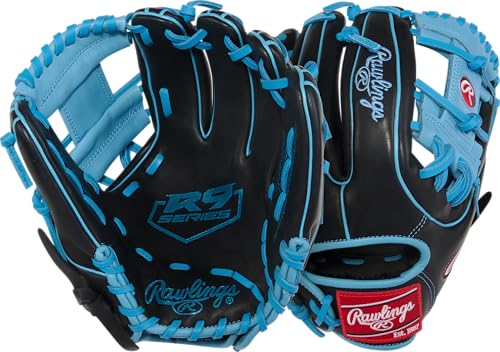
Rawlings R9 Series
Factory conditioning softens the leather, so an R9 plays within one to two weeks. High school players and returning adults get real leather without losing a month of the season. A reinforced palm pad blunts hard throws, though the softer hide loosens sooner than flagship lines do.
Pros
- Game ready in one to two weeks
- Reinforced palm pad absorbs hard throws
- Genuine leather across a wide size range
Cons
- Pocket loosens sooner than premium hides
- Fewer patterns than the flagship series
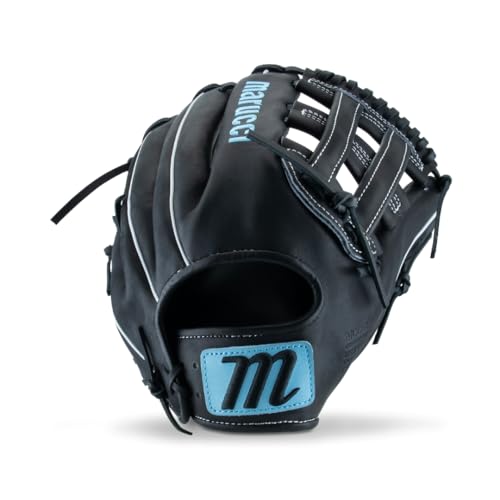
Marucci Cypress Series
Japanese kip leather weighs less than steer hide at similar strength, which is the whole argument for the Cypress. Break-in lands around two to four weeks, between the R9 and Heart of the Hide. Players who find flagship gloves heavy on the hand notice the difference in the first session.
Pros
- Lighter on the hand than steer hide rivals
- Breaks in faster than premium steer hide
- Tight lacing and clean finishing throughout
Cons
- Kip leather scuffs more easily
- Fewer stock patterns than Rawlings or Wilson

Mizuno Prospect Series Youth Glove
Scaled-down adult gloves fail children because small hands cannot squeeze them shut. Mizuno pairs a PowerClose system with a flex groove, so a young player actually closes the glove on a ball. Soft pigskin arrives game ready, and sizes start near 10 inches for genuinely small hands.
Pros
- Closes in a small hand on day one
- Soft pigskin needs almost no break-in
- Sized for young players rather than scaled down
Cons
- Outgrown within a season or two
- Soft leather wears through with heavy use

Wilson A360
A leather and synthetic blend keeps the A360 light while retaining Wilson pattern shapes. First-season players, recreational leagues and spare-glove duty all suit it well. Nothing needs breaking in, but the synthetic content gives up pocket structure long before a full-leather glove would.
Pros
- Ready to play out of the box
- Light enough for younger arms
- Sizes span 10 to 13 inches across positions
Cons
- Synthetic content shortens overall lifespan
- Pocket flattens faster than full leather

Franklin Sports Field Master Series Baseball Glove
Garden catch, beach trips and company softball do not need competition leather. A synthetic shell with soft lining plays from the moment it leaves the packaging. Sizes run from 9.5 to 15 inches, covering children through adults, though organised league play deserves real hide.
Pros
- Usable immediately with no conditioning
- Size range covers children and adults
- Soft lining suits occasional catch
Cons
- Not built for competitive play
- Synthetic shell stiffens and cracks over time
The lineup, side by side
| # | Model | Leather | Best for | Score | Price |
|---|---|---|---|---|---|
| 1 | Rawlings Heart of the Hide 11.75 inch | Heart of the Hide steer hide | Best overall | 9.4 | Check price |
| 2 | Wilson A2000 11.5 inch | Pro Stock steer hide | Best for infield | 9.2 | Check price |
| 3 | Rawlings R9 Series | Conditioned pro grade leather | Best value | 9.0 | Check price |
| 4 | Marucci Cypress Series | Japanese kip leather | Best premium alternative | 8.8 | Check price |
| 5 | Mizuno Prospect Series Youth Glove | Soft full grain pigskin leather | Best for youth players | 8.6 | Check price |
| 6 | Wilson A360 | Leather and synthetic blend | Best budget | 8.3 | Check price |
| 7 | Franklin Sports Field Master Series Baseball Glove | Synthetic leather shell | Best for casual play | 8.0 | Check price |
Good to know
What size baseball glove do I need?
Position sets the number. Middle infielders use 11.25 to 11.75 inches, third base and pitchers 11.75 to 12 inches, and outfielders 12.5 to 12.75 inches. Youth players need a glove they can close, usually 10 to 11.5 inches, rather than something to grow into.
How long does it take to break in a baseball glove?
Premium steer hide gloves such as the Rawlings Heart of the Hide and Wilson A2000 commonly take four to six weeks of regular catch. Marucci Cypress kip leather lands nearer two to four weeks. Rawlings R9 plays within a week or two, and synthetic gloves need no break-in.
What is the best way to break in a baseball glove?
Play catch repeatedly, then work the pocket and hinge by hand. Wrap a ball in the pocket with a band between sessions. Add a light application of conditioner a few times a season. Avoid ovens, microwaves and oil soaking, which break down leather fibres.
Infield vs outfield gloves: what is the difference?
Infield gloves are shorter with shallow pockets and often open webs, so a ball can be located and thrown quickly. Outfield gloves are longer with deep pockets and usually closed webs, prioritising reach and secure catches. Using one in the other role makes the position harder than it needs to be.
Are expensive baseball gloves worth it?
For players in regular organised play, yes, because premium leather keeps its shape for several seasons and a settled pocket makes catching more reliable. For casual catch or a growing child, mid-tier or entry-level leather makes more sense, since the glove gets replaced anyway.
How do you care for a leather baseball glove?
Wipe dirt off after each use and store the glove with a ball in the pocket. Apply a small amount of conditioner a few times a season rather than heavily. Keep it out of hot cars, and dry a wet glove slowly at room temperature, never near a heater.
Which glove should a first-time player buy?
Something soft that closes with one squeeze. Mizuno Prospect Series suits children, and the Wilson A360 works for adults new to the game. A stiff premium glove actively slows learning, because a beginner cannot close it around the ball.
How do you know if a baseball glove fits?
Fingers should reach the stalls without cramming, and the wrist opening should stay snug when you shake your hand. You should be able to close the glove with a single squeeze. Many players leave the index finger outside the glove, which is normal and purely preference.
What is the best baseball glove for a youth player?
Mizuno Prospect Series, because PowerClose and a flex groove let a small hand shut the glove on a ball. Sizes start near 10 inches. Skip oversized gloves bought for a child to grow into, since an uncloseable glove teaches flinching instead of catching.
Can you use a softball glove for baseball?
Not well. Softball gloves are cut larger with deeper pockets to hold a bigger ball, so a baseball rattles around and transfers slowly. Fastpitch models sit closer to baseball sizing, but a dedicated baseball glove fits the ball properly.
The bottom line
Rawlings Heart of the Hide is the glove to buy for regular play, because it will still hold its shape several seasons after the break-in ends. Infielders who prefer Wilson hand shapes get the same longevity from the A2000 at 11.5 inches. Anyone needing a glove that plays this month should take the Rawlings R9 Series, and young players should start with the Mizuno Prospect so they can actually close it.


