Bench Vises Compared: Bench-Top vs Clamp-On Models
Yost Vises 750-DI takes the top spot on body metal, because ductile iron bends where grey cast iron cracks. Yost Vises LV-4 fits a typical home bench, packing pipe jaws and an anvil face into a compact casting. Olympia Tools 38-604 covers occasional repairs.
Yost Vises 750-DI is the pick for a bench that sees real abuse, since ductile iron tolerates the sideways loads and hammer blows that fracture grey cast iron. Yost Vises LV-4 handles most home garage work in far less bench space. Olympia Tools 38-604 makes a reasonable starting vise for occasional hobby jobs.
Headline jaw width tells you almost nothing about strength, which is why vises are harder to choose than they look. We compared listings on jaw width and throat depth, grey cast iron against ductile iron, pipe jaw and anvil provision, swivel base locking, and the bolt pattern each demands from a bench top. Owner reports on cracked castings and stiff screws filled the remaining gaps.
How to pick the right one
Does jaw width tell you how strong a bench vise is? No, and the gap is wider than most buyers expect. A six inch grey cast iron vise can fail sooner than a five inch ductile iron one, because grey iron is brittle and lets go suddenly under sideways load. Body metal decides survival whenever you bend stock, strike the anvil or clamp long bars. Ductile iron and forged steel bodies ask more of your budget and repay it by not cracking. Read the material line in the listing before the jaw measurement.
How much throat depth do tall workpieces need? Throat depth measures from the jaw tops down to the slide, and it sets how far a tall piece can drop in. Shallow throats force you to clamp near the top edge, where work flexes and chatters under a file or saw. Three inches or so handles most home tasks comfortably. Brackets, box section and deep sheet metal all reward another half inch. Measure your typical workpiece before assuming the biggest jaws win.
How do you mount a bench vise to a wooden bench? Every vise transfers its loads straight into the bench top through a bolt pattern you drill yourself. Particle board and thin softwood crush around those bolts within months. Use a hardwood or doubled up top, then fit large washers or a steel backing plate underneath. Position the fixed jaw slightly proud of the front edge so long bar stock hangs down instead of fouling the bench. Snug the bolts again after the first few weeks of use.
Is a swivel base worth it, or is a fixed base stiffer? Swivel bases angle work toward the light or your body, which genuinely helps filing, sawing and welding prep. They also add height and one more joint that can flex under load. Mostly clamping and hitting things? A fixed base stays stiffer and sits lower. Doing detailed hand work? The swivel earns its keep several times a week. Twin lockdown bolts hold noticeably better than a single bolt once you start applying force.
What we recommend

Yost Vises 750-DI
Ductile iron earns this the top spot, because it deforms before it breaks and absorbs the off axis loads that snap brittle castings. Five inch jaws with a three and a half inch throat cover most fabrication and repair work on a home bench. Owners report the swivel base stays put once both lockdown bolts are snug.
Pros
- Ductile iron bends instead of fracturing
- Replaceable serrated jaws and pipe jaws
- Twin lockdown bolts kill swivel movement
Cons
- Heavy enough that mounting wants a second pair of hands
- Demands a hardwood or reinforced bench top
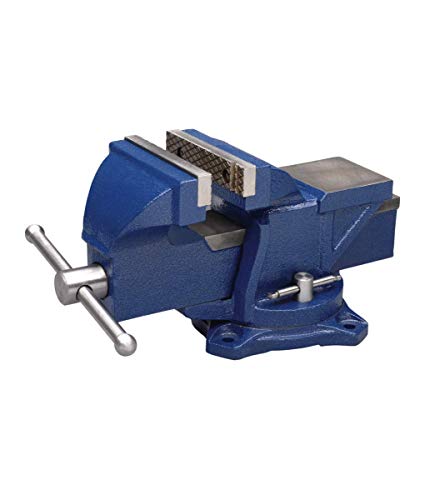
Wilton 11104 Bench Vise
Decades of machinist vise production show in the reinforced casting and the enclosed spindle. Grinding dust and swarf stay out of the acme threads, which is the usual reason a vise turns stiff by its second winter. Handle length gives real clamping force without reaching for a pipe extension.
Pros
- Enclosed screw keeps swarf out of the threads
- Reinforced casting handles daily shop duty
- Long handle applies force without an extension
Cons
- Four inch jaws limit wide plate work
- Pipe jaw capacity trails larger vises
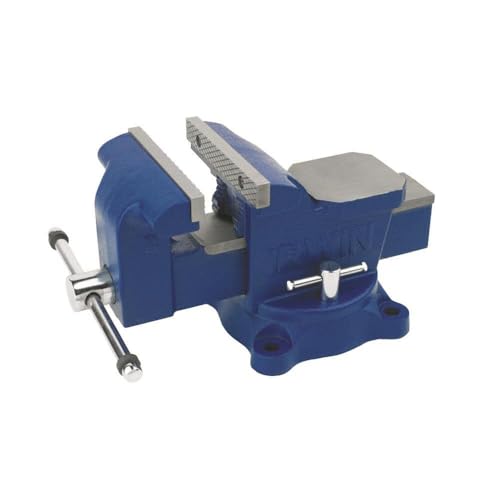
IRWIN Multi-Purpose Bench Vise 226306ZR
Pipe jaws here are genuinely usable rather than a token moulding, which matters when a job swings between plumbing and metalwork. Six inch jaws take wider stock than most home vises manage, and the anvil face absorbs light hammering. Owners report the base bolts want large washers on a softwood bench top.
Pros
- Pipe jaws grip round stock properly
- Wide flat jaws suit larger workpieces
- Built in anvil face for light forming
Cons
- Grey cast iron rather than ductile iron
- Swivel travel stops at 120 degrees

Yost Vises LV-4
Four and a half inch jaws cover bike parts, brackets and small fabrication, which is what most home workshops actually clamp. Flat jaws, pipe jaws and an anvil surface all live in one compact casting. Hand filing and sawing hold steady, though sledge work belongs elsewhere.
Pros
- Compact footprint suits a small bench
- Flat and pipe jaws in one casting
- Light enough for one person to mount
Cons
- Cast iron cracks under shock loading
- Short handle limits maximum clamping force

TEKTON 54004 Swivel Bench Vise
A three bolt pattern and modest base suit folding benches and narrow work tops where a shop vise would overhang badly. Full 360 degree rotation locks with a single lever, so repositioning mid job takes seconds. Assembly and woodworking sit better here than heavy metal removal.
Pros
- Small bolt pattern fits narrow bench tops
- Single lever swivel lock speeds repositioning
- Light enough to move between benches
Cons
- Modest clamping force for its jaw size
- Jaw serrations mark soft stock without caps

Forward CR60A Bench Vise
Six inch jaws paired with a deep throat swallow wider plate and taller assemblies than most home vises accept. Twin lockdowns on the 360 degree base hold position once set. Its mass makes bolting down a two person job, so plan the bench and the bolt pattern before delivery day.
Pros
- Large capacity for wide plate and boxes
- Twin base locks resist swivel creep
- Deep throat clamps tall work without flex
Cons
- Weight makes installation a two person job
- Finish quality varies between units
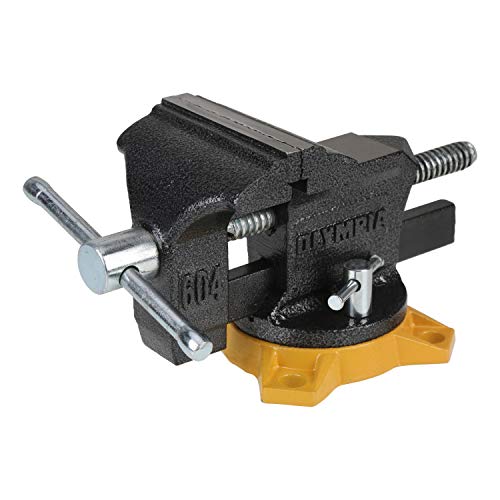
Olympia Tools 38-604 Bench Vise
Straightforward four inch jaws for hobby benches, household repairs and light assembly rather than daily shop duty. Pipe jaws and an anvil surface come included, so the basics are covered from the start. Owners report a wipe of grease on the screw when new smooths the action considerably.
Pros
- Light enough to fit single handed
- Pipe jaws included at the entry level
- Handles routine household repair tasks
Cons
- Not built for hammering or bending
- Single base lock works loose over time
The lineup, side by side
| # | Model | Jaw width | Best for | Score | Price |
|---|---|---|---|---|---|
| 1 | Yost Vises 750-DI | 5 inches | Best overall | 9.4 | Check price |
| 2 | Wilton 11104 Bench Vise | 4 inches | Best for heavy duty use | 9.2 | Check price |
| 3 | IRWIN Multi-Purpose Bench Vise 226306ZR | 6 inches | Best for mixed metal and pipe work | 9.0 | Check price |
| 4 | Yost Vises LV-4 | 4.5 inches | Best value | 8.8 | Check price |
| 5 | TEKTON 54004 Swivel Bench Vise | 4 inches | Best for small benches | 8.6 | Check price |
| 6 | Forward CR60A Bench Vise | 6 inches | Best for large stock | 8.3 | Check price |
| 7 | Olympia Tools 38-604 Bench Vise | 4 inches | Best budget | 8.0 | Check price |
Good to know
What size bench vise do most home workshops need?
Four to five inch jaws cover the overwhelming majority of home jobs, from bike maintenance through small fabrication. Larger vises add weight and consume bench space for capacity you will rarely reach unless wide plate is routine work.
Is ductile iron really better than cast iron for a vise?
Yes, in the way that counts. Grey cast iron is stiff but brittle, fracturing without warning under shock or twisting. Ductile iron deforms first, which usually turns a catastrophic break into a bent handle.
Can I hammer on the anvil surface of a bench vise?
Light forming and straightening is fine on a built in anvil face. Send heavy sledge work to a proper anvil, since that force travels through the slide and base and cracks vise bodies regularly.
How do you protect soft metal from jaw serrations?
Fit soft jaw caps in aluminium, copper or plastic, or fold thin aluminium sheet or leather over each jaw. Magnetic soft jaws slip on and off in seconds and cost little to keep on the bench.
Should a bench vise overhang the front of the bench?
Yes. Mount it so the fixed jaw sits just past the bench edge, letting long bar stock hang straight down rather than fouling the top. That single detail improves a new vise more than any accessory.
Do I need pipe jaws on a bench vise?
Plumbing, exhaust tube and round bar all grip far better in pipe jaws, because flat serrated jaws crush or slip on round sections. Working only in flat stock? They add nothing you will miss.
Why does my bench vise feel stiff to turn?
Dirt in the screw threads or a dry slide explains nearly every case. Wind the vise fully open, brush out the swarf, grease the acme screw and put light oil on the slide. Enclosed spindle designs stay clean far longer.
Can you mount a bench vise on a portable workbench?
Only with a small bolt pattern and a light vise, which is where the TEKTON 54004 fits. Bolt it through a hardwood spacer board, then clamp that board to the bench so the load spreads across a wider area.
How much clamping force do I actually need?
Hand filing, sawing and assembly need only moderate pull on a normal handle, and overtightening distorts thin work. Save maximum force for bending and press fits. Never slip a pipe extension over the handle of a cast iron vise.
Our pick
Yost Vises 750-DI is the buy for a vise that outlasts the bench it sits on, thanks to a ductile iron body that shrugs off real abuse. Yost Vises LV-4 makes more sense for a typical home garage, covering flat, pipe and anvil work in a small footprint. Olympia Tools 38-604 is a fair starting point when repairs are occasional.


