Brake Fluid Boiling Points Compared: DOT 3 vs DOT 4
Bosch ESI6-32N suits most modern road cars, ATE Original TYP 200 gives the highest wet boiling point for spirited driving, and Prestone DOT 3 Synthetic covers routine top ups cheaply. Motul RBF 600 handles track days where fade resistance decides the lap.
Bosch ESI6-32N tops this list for everyday cars, since it meets three DOT specifications and resists moisture longer than a standard fluid. ATE Original TYP 200 suits drivers who push harder on mountain roads. Motul RBF 600 belongs in a car that sees the track, where fade resistance outweighs convenience.
DOT numbers suggest a simple hierarchy, yet wet boiling point predicts real world performance better than the dry figure ever does. A fluid that has sat in a car for a year behaves nothing like fresh fluid from a sealed bottle. We compared published dry and wet boiling points, DOT specifications, moisture tolerance and manufacturer guidance on change intervals. Always follow the specification printed on your reservoir cap.
What we recommend
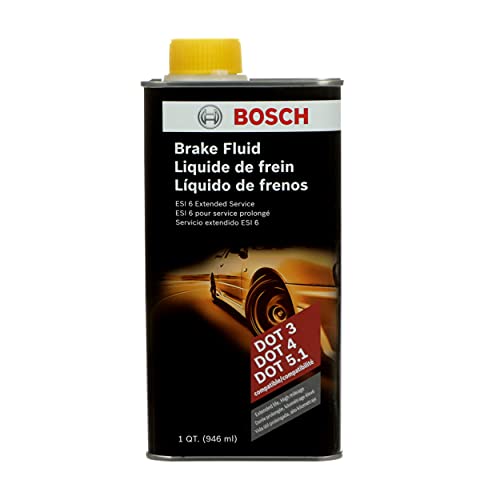
Bosch ESI6-32N Brake Fluid
ESI6 meets DOT 3, DOT 4 and DOT 5.1 in one bottle, which covers nearly every road car on the market. Bosch rates it for an extended change interval because the formulation resists moisture uptake longer than standard DOT 4. ABS and stability control systems accept it without issue, and it mixes safely with existing glycol fluid.
Pros
- Meets three DOT specifications in one fluid
- Resists moisture longer than standard DOT 4
- Safe with ABS and stability control systems
Cons
- Priced above basic DOT 3 fluids
- Extended interval still requires eventual replacement

ATE Original TYP 200 Brake Fluid
TYP 200 is a DOT 4 fluid built around one number: wet boiling point. At about 198 degrees Celsius, it holds performance well after a year of moisture absorption, unlike fluids that only look good fresh from the bottle. European workshops favor it for mountain driving and occasional track days. Most modern braking systems accept it without modification.
Pros
- Highest wet boiling point in this group
- Keeps performance through a full service interval
- Trusted across European workshops
Cons
- Not a substitute where DOT 5.1 is specified
- Stock varies by region and retailer

Prestone DOT 3 Synthetic Brake Fluid
Prestone DOT 3 suits any car that specifies DOT 3 and sees ordinary commuting. Stock is available at nearly every auto parts counter, which makes it practical for a full flush rather than a small top up. Heavy or repeated braking exposes its limits quickly, since boiling points sit at the bottom of this list. Towing vehicles or spirited drivers should step up to a DOT 4.
Pros
- Inexpensive enough for a complete flush
- Stocked at almost every auto parts store
- Meets DOT 3 requirements reliably
Cons
- Lowest dry and wet boiling points here
- Limited margin under heavy braking

Motul RBF 600 Factory Line Brake Fluid
RBF 600 is a racing DOT 4 fluid engineered for repeated heavy braking, where pedal fade would otherwise creep in lap after lap. Its dry boiling point reaches roughly 312 degrees Celsius, among the highest here. Moisture absorption happens faster than in road fluids, so a car driven daily needs frequent flushes to keep the advantage. Track and race applications get the most from it.
Pros
- Exceptional resistance to brake fade under load
- Among the highest dry boiling points tested
- Proven record in motorsport applications
Cons
- Absorbs moisture faster than road focused fluids
- Needs frequent changes to stay effective

Castrol GT LMA Brake Fluid
GT LMA stands for low moisture activity, a formulation aimed at slowing water absorption rather than chasing peak boiling point. Vehicles that sit for weeks between drives benefit most, since time degrades fluid as much as heat does. Older seal materials have a long compatibility record with this fluid. Boiling points land in the middle of this group, well short of ATE TYP 200.
Pros
- Slows moisture absorption over time
- Long compatibility record with older seals
- Suits vehicles driven infrequently
Cons
- Wet boiling point trails ATE TYP 200
- Not intended as a performance fluid

Valvoline DOT 3 and DOT 4 Brake Fluid
One bottle covers both DOT 3 and DOT 4 requirements, which simplifies a household running several vehicles with different specifications. Performance sits comfortably above basic DOT 3 fluid, though it falls short of the European high boiling point options. Cost per liter stays reasonable for routine service. Stocking one fluid instead of two saves shelf space in a home garage.
Pros
- Covers two DOT specifications in one bottle
- Solid middle ground on boiling points
- Reasonable cost for routine service
Cons
- Neither the cheapest nor highest performing option
- Not rated for systems specifying DOT 5.1
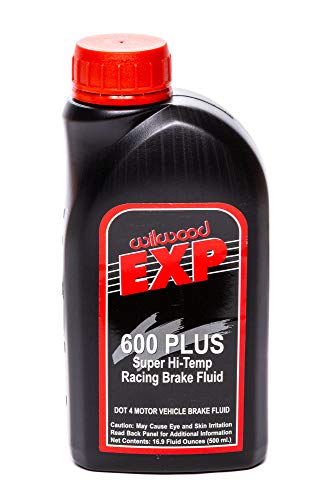
Wilwood EXP 600 Plus Racing Brake Fluid
EXP 600 Plus targets extreme sustained heat in racing systems with large rotors and multi piston calipers. Dry boiling point runs around 315 degrees Celsius, giving enormous headroom under abuse. Moisture uptake happens quickly, so competition teams flush it every event or season rather than annually. A car spending most of its life on public roads gains little from this fluid.
Pros
- Extremely high temperature tolerance for competition use
- Built for multi piston race caliper systems
- Holds a consistent pedal under sustained abuse
Cons
- Requires flushing far more often than road fluid
- Impractical and unnecessary for daily driving
What to look for
What dry and wet boiling points actually measure Dry boiling point comes from fresh fluid straight out of a sealed bottle. Wet boiling point is measured after the fluid absorbs a defined amount of water, which mirrors how it behaves after a year or two in a car. Since fluid spends nearly its whole life closer to the wet figure, that number matters more for real world comparison. Marketing copy tends to lead with the more impressive dry figure instead.
Why brake fluid absorbs moisture in the first place Glycol based fluids are hygroscopic, pulling water vapor through seals, hoses and the reservoir cap over time. Absorbed water lowers the boiling point and promotes corrosion inside ABS units and brake cylinders. That is why brake fluid carries a time based change interval instead of a mileage based one. A car parked for months still needs a change, even without a single trip.
How to pick the right DOT rating for your car Check the reservoir cap or owner’s manual, since the manufacturer’s specification always wins. DOT 3, DOT 4 and DOT 5.1 are all glycol based and mix safely with each other. DOT 5 is silicone based and must never enter a system designed for the others, since it behaves differently under ABS operation. Upgrading to a higher DOT number is usually fine, but downgrading is not.
Changing intervals and bleeding brakes safely Most manufacturers call for a change every two years regardless of mileage, and track use shortens that considerably. Test strips and electronic moisture testers offer a rough reading but do not replace the calendar interval. Proper bleeding means keeping the reservoir topped up, following the correct wheel sequence and confirming a firm pedal before driving. Hand the job to a qualified mechanic if you are not confident, since braking is safety critical.
The lineup, side by side
| # | Model | Specification | Best for | Score | Price |
|---|---|---|---|---|---|
| 1 | Bosch ESI6-32N Brake Fluid | DOT 3, 4 and 5.1 | Best overall | 9.4 | Check price |
| 2 | ATE Original TYP 200 Brake Fluid | DOT 4 | Best for spirited driving | 9.2 | Check price |
| 3 | Prestone DOT 3 Synthetic Brake Fluid | DOT 3 | Best value | 9.0 | Check price |
| 4 | Motul RBF 600 Factory Line Brake Fluid | DOT 4 racing | Best for track use | 8.8 | Check price |
| 5 | Castrol GT LMA Brake Fluid | DOT 4 | Best for older vehicles | 8.6 | Check price |
| 6 | Valvoline DOT 3 and DOT 4 Brake Fluid | DOT 3 and DOT 4 | Best all purpose option | 8.3 | Check price |
| 7 | Wilwood EXP 600 Plus Racing Brake Fluid | Racing, DOT 4 compatible | Best for competition braking | 8.0 | Check price |
Questions worth asking
How often should brake fluid be changed?
Most manufacturers call for a change every two years regardless of mileage, since moisture absorption is time based rather than distance based. Track use shortens that interval, sometimes to every event with racing fluid. Check your owner’s manual for the exact figure.
Can you mix DOT 3 and DOT 4 brake fluid?
Yes, both are glycol based and compatible, so topping up a DOT 3 system with DOT 4 is generally fine. Never mix silicone based DOT 5 with either one, since it behaves differently and is not interchangeable.
What happens when brake fluid gets old?
Absorbed moisture lowers the boiling point, so hard or repeated braking can vaporize water inside the fluid. That produces a soft, sinking pedal at the worst possible moment. Old fluid also accelerates corrosion inside the ABS unit and cylinders.
Is DOT 4 or DOT 5.1 better for a modern car?
Both are glycol based and mix safely, but DOT 5.1 has a higher minimum boiling point and typically lower viscosity. Cars with electronic stability control often specify DOT 5.1 for that faster response. Follow whichever your manufacturer lists on the cap.
Is a higher boiling point always the better choice?
Not necessarily, since racing fluids absorb moisture quickly despite a very high dry boiling point. In a road car that goes years between services, that fast uptake can leave you worse off than a well chosen road fluid. Match the fluid to how the car is actually driven.
How can you tell if brake fluid needs replacing?
Dark or cloudy fluid in the reservoir is a visual clue, and a spongy pedal after repeated braking is a functional one. Neither sign is fully reliable on its own. A workshop can measure moisture content directly with a test strip or electronic tester.
Is topping up brake fluid enough, or does it need a full flush?
Topping up restores the level but leaves existing moisture in the system untouched. A dropping fluid level usually points to pad wear or a leak rather than normal consumption. Have the system inspected if the level keeps falling noticeably.
Does brake fluid damage paint or other surfaces?
Glycol based brake fluid strips paint on contact and works fast. Wipe up spills immediately and rinse the area with water. Keep a cloth under the reservoir cap when topping up, especially near painted wing surfaces.
What is the best brake fluid for track days?
Motul RBF 600 and Wilwood EXP 600 Plus both handle sustained heavy braking without fading, thanks to very high dry boiling points. Expect to flush either one far more often than a road fluid, since moisture uptake happens quickly under those formulations.
DOT 3 vs DOT 4: which one does my car need?
Check the reservoir cap or owner’s manual, since that specification is non negotiable. DOT 4 generally offers a higher boiling point than DOT 3 for a modest cost increase. Upgrading from DOT 3 to DOT 4 is safe; going the other direction is not recommended.
The verdict
Bosch ESI6-32N remains the sensible default for most road cars, meeting multiple DOT specifications while resisting moisture longer than conventional fluid. Drivers pushing harder on mountain roads or occasional track days will notice the benefit of ATE Original TYP 200’s higher wet boiling point. Whichever bottle you choose, match the DOT specification to your manufacturer’s requirement, hold to the two year interval, and have the system bled correctly, since braking is not the place to improvise.