Which Brake Pads Stop Best for Your Driving Style
Bosch QuietCast BC ceramic pads top this list for quiet, low dust daily driving. Akebono ProACT ceramic pads suit drivers who want gentle rotor wear and a smooth pedal. Power Stop Z23 Evolution Sport pads handle towing and hauling best, thanks to a carbon fiber ceramic compound built for heat.
Bosch QuietCast BC ceramic pads lead this ranking for quiet stops and clean wheels on a daily driver. Akebono ProACT follows close behind, prized for a gentle touch on rotors and a smooth pedal feel. Power Stop Z23 Evolution Sport earns its spot with drivers who tow trailers or haul heavy loads.
Marketing language reduces everything to ceramic versus semi metallic, though the real differences sit in the friction compound, the shim design and what hardware ships in the box. We compared published friction data, noise control features, dust levels owners report, included hardware and each range’s stated use case, then ranked seven sets against common driving patterns. Have any pad replacement checked by a qualified mechanic, since braking is a safety system.
What we recommend

Bosch QuietCast BC Ceramic Brake Pads
QuietCast pairs a ceramic friction compound with a multilayer shim and a slotted, chamfered edge, aimed squarely at killing squeal before it starts. New hardware and synthetic lubricant ship in the box, removing the usual reason a pad job turns noisy. Owners report noticeably cleaner wheels compared with the semi metallic pads they replaced.
Pros
- Very low dust on alloy wheels
- Hardware and lubricant included
- Consistently quiet from cold
Cons
- Not intended for track or heavy towing
- Bite feels softer than performance pads

Akebono ProACT Ultra-Premium Ceramic Brake Pads
Akebono supplies pads to several vehicle manufacturers, and the ProACT range keeps that same emphasis on smooth, progressive engagement. This compound treats rotors kindly, which stretches the interval between full brake jobs. Owners describe a soft, predictable pedal rather than an aggressive initial bite.
Pros
- Easy on rotor surfaces over time
- Smooth, progressive pedal feel
- Very low noise reported by owners
Cons
- Hardware is not always included
- Less initial bite than sport compounds

Power Stop Z23 Evolution Sport Carbon-Fiber Ceramic Brake Pads
Z23 pads use a carbon fiber infused ceramic compound with slots and chamfers that shed gas and heat through repeated hard stops. Trucks and SUVs that carry weight or descend long grades are the intended audience. Stopping confidence rises here, at the cost of slightly more dust than a pure commuter pad.
Pros
- Strong bite when loaded or towing
- Handles heat better than standard ceramic
- Stainless hardware supplied
Cons
- Produces more dust than quiet ceramics
- Can feel grabby in light city driving

Wagner ThermoQuiet Ceramic Brake Pads
ThermoQuiet pads bond friction material, backing plate and insulator into one piece, targeting vibration at its source. Heat spreads more evenly across the pad face because of that construction. Choose this set if your last pads squealed persistently.
Pros
- Integrated insulator cuts squeal
- Even heat spread across the pad
- Wide vehicle coverage available
Cons
- Bedding in takes a few hundred miles
- Dust output sits mid pack

Raybestos Element3 EHT Brake Pads
Element3 pads blend ceramic and semi metallic traits to cover mixed driving without leaning too far either way. That hybrid approach delivers usable cold bite plus reasonable dust control. Based on specifications, this pad suits a car doing city runs all week and loaded trips on weekends.
Pros
- Good compromise across driving styles
- Reliable cold performance
- Widely available part numbers
Cons
- Not the quietest option here
- Dust falls between ceramic and metallic

ACDelco Gold Ceramic Brake Pads
ACDelco Gold pads aim to restore the braking feel a vehicle had from the factory, which matters if you liked the original pedal. Coverage runs strongest across General Motors vehicles but extends well beyond them. Owners describe a predictable, unremarkable pad in the best sense of that word.
Pros
- Familiar factory style pedal response
- Strong coverage for GM vehicles
- Consistent quality control
Cons
- No performance gain over stock
- Fewer options for European models
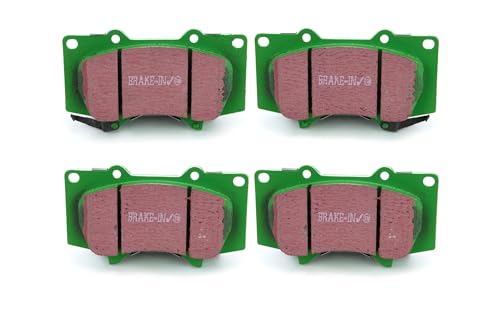
EBC Brakes Greenstuff 6000 Series Brake Pads
Greenstuff 6000 targets heavier vehicles that need extra friction without jumping to a race compound. Pads arrive with a brake-in surface coating that speeds up bedding. They run warmer and dustier than commuter ceramics, the trade for added stopping power.
Pros
- Strong friction for heavy vehicles
- Surface coating speeds up bedding
- Holds up on long descents
Cons
- Higher dust output than ceramics
- Can be noisy until fully bedded
How they compare
| # | Model | Friction material | Best for | Score | Price |
|---|---|---|---|---|---|
| 1 | Bosch QuietCast BC Ceramic Brake Pads | Ceramic compound | Best overall | 9.4 | Check price |
| 2 | Akebono ProACT Ultra-Premium Ceramic Brake Pads | Ceramic, low steel | Best for rotor life | 9.2 | Check price |
| 3 | Power Stop Z23 Evolution Sport Carbon-Fiber Ceramic Brake Pads | Carbon fibre ceramic | Best for towing and hauling | 9.0 | Check price |
| 4 | Wagner ThermoQuiet Ceramic Brake Pads | Ceramic compound | Best for noise control | 8.7 | Check price |
| 5 | Raybestos Element3 EHT Brake Pads | Enhanced hybrid technology | Best all round hybrid | 8.5 | Check price |
| 6 | ACDelco Gold Ceramic Brake Pads | Ceramic compound | Best for a factory feel | 8.2 | Check price |
| 7 | EBC Brakes Greenstuff 6000 Series Brake Pads | Aramid organic compound | Best for trucks and SUVs | 8.0 | Check price |
How to pick the right one
What type of brake pad fits your driving? Ceramic pads suit commuting, with low dust and quiet operation. Semi metallic and hybrid compounds handle heat better when you tow, carry weight or drive hilly routes. Fitting a heavy duty pad to gentle city driving usually just adds dust and noise for no benefit. Be honest about the hardest job your brakes do each month, then buy for that.
Do new pads need new hardware? Clips, shims and slides age alongside the friction material. A tired clip is the most common cause of squeal after a fresh pad fit. Some kits bundle new stainless hardware and lubricant, while others expect you to buy it separately. Budget for hardware either way, since reused corroded clips undo the noise engineering built into a good pad.
Should rotors be replaced with pads? Pads and rotors wear as a pair. Fitting new pads to grooved or unevenly worn rotors leads to vibration and short pad life. Measure rotor thickness against the minimum stamped on the hub face. Replacing both at once costs less than doing the job twice when rotors sit near that limit or show visible scoring.
How do you bed in new brake pads? Fresh pads need a series of moderate stops from moderate speed to transfer an even friction layer onto the rotor. Skipping that step explains why some owners report judder or noise on a new set. Follow the bedding procedure listed for the specific pad range. Avoid hard stops and parking with hot brakes for the first few hundred miles.
Common questions
Are ceramic brake pads better than semi metallic pads?
It depends on the job. Ceramic pads run quieter and shed less visible dust, which suits commuting. Semi metallic and hybrid compounds handle sustained heat better, which matters for towing, heavy vehicles and long descents.
How do I know which brake pads fit my car?
Every range here sells by application, so you choose a part number using your exact year, make, model and sometimes brake variant. Check the fitment tool on the listing and compare it against your current pad shape before ordering.
How often do brake pads need replacing?
Wear depends more on driving style and terrain than on a fixed mileage interval. Have friction material thickness checked at every service, and act on squeal, a longer pedal or vibration under braking.
Do rotors need replacing along with pads?
Not always, but rotors must sit within the minimum thickness marked on the hub and stay free of deep scoring or heat damage. Fitting new pads to worn rotors commonly causes judder and premature pad wear.
Why do new brake pads squeal?
Reused corroded hardware, missing shims, skipped lubricant on contact points and an unfinished bedding process cause most squeal. All four are avoidable during fitting, which is why included hardware in a kit matters.
Can brake pads be replaced at home?
Some owners do, though braking is a safety critical system with torque specs, caliper handling and bedding procedures that must be followed exactly. Have the work done or inspected by a qualified mechanic if you have any doubt.
Do low dust ceramic pads brake as well as other compounds?
For everyday driving, yes. Low dust ceramic compounds stop a normal car perfectly well. Their limit shows up under repeated heavy braking, where heat resistant compounds hold their friction level longer.
Should front and rear brake pads be replaced together?
Front and rear pads wear at different rates, with fronts usually going first, so the axles do not need replacing at the same moment. Always replace both pads on the same axle together, though, so braking stays balanced side to side.
The verdict
Bosch QuietCast BC pads make a sensible default for a daily driver, pairing a quiet ceramic compound with the hardware and lubricant needed to keep it that way. Akebono ProACT suits drivers chasing long rotor life and a smooth pedal, while Power Stop Z23 Evolution Sport earns its place on trucks and SUVs that tow. Confirm the correct part number for your vehicle, and have the fitting checked by a qualified mechanic.