The Budget Drones That Actually Fly Nice and Steady
The DJI Mini 2 SE is our top pick for beginners who want stable 2.7K video under the 250 gram registration limit. Photographers should choose the Potensic Atom for its 4K three-axis gimbal, while the Ryze Tello suits first-time indoor pilots.
The DJI Mini 2 SE fits most new pilots with GPS-locked hovering, 2.7K video, and a weight under 250 grams that avoids US registration for recreational flying. Buyers who mainly want smooth cinematic footage should look at a three-axis gimbal model instead.
Cheap drones range from toy-grade indoor flyers to genuinely capable camera drones, so the label alone means little. We compared camera and gimbal quality, GPS hold, flight time, weight against the 250 gram rule, and owner reports on wind handling to sort real aerial tools from short-range toys.
Before you buy
What to look for in a budget drone GPS positioning is the single biggest upgrade over a toy drone, since it holds a steady hover and enables return-to-home. Camera quality depends less on the megapixel number and more on stabilization, so a real gimbal beats electronic-only smoothing. Flight time, transmission range, and weight against the 250 gram rule round out the decision for most recreational pilots.
Why the 250 gram weight limit matters In the United States, recreational drones under 250 grams do not require FAA registration, which is why models like the DJI Mini 2 SE and Potensic Atom sit just below it. Heavier drones such as the Holy Stone HS720E must be registered and marked. Check your local rules too, since weight thresholds and registration steps vary by country.
Camera and stabilization on a budget A 4K label means little without stabilization. A mechanical three-axis gimbal, as on the Potensic Atom, physically cancels shake for smooth video. Electronic stabilization crops and warps the frame to reduce jitter, which helps but looks less clean. For photos, GPS hover keeps the drone still enough for sharp stills even without a gimbal.
Best drones for beginners versus footage New pilots should start with GPS stability and, ideally, prop guards or an indoor-safe design like the Ryze Tello. Once comfortable, a sub-250-gram GPS drone gives room to grow. If smooth aerial footage is the goal from day one, prioritize a gimbal drone like the Potensic Atom over a toy, and avoid no-GPS models that drift the moment you stop steering.
Our top picks

DJI Mini 2 SE
GPS positioning holds this lightweight drone steady in a hover, which forgives beginner mistakes. At under 250 grams it skips recreational registration, and the OcuSync transmission keeps a stable connection well beyond toy-drone range.
Pros
- GPS hover forgives new-pilot errors
- Under 250g avoids recreational registration
- Long, stable transmission range
Cons
- No obstacle-avoidance sensors
- Digital-only image, no 4K video

Potensic Atom
A mechanical three-axis gimbal steadies 4K footage far better than software alone, which is rare at this price. GPS return-to-home and a strong video link make it a capable camera drone that still weighs under 250 grams.
Pros
- True 3-axis gimbal smooths 4K video
- GPS return-to-home adds safety
- Stays under the 250g threshold
Cons
- No obstacle avoidance
- Handles less wind than heavier drones
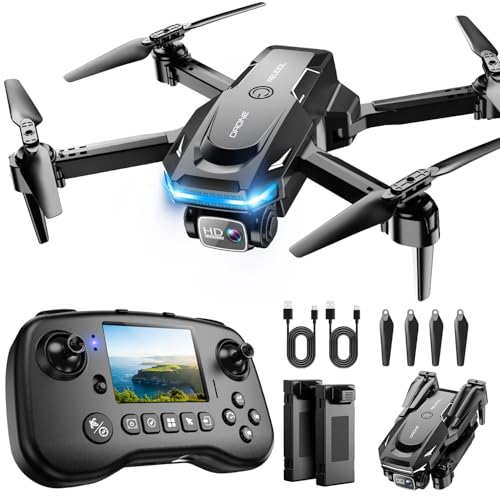
Ryze Tello
Powered by DJI flight tech, this tiny drone is stable enough for beginners to learn indoors. Prop guards and programmable flips make it fun, and coding support with Scratch turns it into a learning tool for kids.
Pros
- Stable and safe for indoor practice
- Scratch coding teaches programming
- Very low price to start flying
Cons
- No GPS, drifts in any breeze
- 720p camera and short range only
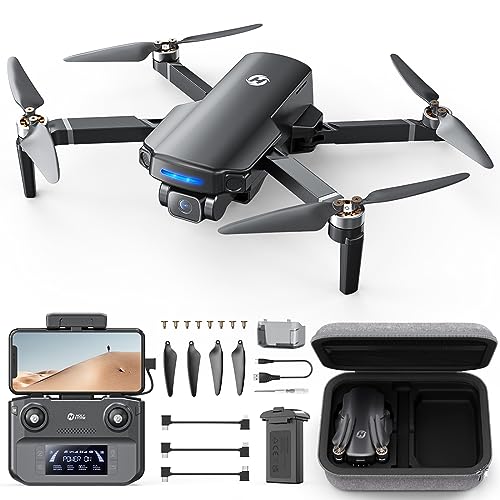
Holy Stone HS720E
A 4K camera with electronic stabilization sits on a two-axis gimbal for smoother clips than a fixed mount. GPS return-to-home and a brushless motor add reliability, and the foldable body packs down for travel.
Pros
- GPS and return-to-home reduce loss risk
- Brushless motors run quieter and last longer
- Folds small for a bag
Cons
- Over 250g, so US registration applies
- EIS is less smooth than a full gimbal

Potensic Atom SE
This lighter model brings GPS positioning and a long transmission range at a lower price than gimbal drones. It shoots 4K with electronic stabilization and holds a steady hover, making it a solid step up from toy drones.
Pros
- GPS hover and return-to-home included
- Long range for the price
- Under 250g weight class
Cons
- EIS only, no mechanical gimbal
- Struggles more in gusty wind

Holy Stone HS175D
GPS plus optical-flow positioning keeps this folding drone steady indoors and out. Return-to-home triggers on low battery or lost signal, and two included batteries roughly double the time you spend flying per outing.
Pros
- Optical flow steadies low-altitude hover
- Two batteries extend flying time
- Foldable, lightweight body
Cons
- Shorter range than DJI transmission
- Camera detail trails class leaders

DEERC D10
Altitude hold and headless mode make this folding drone easy for a first flyer to control. A 1080p adjustable camera streams to a phone, and two batteries plus a simple app keep the learning curve gentle.
Pros
- Altitude hold simplifies first flights
- Two batteries for more air time
- Low price for a camera drone
Cons
- No GPS, so it drifts without input
- 1080p camera and short range
Compared at a glance
| # | Model | Camera | Best for | Score | Price |
|---|---|---|---|---|---|
| 1 | DJI Mini 2 SE | 2.7K video, 12MP photos | Best for beginners | 9.2 | Check price |
| 2 | Potensic Atom | 4K video with 3-axis gimbal | Best for aerial photography | 9.0 | Check price |
| 3 | Ryze Tello | 720p video, 5MP photos | Best for indoor learning | 8.5 | Check price |
| 4 | Holy Stone HS720E | 4K with EIS, adjustable lens | Best value camera drone | 8.6 | Check price |
| 5 | Potensic Atom SE | 4K video, EIS | Best budget GPS drone | 8.7 | Check price |
| 6 | Holy Stone HS175D | 4K adjustable, EIS | Best foldable travel drone | 8.3 | Check price |
| 7 | DEERC D10 | 1080p, adjustable angle | Best entry-level camera drone | 8.0 | Check price |
Good to know
Do I need to register a budget drone?
In the United States, recreational drones under 250 grams do not need FAA registration, which covers the DJI Mini 2 SE and Potensic Atom. Heavier models like the Holy Stone HS720E do require registration. Rules differ by country, so check your local aviation authority before your first flight.
What is the best budget drone for beginners?
The DJI Mini 2 SE is the best all-round starter because GPS holds it steady and it stays under 250 grams. For pure indoor learning on a smaller budget, the Ryze Tello is stable and safe with prop guards. Both forgive the mistakes new pilots make while getting comfortable.
Does a cheap drone need a gimbal for smooth video?
A gimbal makes a big difference. A mechanical three-axis gimbal like the Potensic Atom’s physically steadies footage for a cinematic look. Electronic stabilization on drones such as the HS720E helps but crops the image and can look less natural. For the smoothest budget video, choose a gimbal model.
How long do budget drones fly on one battery?
It varies widely. Sub-250-gram GPS drones like the Mini 2 SE and Potensic Atom manage around 30 minutes. Toy drones such as the Ryze Tello fly closer to 13 minutes. Many budget drones include two batteries to roughly double your total flying time per outing.
Why does GPS matter on a drone?
GPS lets a drone lock its position and hover in place instead of drifting, and it enables return-to-home if the signal drops or the battery runs low. Non-GPS drones like the DEERC D10 rely on you to correct drift constantly, which makes them harder to fly and easier to lose.
Can budget drones handle wind?
Lightweight drones under 250 grams are more affected by wind because they weigh so little. GPS helps them hold position in a light breeze, but strong gusts push them around. Heavier drones with brushless motors, like the HS720E, cope better outdoors. Avoid flying any budget drone in strong wind.
What camera resolution do budget drones offer?
Many now advertise 4K, including the Potensic Atom, HS720E, and HS175D, though stabilization affects how usable that footage is. Cheaper models like the DEERC D10 shoot 1080p, and the Ryze Tello records 720p. Judge the whole package, since a stabilized lower resolution can look better than shaky 4K.
Are budget drones good enough for real photography?
The better ones are. A sub-250-gram GPS drone with a gimbal, like the Potensic Atom, produces sharp aerial stills and smooth video suitable for social media and travel memories. Toy drones fall short for serious photos due to weak cameras, no stabilization, and drift that blurs handheld shots.
The verdict
For most people starting out, the DJI Mini 2 SE is the safest buy, combining GPS stability, long range, and a sub-250-gram weight that keeps recreational flying paperwork-free. Pilots whose main goal is smooth 4K footage should spend on the gimbal-equipped Potensic Atom instead, while absolute beginners and kids are better served learning indoors on the inexpensive Ryze Tello first.


