Podcast Microphones Compared by Connector and Budget Tier
Shure MV7 leads for most podcasters, combining USB simplicity with XLR upgrade room for a growing show. Audio-Technica AT2020USB+ matches its clarity at a lower entry cost for solo hosts. Elgato Wave:3 suits streamers who also podcast, adding onboard mixing without extra hardware.
Shure MV7 suits most solo and co-hosted shows, pairing USB and XLR outputs so it grows from a laptop setup into a full studio interface. Onboard voice-tuning DSP flatters untrained voices well. Its plastic body still feels less rugged than the metal-bodied SM7B.
We compared polar patterns, connector types, and sample rates against owner feedback from podcasters, streamers, and audio engineers. Each group prioritizes different tradeoffs, from portability to budget to broadcast-grade tone.
The best picks, ranked

Shure MV7
Shure MV7 pairs a dynamic cardioid capsule with USB-C and XLR outputs, working straight out of the box or through a full mixer. Onboard DSP applies auto-leveling and voice isolation through Shure’s companion app. Podcasters upgrading from all-in-one USB mics often call it the step that finally sounds broadcast-ready.
Pros
- Works as plug-and-play USB or full XLR studio mic
- Built-in headphone jack enables zero-latency monitoring
- Touch panel controls gain and mix without extra software
Cons
- Plastic housing feels less rugged than metal-bodied rivals
- Companion app required for full DSP feature access
Shure SM7B
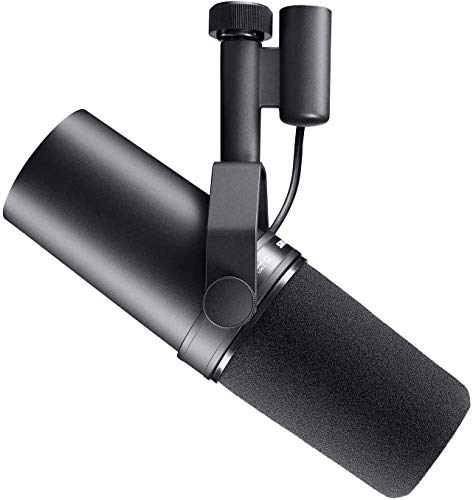
Shure SM7B anchors countless radio and podcast studios, prized for rejecting plosives and room echo without a pop filter. No digital output ships with it, so it needs an audio interface or inline preamp such as a Cloudlifter to reach usable gain. Engineers running it through a proper interface describe the low end as noticeably warmer than USB condensers.
Pros
- Internal air suspension isolates handling noise
- Flat, wide-range frequency response suits voice and music
- Detachable windscreen reduces plosives without extra pop filter
Cons
- Needs a separate audio interface and often a preamp booster
- Heavier stand or boom arm required to support its weight

Audio-Technica AT2020USB+
AT2020USB+ uses a side-address condenser capsule tuned for spoken word, closer in detail to studio condensers than typical USB mics. A built-in headphone jack and mix-blend knob let hosts monitor their voice without extra hardware. Its cardioid pattern rejects room noise better than the omnidirectional mode found on some rivals.
Pros
- Condenser detail at a fraction of studio mic cost
- Mix control blends mic and playback for live monitoring
- Includes desktop stand and cable in the box
Cons
- No XLR output for future interface upgrades
- Condenser capsule picks up more background noise than dynamic mics

Elgato Wave:3
Elgato Wave:3 combines a cardioid condenser capsule with a capacitive mute panel and proprietary Clipguard limiting that stops digital distortion during loud moments. Bundled Wave Link software mixes microphone, game, and chat audio into separate channels for OBS. Its all-metal body sits on a compact stand suited to webcam-adjacent setups.
Pros
- Clipguard limiter prevents clipping without an external compressor
- Wave Link software routes separate mic and game audio channels
- Capacitive touch panel mutes instantly without clicking noise
Cons
- Condenser capsule needs a quiet room to sound its best
- Software setup takes longer than plug-and-play dynamic mics

Blue Yeti
Blue Yeti offers four selectable polar patterns, cardioid, omnidirectional, bidirectional, and stereo, so one mic covers solo hosting and in-person interviews. Its tri-capsule condenser array and onboard gain dial keep setup simple for first-time podcasters. Solid metal housing adds weight that stabilizes the mic on a desktop stand without a boom arm.
Pros
- Four pickup patterns cover solo and multi-guest recording
- Built-in headphone jack and volume dial for live monitoring
- No software required for basic recording
Cons
- Condenser capsule picks up keyboard clatter and room echo easily
- Heavy metal body is awkward to pack for travel

Samson Q2U
Samson Q2U is a dynamic cardioid mic with combined USB and XLR outputs, recording straight to a laptop or through a field mixer. Its compact metal body and included stand clip pack into a bag more easily than condenser mics with shock mounts. Traveling hosts cite its dynamic capsule as more forgiving of noisy environments than desktop condensers.
Pros
- Compact build and included case suit frequent travel
- Dynamic capsule handles noisy rooms better than condensers
- USB and XLR outputs cover laptop and mixer setups
Cons
- USB preamp gain runs quiet compared to XLR through an interface
- Basic desktop stand feels less stable than heavier tripod mounts

FIFINE K669B
FIFINE K669B is a cardioid condenser USB mic aimed at first-time streamers and podcasters who want plug-and-play recording without an interface. Its metal body and adjustable arm-mount thread fit standard boom arms despite the low cost. Owners note the capsule performs best in a quiet, treated room, since it has no built-in noise gating.
Pros
- Low cost of entry for a metal-bodied condenser mic
- Standard mic thread fits most boom arms and stands
- Simple one-cable USB setup with no drivers needed
Cons
- No headphone jack for direct monitoring
- Condenser capsule amplifies room noise more than dynamic budget options
Side by side
| # | Model | Connector Type | Best for | Score | Price |
|---|---|---|---|---|---|
| 1 | Shure MV7 | USB-C and XLR | Best overall | 9.4 | Check price |
| 2 | Shure SM7B | XLR only (analog) | Best XLR | 9.1 | Check price |
| 3 | Audio-Technica AT2020USB+ | USB (Type-B cable) | Best value | 8.8 | Check price |
| 4 | Elgato Wave:3 | USB-C | Best for streaming | 8.6 | Check price |
| 5 | Blue Yeti | USB | Best for USB simplicity | 8.4 | Check price |
| 6 | Samson Q2U | USB and XLR | Best for travel | 8.2 | Check price |
| 7 | FIFINE K669B | USB | Best budget | 8.0 | Check price |
Before you buy
What to look for in a podcast microphone Cardioid microphones reject sound from the sides and rear, which matters most in untreated rooms with hard walls or echo. Dynamic capsules, like the ones in the SM7B and Q2U, tolerate loud environments better than condensers, though they need more gain. Connector type decides the upgrade path: USB mics record straight to a laptop, while XLR mics need an interface or mixer but scale into a full studio. Weight and mount thread matter too, since a heavier condenser like the Blue Yeti needs a sturdier stand than a compact dynamic mic.
USB vs XLR: which connection fits your setup USB microphones plug directly into a laptop and skip the need for an audio interface, suiting solo hosts recording from a home office. XLR microphones like the SM7B send an analog signal that requires a preamp, interface, or mixer, adding a step but unlocking studio-grade routing for multi-mic shows. Hybrid models such as the Shure MV7 and Samson Q2U cover both, starting on USB and moving to XLR once a host adds an interface. Pick USB for a single-guest show and XLR or hybrid once a second microphone or mixer enters the setup.
Best setup for streaming and video calls Streamers benefit from onboard mixing, since routing game audio, chat, and mic input through software like Elgato’s Wave Link avoids a hardware mixer. A cardioid condenser such as the Wave:3 or AT2020USB+ picks up clear detail for viewers without needing extra gain. Built-in mute controls, like the Wave:3’s capacitive touch panel, matter more for live audiences than for pre-recorded podcast editing. Camera-adjacent placement also favors compact mics over the bulkier Blue Yeti, which can block a webcam frame.
Budget picks and multi-mic setups for co-hosted shows A single USB condenser like the FIFINE K669B covers a solo show for a low upfront cost, though it lacks the XLR path to add microphones later. Co-hosted shows need identical microphones per host to keep tone consistent, usually two of the same USB mic or an XLR pair run through a small mixer. Dynamic mics such as the Q2U or SM7B suit shared rooms better than condensers, since they reject cross-talk between adjacent hosts. Budget upgraders often start with one USB mic and add a mixer once a second host joins.
Common questions
What is the best podcast microphone for beginners?
Audio-Technica AT2020USB+ and Blue Yeti both suit beginners, since each plugs in over USB with no interface needed. The AT2020USB+ costs less and has a tighter cardioid pattern, while the Yeti adds multiple polar patterns for interview-style recording.
Is a USB microphone good enough for podcasting?
USB microphones like the Shure MV7 and Elgato Wave:3 deliver broadcast-quality audio for most home podcast setups. XLR only becomes necessary once a show adds multiple hosts or needs a dedicated mixer.
Shure MV7 vs Shure SM7B, which should I buy?
The MV7 works over USB out of the box and adds XLR later, making it easier for a first studio. The SM7B needs an audio interface and preamp from day one but is the mic used across broadcast radio and many top podcasts.
Do I need an audio interface for a podcast microphone?
Only XLR mics like the SM7B or Q2U’s XLR mode need an interface or mixer to convert their analog signal. USB mics such as the AT2020USB+ or FIFINE K669B skip that step and record straight into a laptop.
What is the best cheap microphone for podcasting?
FIFINE K669B offers a metal-bodied cardioid condenser at the lowest cost in this comparison, with a standard mic thread that fits most boom arms. It lacks a headphone jack, so monitoring requires a separate output.
Can I use a gaming microphone like the Blue Yeti for podcasting?
Yes, the Blue Yeti’s cardioid mode works well for solo podcast recording, and its bidirectional mode suits face-to-face interviews. Its condenser capsule does pick up more room noise than a dynamic mic in an untreated space.
How many microphones do I need for a two-person podcast?
Two hosts recording together need two identical microphones to keep tone consistent between tracks. Matching dynamic mics, such as a pair of Samson Q2U units, run through a small mixer or dual-input interface work well.
Is a dynamic or condenser microphone better for podcasting?
Dynamic mics like the SM7B and Q2U reject background noise and room echo better, suiting untreated home offices. Condenser mics like the AT2020USB+ and Wave:3 capture more detail but need a quieter room to avoid picking up hums or traffic noise.
Which podcast microphone works best for a home studio without acoustic treatment?
Dynamic mics such as the SM7B or Q2U handle untreated rooms best, since their pickup pattern rejects reflections off bare walls. Condenser mics in the same room tend to sound boomy or echoey until foam panels or blankets absorb reflections.
The verdict
Shure MV7 remains the strongest all-around pick, since its USB start and XLR upgrade path fit both new and growing shows without a mic swap. Hosts who already own an audio interface and want the broadcast standard should choose the SM7B instead, given its dynamic capsule and wide frequency response for music-adjacent shows. Budget-conscious solo hosts get most of the same clarity from the AT2020USB+ at a lower entry cost.