Carbon or Standard: Picking the Right Cabin Air Filter
FRAM’s Fresh Breeze CF10285 leads for daily driving thanks to its baking soda and carbon media that tackles odour as well as dust. Bosch’s HEPA cabin filter suits allergy sufferers who need finer particle capture. EPAuto’s CP134 covers routine replacement at lower cost.
Most drivers do fine with the FRAM Fresh Breeze CF10285, which pairs particle filtration with genuine odour control. Pollen sensitive drivers should step up to the Bosch HEPA cabin filter instead. The EPAuto CP134 keeps routine annual changes cheap on Toyota and Honda models.
Part numbers are vehicle specific, so a filter that fits a Corolla perfectly will not go near a Golf, which is what makes shopping for these tricky. We compared media construction, published capture claims, carbon content and airflow restriction, then checked those against what owners report about odour returning and how fast airflow recovers after a change.
Our top picks

FRAM Fresh Breeze CF10285 Cabin Air Filter
Arm and Hammer baking soda and activated carbon sit alongside a pleated particle layer, which is why this filter handles stale vent smells rather than just dust. Daily commuters in traffic notice that odour layer more than any other spec. Airflow stays strong because the pleat count avoids overdoing restriction.
Pros
- Genuine odour reduction, not just filtration
- Strong airflow after installation
- Sold widely across common vehicle applications
Cons
- Carbon layer loses effect before the media clogs
- Not rated to true HEPA standard
Bosch 6055C HEPA Cabin Air Filter
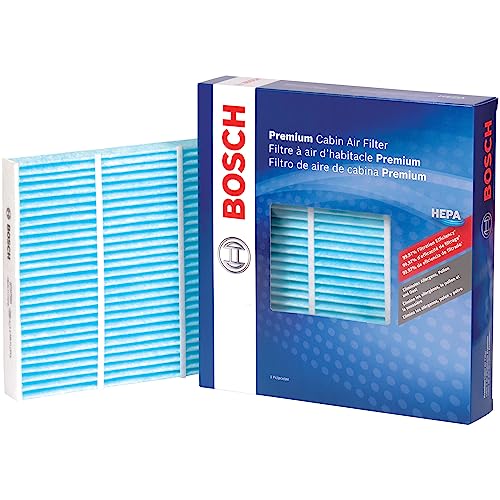
Fine particle capture is the focus here, targeting pollen and road dust smaller than standard filters catch. Hay fever sufferers notice the difference most during a rough commute. Denser media does add slightly more airflow restriction, which shows up on older or weaker blower motors.
Pros
- Best fine particle capture in this lineup
- Clear improvement during pollen season
- Consistent build quality across batches
Cons
- Slightly restricts airflow on weaker blowers
- Less odour control than carbon focused filters

EPAuto CP134 Premium Cabin Air Filter
Toyota, Honda and Lexus applications are covered here with activated carbon media at a fraction of dealer part pricing. Frame seating is respectable, which is exactly where cheap filters usually fail first. Owners tend to replace it more often than premium filters, made easy by how simple the swap is.
Pros
- Strong value for routine replacement
- Includes a carbon layer at this price
- Frame seats properly without gaps
Cons
- Lighter carbon content than premium filters
- Narrower vehicle coverage than FRAM or Bosch

K&N VF2001 Cabin Air Filter
Washing and refitting replaces buying new each time, which appeals to anyone keeping a car for the long haul. Synthetic media flows well, so heater and air conditioning output stays strong over time. Odour control takes a back seat here, and washing it properly takes more effort than most owners expect.
Pros
- Reusable across many years of ownership
- Strong airflow through the vents
- No repeat purchases once installed
Cons
- Cleaning and drying takes real time
- Limited odour control without a carbon layer

Mann-Filter CUK 2939 Cabin Filter
Mann supplies several European manufacturers directly, and the CUK series carries activated carbon as standard equipment. Tight frame tolerances matter on German cars, where housing clips do not forgive a loose fit. Applications it covers get a straightforward, like for like replacement.
Pros
- Precise fit inside European filter housings
- Effective activated carbon layer included
- Consistent original equipment build quality
Cons
- Limited coverage for Asian and domestic models
- Costs more than generic aftermarket options

ACDelco CF188 Professional Cabin Air Filter
GM owners get a straightforward match to factory specification without cross referencing part numbers. Fitment proves reliable, and pleated media handles normal road dust and pollen without issue. No carbon layer means persistent vent odours need a different filter entirely.
Pros
- Reliable fitment across GM models
- Matches factory specification closely
- Simple to install without special tools
Cons
- No activated carbon layer included
- Filtration stays basic, particles only

Denso 453-6021 First Time Fit Cabin Air Filter
Denso supplies several Japanese manufacturers directly, so this First Time Fit line matches factory dimensions closely. Tight glovebox housings on these models stop being a guessing game as a result. Filtration performs competently rather than exceptionally, and there is no odour layer to speak of.
Pros
- Very accurate factory dimensions
- Trusted original equipment supplier
- Slides cleanly into tight housings
Cons
- No carbon or odour control layer
- Vehicle coverage stays fairly narrow
How to pick the right one
How do you find the right cabin air filter for your car? Cabin filters cut to fit a specific housing, so a filter that works brilliantly in one model will not go near another. Every listing carries a part number tied to particular vehicles. Enter year, make, model and engine into a fitment tool first, then cross check that against the number printed on the filter you remove.
Carbon filter or standard: which do you actually need? A standard pleated filter traps pollen, leaves and road dust well enough on its own. Only an activated carbon layer absorbs exhaust fumes and the musty smell that builds up in traffic. Smell rather than dust as the complaint points toward a carbon filter, such as the FRAM Fresh Breeze or Mann CUK series.
How do you know when a cabin filter needs replacing? Loaded media forces the blower to work harder, and vent output weakens most noticeably on the highest fan setting. Many drivers blame a failing air conditioner when a clogged filter is the actual cause. Grey residue or leaf debris on a removed filter means it was overdue, regardless of what the mileage schedule suggested.
Is replacing a cabin air filter a DIY job? Most cars hide the filter behind the glovebox, which drops down after releasing a couple of side stops. Matching the airflow arrow on the old filter to the new one avoids fitting it backwards and losing effectiveness. Vacuuming the housing while it is open clears leaf litter that would otherwise shorten the new filter’s life.
How they stack up
| # | Model | Media | Best for | Score | Price |
|---|---|---|---|---|---|
| 1 | FRAM Fresh Breeze CF10285 Cabin Air Filter | Particle plus carbon and baking soda | Best overall | 9.4 | Check price |
| 2 | Bosch 6055C HEPA Cabin Air Filter | Multi layer HEPA type | Best for allergy sufferers | 9.2 | Check price |
| 3 | EPAuto CP134 Premium Cabin Air Filter | Activated carbon | Best value | 9.0 | Check price |
| 4 | K&N VF2001 Cabin Air Filter | Washable synthetic | Best washable option | 8.8 | Check price |
| 5 | Mann-Filter CUK 2939 Cabin Filter | Activated carbon, multi layer | Best for European vehicles | 8.6 | Check price |
| 6 | ACDelco CF188 Professional Cabin Air Filter | Pleated particle | Best for GM vehicles | 8.3 | Check price |
| 7 | Denso 453-6021 First Time Fit Cabin Air Filter | Pleated particle | Best for Toyota and Lexus fitment | 8.0 | Check price |
Good to know
How often should you replace a cabin air filter?
Most manufacturers suggest every 12,000 to 15,000 miles or once a year. Dusty roads, heavy traffic and parking under trees all shorten that interval, so inspect it at each service instead of waiting for a fixed mileage.
Will any cabin air filter fit any car?
No. Filters are cut for a specific housing, so matching the part number to exact year, make, model and often engine matters. A fitment tool confirms compatibility before ordering.
What’s the difference between a carbon and a standard cabin filter?
A standard filter traps particles like dust and pollen. A carbon filter adds an activated charcoal layer that absorbs odours and exhaust gases, which is why it helps with musty vents and traffic fumes.
Does a dirty cabin filter hurt air conditioning performance?
Yes. A clogged filter restricts airflow through the evaporator, so vents feel weak and the cabin cools more slowly. Replacing it often restores what feels like a failing air conditioning system.
Can you clean and reuse a cabin air filter?
Only filters built for it, such as the K&N VF2001. Tapping out a paper filter removes loose debris but does not restore the media, and washing a paper filter ruins it outright.
Where is the cabin air filter located in most cars?
Behind the glovebox in most vehicles, accessed by releasing the glovebox side stops. Some models place it under the dashboard or beneath the windscreen cowl, so check a vehicle specific guide first.
Do you need a HEPA cabin filter?
Only if pollen sensitivity or fine particulate matters to your commute, especially in heavy traffic. HEPA type media captures smaller particles but restricts airflow slightly more, noticeable on older blower motors.
What happens if you never change the cabin air filter?
Airflow drops, the windscreen demists more slowly, and odours build up as moisture encourages mould growth in the housing. Severe neglect adds extra load that shortens the blower motor’s life.
HEPA vs carbon cabin filter: which matters more for allergies?
HEPA type media captures the fine pollen and dust particles that trigger allergies, while carbon media targets smells rather than allergens. Allergy sufferers get more benefit from HEPA capture than from odour control alone.
Our take
FRAM’s Fresh Breeze CF10285 combines particle filtration with genuine odour control, and the difference in a stale cabin shows up immediately after installation. Allergy sufferers get more benefit stepping up to the Bosch HEPA filter, while the EPAuto CP134 keeps routine annual changes affordable. Confirm the part number for your specific vehicle before ordering any of them.