Which Calligraphy Pens Suit Beginners vs Pros?
The Pilot Parallel Pen wins on interchangeable nibs and clean broad-edge lines. Newer letterers often prefer the Manuscript MC1 set for its simpler cartridge loading. Anyone drawn to brush lettering instead should start with the Tombow Fudenosuke.
Three pens cover most beginner needs. The Pilot Parallel Pen handles broad-edge italic, the Manuscript MC1 set eases first attempts, and the Tombow Fudenosuke suits brush lettering instead.
Nib shape changes the whole technique, so no single pen fits every script. We compared nib width, ink delivery, grip comfort and how forgiving each pen felt on a shaky first stroke, then checked those findings against feedback from owners learning the same styles.
What matters most
What to look for in a first calligraphy pen Nib type matters more than brand name. Broad-edge nibs, cartridge or dip ink systems, and grip comfort each shape how a first session actually feels. Cost per nib width is worth comparing too, since a set with three widths often beats three single pens bought separately.
Broad-edge nibs versus brush tips Broad-edge nibs, like the Pilot Parallel Pen’s, create thick and thin strokes from the angle you hold the pen. Brush tips create that same contrast through pressure instead. Italic and blackletter scripts favor broad-edge tools, while modern brush lettering favors flexible tips.
How cartridge, dip and refillable systems compare Cartridge pens load in seconds and travel cleanly, useful for practice on the go. Dip pens, such as the Speedball set, need bottled ink and cleaning after each session but offer the widest nib variety per dollar. Refillable pens like the Kuretake No. 40 split the difference, trading convenience for lower ongoing cost.
What a total beginner should practice first Start with one mid-width nib rather than switching sizes constantly. Basic upstrokes and downstrokes matter more early on than full letterforms. A kit with a printed guide, like the Manuscript MC1 or Sheaffer Maxi Kit, shortens that early learning curve.
The best picks, ranked

Pilot Parallel Pen Calligraphy Set
Two parallel plates form the nib, producing crisp broad-edge strokes without the pressure control a dip pen demands. Widths of 1.5mm, 2.4mm, 3.8mm and 6.0mm cover small text through large display lettering. Cartridges snap in cleanly, so swapping ink takes seconds instead of a cleaning break.
Pros
- Multiple nib widths in one starter set
- Cartridges swap without a cleaning break
- Consistent line width even for new hands
Cons
- Broad-edge technique still needs practice
- Nibs can catch on rough paper

Manuscript MC1 Calligraphy Pen Set
Three nib sizes and six ink cartridges ship in one box, so a first-time letterer skips buying separate parts. Cushioned barrel grip reduces hand fatigue during longer sessions. An included guide walks through basic strokes before tackling full alphabets.
Pros
- Complete beginner kit in one box
- Cushioned grip eases hand fatigue
- Included guide covers basic strokes
Cons
- Nib widths run smaller than the Parallel Pen
- Cartridges are proprietary to the brand

Speedball Calligraphy Pen Set
A traditional dip pen holder ships with several steel nibs and a small ink bottle, covering multiple widths for one low outlay. Steel nibs flex under pressure, adding thick and thin variation that cartridge pens cannot match. Cleanup after every session is required, unlike sealed cartridge systems.
Pros
- Lowest cost way to try several nib widths
- Flexible steel nibs add line variation
- Bottled ink works with other dip pens too
Cons
- Dip pens need cleaning after every session
- Steeper learning curve than cartridge pens
Tombow Fudenosuke Brush Pen Set
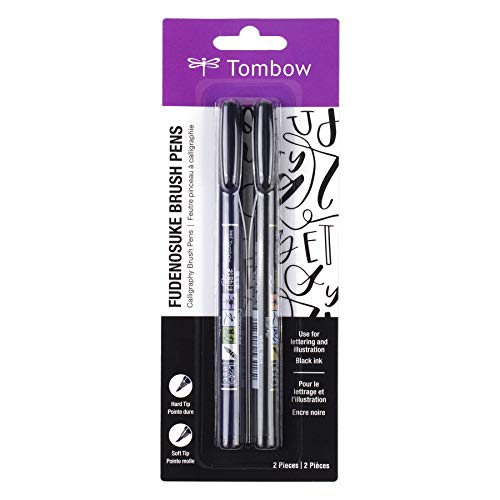
A firm tip pen and a soft tip pen ship together, letting a letterer compare pressure control side by side. Pigment ink resists water once dry, so highlighters and washes will not smear finished work. The felt tip mimics a small brush without the loading and reshaping a real one needs.
Pros
- Firm and soft tips suit different pressure styles
- Pigment ink resists water once dry
- No reshaping needed like a real brush
Cons
- Pens are not refillable once dry
- Tip wears down faster with daily practice

Zebra Zensations Brush Pen
A flexible brush tip delivers real thick-to-thin contrast at a lower cost than most brush pen sets. Water based ink stays smooth on standard printer or notebook paper without heavy bleed-through. Single pen packaging keeps the entry cost low for anyone testing brush lettering first.
Pros
- Lowest entry cost for brush lettering
- Works fine on ordinary notebook paper
- Flexible tip gives real contrast quickly
Cons
- Ink can bleed through thinner paper
- Tip softens faster under heavy use

Kuretake No. 40 Fountain Brush Pen
A refillable cartridge sits inside a standard fountain pen body, so this travels better than bottled ink setups. Its synthetic brush tip holds a point through repeated strokes, unlike cheaper felt alternatives. Cartridges are widely available, so running dry mid-project rarely stalls the work for long.
Pros
- Refillable cartridges cut long-term cost
- Synthetic tip holds its shape well
- Fountain pen body travels cleanly in a bag
Cons
- Tip is stiffer than a natural hair brush
- Cartridges add an ongoing supply to track

Sheaffer Calligraphy Maxi Kit
Three nib widths pair with simple cartridge loading, aimed at anyone who wants results without a dip pen’s mess. A converter is included for owners who prefer bottled ink over cartridges long term. Practice sheets ship with the kit, useful for early letterform drills.
Pros
- Converter allows bottled ink later on
- Practice sheets included for early strokes
- Cartridge loading avoids dip pen mess
Cons
- Narrower widths than the Pilot Parallel Pen
- Nib swaps feel fiddlier than the Parallel system
How they stack up
| # | Model | Nib type | Best for | Score | Price |
|---|---|---|---|---|---|
| 1 | Pilot Parallel Pen Calligraphy Set | Parallel plate, broad edge | Best overall | 9.3 | Check price |
| 2 | Manuscript MC1 Calligraphy Pen Set | Italic broad edge | Best for beginners | 9.0 | Check price |
| 3 | Speedball Calligraphy Pen Set | Steel dip nibs, multiple widths | Best value | 8.8 | Check price |
| 4 | Tombow Fudenosuke Brush Pen Set | Felt brush tip, firm and soft | Best for brush lettering | 8.6 | Check price |
| 5 | Zebra Zensations Brush Pen | Flexible brush tip | Best budget | 8.3 | Check price |
| 6 | Kuretake No. 40 Fountain Brush Pen | Synthetic brush tip | Best for portability | 8.1 | Check price |
| 7 | Sheaffer Calligraphy Maxi Kit | Italic broad edge, interchangeable | Best for cartridge convenience | 8.0 | Check price |
Common questions
What is the best calligraphy pen for a beginner?
The Manuscript MC1 or Pilot Parallel Pen both suit new letterers, since each ships with multiple nib sizes and clear cartridge loading.
Is brush lettering the same thing as calligraphy?
Brush lettering is one style within calligraphy, built on pressure-based line variation. Traditional calligraphy more often means broad-edge scripts like italic or blackletter.
Do calligraphy pens need special ink?
Cartridge and dip pens need ink matched to that system. Brush pens like the Tombow Fudenosuke ship pre-filled and are not designed for refilling.
Can calligraphy pens be used on regular printer paper?
Smoother printer paper works for light practice, though ink may bleed on thinner sheets. Heavier, smoother paper gives cleaner results for dip and cartridge pens alike.
Which nib width is easiest for a first-timer?
A mid-range width, around 2mm to 2.4mm, is forgiving enough to show clear results without being too fine to control.
How do dip pens differ from cartridge pens?
Dip pens use bottled ink and need cleaning after each session but offer more nib variety. Cartridge pens load instantly and travel better for practice away from a desk.
Are brush pens easier to learn than broad-edge pens?
Brush pens are often easier for absolute beginners, since pressure control feels more intuitive than the angle discipline broad-edge nibs demand.
Do calligraphy pen sets come with instructions?
Some do. The Manuscript MC1 and Sheaffer Maxi Kit both include practice guides, while dip pen sets like Speedball usually leave technique to outside tutorials.
What is the best pen for modern brush lettering specifically?
The Tombow Fudenosuke is built for it, pairing a firm and soft tip so a letterer can compare pressure control in one set.
Is a dip pen worth the extra cleanup for a beginner?
It is if budget matters most, since a dip pen set covers more nib widths per dollar than any cartridge alternative here.
Our pick
Most beginners land well with the Pilot Parallel Pen, since its interchangeable nibs cover several scripts without buying separate tools. Anyone starting from zero may prefer the simpler cartridge loading of the Manuscript MC1. For brush lettering specifically, the Tombow Fudenosuke offers the clearest path from first stroke to confident practice.