Painting Supplies Worth Buying Before Your Next Canvas
Liquitex BASICS is our top pick for acrylic painters who want real pigment without artist-grade pricing. The Winsor and Newton Cotman pocket box leads for watercolour beginners, and Princeton Velvetouch brushes are the upgrade that improves results across every medium.
If you are assembling a painting kit, Liquitex BASICS covers acrylics properly, the Winsor and Newton Cotman pocket box is the best watercolour starting point, and Princeton Velvetouch brushes improve everything you paint regardless of medium.
Painting supplies are tricky because the difference between student and artist grade is invisible in a photograph and obvious the moment you mix a colour: low pigment paints turn muddy, cheap paper buckles and pills, and stiff synthetic brushes lose their point after a week. We compared pigment information, lightfastness ratings, paper weights and brush filament construction, along with what owners report after months of use, then ranked by which purchases most improve the finished work.
How to choose
Spend on brushes and surfaces before upgrading paint Beginners usually assume better paint is the upgrade that matters, but a good brush and a surface that does not buckle change results more visibly. A synthetic brush that holds its point lets you make the marks you intend. Paper heavy enough for a wash lets colour behave predictably. Student-grade paint on good paper with a good brush produces far better work than professional paint on copier paper with a stiff bristle brush.
Understand what student grade actually means Student paints contain less pigment and more filler, and often substitute cheaper pigments labelled as hues. That means weaker colour, more muddiness when mixing and slightly lower lightfastness. For learning, practice and studies, none of this matters much and the cost savings let you paint more. For work you intend to sell or hang for decades, artist-grade pigment and lightfastness ratings become worth the difference.
Paper weight and texture decide watercolour success Anything under about 200 grams per square metre will cockle when wet, which ruins washes and frustrates beginners into thinking they lack skill. Cold press is the general-purpose texture, hot press is smooth for detail and ink work, and rough suits loose expressive painting. Cotton paper blends and lifts far better than wood pulp, but wood pulp is entirely adequate for practice and costs a fraction as much.
Cleaning routine determines how long a kit lasts Acrylic is the destroyer of brushes because it dries permanently in the ferrule where you cannot see it. Rinse constantly while working, never leave a brush standing in water, and clean thoroughly with a proper cleaner rather than only rinsing. Store brushes bristle-up or flat, never point-down in a jar. A set of mid-range brushes maintained properly outlasts several sets of expensive brushes treated carelessly.
The shortlist, ranked
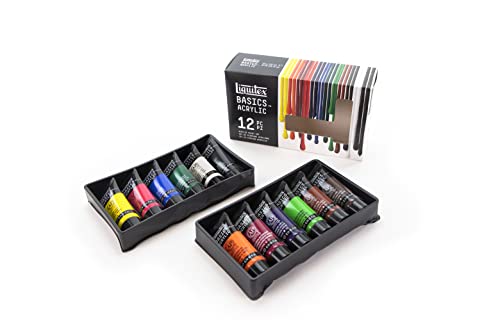
Liquitex BASICS Acrylic Paint Set
BASICS carries considerably more pigment than the bargain acrylic sets that fill the same shelf, so colours stay clean when mixed rather than sliding toward grey. The consistency holds a brush mark, which matters for texture work. It is the set most art tutors point beginners toward, and it remains useful long after the beginner stage.
Pros
- Mixes cleanly without going muddy
- Consistency suits both brush and palette knife
- Widely available for restocking single colours
Cons
- Not as pigmented as professional lines
- Dries faster than some painters prefer

Winsor and Newton Cotman Watercolour Sketchers Pocket Box
A compact tin of half pans with a built-in mixing lid and a small brush, which makes it the easiest way into watercolour without assembling components. Cotman is Winsor and Newton’s student range, so pigment strength sits below their professional line but well above craft-store paint. It fits in a jacket pocket, which is why it gets used.
Pros
- Genuinely pocketable for outdoor sketching
- Mixing area built into the lid
- Reliable colour behaviour for a student range
Cons
- Included brush is basic
- Some colours are hues rather than single pigments
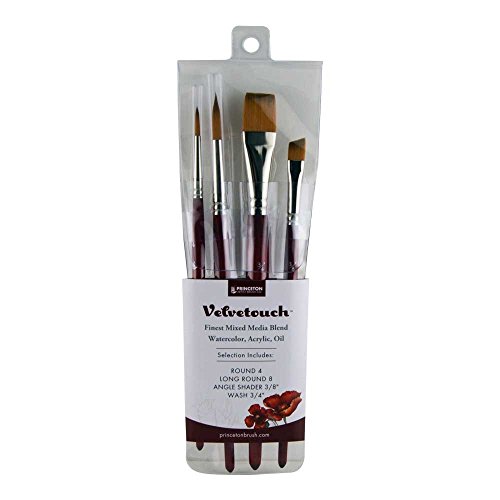
Princeton Velvetouch Series 3950 Brush Set
Velvetouch blends synthetic filaments to give both spring and colour holding capacity, which is why the same brushes work for acrylic, watercolour and oil. They keep a point far longer than budget synthetics, and the comfortable handles reduce hand fatigue on long sessions. This is the single upgrade that most improves a beginner’s results.
Pros
- Holds a point through months of use
- One set covers several mediums
- Comfortable for long painting sessions
Cons
- Costs more than beginner brush bundles
- Needs proper cleaning to keep the shape

Arteza Acrylic Paint Set
Arteza’s appeal is breadth. You get a wide spread of colours for less than a small set of premium paint, which suits beginners still learning what they reach for. Pigment strength is below Liquitex, so expect to layer more for full coverage. It is a good exploratory set rather than a final answer.
Pros
- Very wide colour selection for the price
- Good for experimenting without waste anxiety
- Squeeze tubes are easy to control
Cons
- Lower pigment load needs more layers
- Colour consistency varies between batches
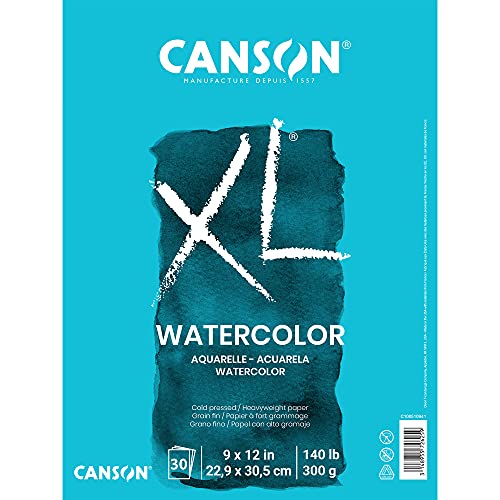
Canson XL Series Watercolor Pad
Heavy enough to take a wet wash without turning into a wave, which is the single most common frustration for new watercolourists using sketchbook paper. The cold press texture holds pigment well and lifts reasonably. It is not cotton paper, so it will not match professional sheets for blending, but it is the right practice surface.
Pros
- Takes wet washes without severe buckling
- Good texture for pigment settling
- Affordable enough for daily practice
Cons
- Not cotton, so lifting is limited
- Glue binding needs taping for very wet work

Strathmore 400 Series Mixed Media Pad
A heavyweight surface that handles pencil, ink, light watercolour and acrylic on the same page, which suits sketchbook painters who mix media in one piece. The vellum surface has enough tooth for dry media without being rough under a brush. Very wet techniques still perform better on dedicated watercolour paper.
Pros
- One pad for several media
- Tooth suits both dry and wet work
- Sturdy enough for acrylic layers
Cons
- Not ideal for heavy watercolour washes
- Fewer sheets than cheaper pads

General Pencil The Masters Brush Cleaner and Preserver
A solid cake of cleaner that lifts dried paint and reconditions filaments, which is the difference between brushes lasting months and lasting years. Owners report it recovers brushes they had written off, particularly acrylic brushes with paint dried into the ferrule. It is cheap and lasts a very long time.
Pros
- Recovers brushes with dried paint
- Reconditions filaments back to shape
- One cake lasts a very long time
Cons
- Slower than solvent cleaning for oils
- Requires proper rinsing afterwards
Side by side
| # | Model | Medium | Best for | Score | Price |
|---|---|---|---|---|---|
| 1 | Liquitex BASICS Acrylic Paint Set | Heavy body acrylic | Best overall | 9.4 | Check price |
| 2 | Winsor and Newton Cotman Watercolour Sketchers Pocket Box | Watercolour half pans | Best for watercolour beginners | 9.2 | Check price |
| 3 | Princeton Velvetouch Series 3950 Brush Set | Multi-filament synthetic blend | Best brushes | 9.0 | Check price |
| 4 | Arteza Acrylic Paint Set | Acrylic paint | Best value | 8.8 | Check price |
| 5 | Canson XL Series Watercolor Pad | Heavy student watercolour stock | Best watercolour paper | 8.6 | Check price |
| 6 | Strathmore 400 Series Mixed Media Pad | Heavyweight mixed media stock | Best all-purpose surface | 8.3 | Check price |
| 7 | General Pencil The Masters Brush Cleaner and Preserver | Solid brush cleaning cake | Best brush care | 8.0 | Check price |
Frequently asked questions
What painting supplies do I need to start?
A small set of paints, three or four brushes in different shapes and sizes, an appropriate surface, a palette and two water containers. That is genuinely enough. Add mediums, easels and specialist tools once you know which direction your painting is going.
Is student-grade paint good enough for beginners?
Yes. Student paint has less pigment but behaves close enough to artist grade for learning, and the lower cost encourages the volume of practice that actually builds skill. Upgrade once you notice specific limitations rather than on principle.
Which brushes should a beginner buy?
A medium round, a medium flat and a small detail brush cover most needs. Synthetic filaments are the sensible choice because they suit acrylic and watercolour, clean easily and cost less than natural hair.
Why does my watercolour paper wrinkle?
The paper is too light for the amount of water you are using. Move to a heavier weight, or stretch and tape the paper to a board before painting. Blocks glued on all four edges also solve this.
How do I clean acrylic out of brushes?
Rinse immediately and often while working, because acrylic dries fast and hardens inside the ferrule. For dried paint, a solid brush cleaner worked into the filaments recovers most brushes. Never let brushes sit in water resting on their points.
Can I use the same brushes for acrylic and watercolour?
Yes, with modern synthetic blends. Watercolour benefits from softer brushes that hold more water, and acrylic benefits from more spring, so painters who do both a lot eventually buy separate sets. To begin with, one good set covers both.
What is the difference between cold press and hot press paper?
Cold press has a textured surface that suits general watercolour work and holds pigment in the tooth. Hot press is smooth, better for fine detail, ink and botanical work, but washes dry less evenly on it.
Do I need a palette or can I use a plate?
A ceramic plate works perfectly well for both acrylic and watercolour, and many painters never buy anything else. Stay-wet palettes are worth considering for acrylic if you find paint drying on you before you can use it.
Our pick
Liquitex BASICS is the acrylic set to buy first because clean mixing matters more than colour count, and the Winsor and Newton Cotman box is the equivalent for watercolour. If you only upgrade one thing, make it the Princeton Velvetouch brushes, since a brush that holds its point improves every painting regardless of what paint is on it. Add a solid brush cleaner and your kit will outlast several years of practice.