Vlogging Cameras Built for Talking to the Lens
The Sony ZV-1 II is the best all-round vlogging camera thanks to its wide lens, reliable face tracking, and clean sound, while the Canon PowerShot V10 is the value pick for creators who want a simple point-and-talk device. The DJI Pocket 3 wins for gimbal-smooth footage on the go.
Short on time? The Sony ZV-1 II is the strongest overall vlogging camera, the Canon PowerShot V10 is the easiest value pick, and the DJI Pocket 3 is the choice for buttery stabilized footage without a rig.
Vlogging cameras are tricky because the spec sheet rarely tells you what matters on camera. A device can shoot 4K yet hunt for focus, clip your audio, or wobble as you walk. We prioritized reliable face-tracking autofocus, a lens wide enough for arm’s-length framing, in-body or gimbal stabilization, and usable sound over raw resolution.
Before you buy
Autofocus is the feature that makes or breaks it Nothing ruins a vlog faster than a lens that drifts off your face mid-sentence. Reliable, sticky face and eye tracking matters more than resolution, which is why Sony’s bodies earn their reputation. If you shoot alone, prioritize autofocus you can trust over any other spec.
Lens width and framing at arm’s length Holding a camera at arm’s length needs a genuinely wide view or you end up cropped to a forehead. A lens around 18 to 24mm equivalent gives room for your face and background, while pocket cams and action cams go wider still. Zoom is a bonus, but width is the must-have.
Stabilization for walking and moving shots If you vlog while walking, stabilization decides whether footage looks pro or seasick. A mechanical gimbal like the Pocket 3 is smoothest, action cams lean on strong electronic correction, and many mirrorless bodies rely on lens or digital help. Match the system to how much you move.
Audio and connections Your built-in mic is fine for calm indoor talking, but wind and rooms quickly muddy it. A 3.5mm mic input or good on-board directional mic lets you upgrade sound, which viewers notice more than a small bump in video quality. Check for a headphone or mic port if audio is central to your channel.
The top picks, ranked

Sony ZV-1 II
The ZV-1 II pairs a wider 18 to 50mm zoom with Sony’s dependable real-time face and eye tracking, so you stay sharp at arm’s length. A directional mic and flip-out screen make it a self-contained talking-head machine.
Pros
- Wide lens frames you and the scene
- Rock-solid face and eye tracking
- Built-in directional mic sounds clean
Cons
- No in-body stabilization for walking
- 1 inch sensor trails larger bodies in low light

Canon PowerShot V10
The PowerShot V10 is a pocket vlogging camera with a built-in kickstand, front screen, and stereo mics, made to grab and talk. It keeps things simple and affordable for creators who do not want a full camera setup.
Pros
- Ultra portable grab-and-go body
- Built-in stand for desk shots
- Front screen for easy framing
Cons
- Fixed wide lens with no zoom
- Limited manual control
DJI Pocket 3
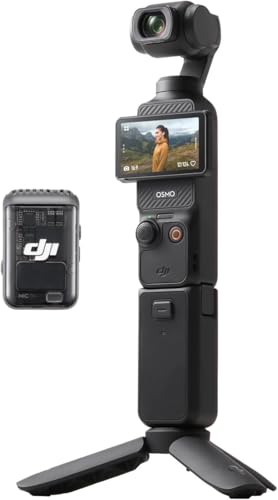
The Pocket 3 puts a 1 inch sensor on a mechanical gimbal, so walking footage stays glassy smooth without editing tricks. Its rotating screen and active tracking make solo vlogging on the move effortless.
Pros
- Gimbal delivers ultra-smooth walking shots
- Tiny and pocketable
- Active tracking keeps you centered
Cons
- Small form limits handling controls
- Battery life is modest for long shoots
Sony ZV-E10
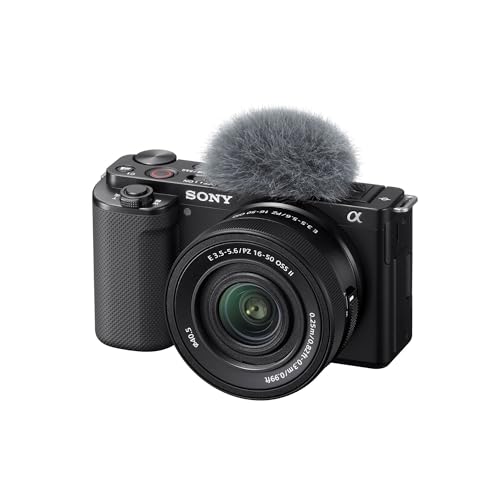
The ZV-E10 brings a larger APS-C sensor and a lens mount, so you can widen out or blur backgrounds as your channel grows. It keeps Sony’s vlogging features like product showcase and background defocus buttons.
Pros
- Bigger sensor for cleaner low light
- Swap lenses as needs change
- Handy vlogging shortcut buttons
Cons
- No in-body stabilization
- Rolling shutter on fast pans

Canon PowerShot G7 X Mark III
The G7 X Mark III is a long-time vlogger favorite with a bright zoom lens, flip-up screen, and a mic input rare at this size. It slips in a pocket while still offering real creative control.
Pros
- Versatile zoom range in a pocket body
- Rare mic input for better sound
- Bright lens for indoor talking heads
Cons
- Flip-up screen blocked by a hot-shoe mic
- Autofocus trails the Sony bodies

Panasonic Lumix G100
The Lumix G100 builds in a directional mic system that can track where your face is to focus the sound on your voice. Paired with a Micro Four Thirds mount, it is a tidy talking-head kit for creators who care about clarity.
Pros
- Smart mic focuses on your voice
- Interchangeable lens flexibility
- Fully articulating screen
Cons
- Contrast autofocus can hunt
- Cropped 4K narrows the field of view

GoPro Hero 12 Black
The Hero 12 Black is a waterproof, ultra-stabilized action cam that doubles as a rugged vlogging camera for active creators. Its wide field and horizon-lock keep hands-free footage steady in rough conditions.
Pros
- Waterproof and shockproof build
- Excellent electronic stabilization
- Ultra-wide for close self-framing
Cons
- Small sensor struggles in low light
- Front screen is compact
Side by side
| # | Model | Sensor | Best for | Score | Price |
|---|---|---|---|---|---|
| 1 | Sony ZV-1 II | 1 inch | Best overall | 9.4 | Check price |
| 2 | Canon PowerShot V10 | 1 inch | Best value | 8.9 | Check price |
| 3 | DJI Pocket 3 | 1 inch | Best for stabilization | 9.2 | Check price |
| 4 | Sony ZV-E10 | APS-C | Best for interchangeable lenses | 9.0 | Check price |
| 5 | Canon PowerShot G7 X Mark III | 1 inch | Best compact zoom | 8.8 | Check price |
| 6 | Panasonic Lumix G100 | Micro Four Thirds | Best for audio | 8.6 | Check price |
| 7 | GoPro Hero 12 Black | Action camera | Best for action vlogs | 8.7 | Check price |
Common questions
What is the most important feature in a vlogging camera?
Reliable face and eye autofocus. If the camera cannot keep your face sharp while you move and talk, no other spec saves the footage.
Do I need a flip screen?
For solo vlogging, yes. A front-facing or fully articulating screen lets you frame yourself and confirm you are in focus before recording.
Is a 1 inch sensor good enough?
For most vlogging, yes. A 1 inch sensor balances quality and pocketability well. Step up to APS-C or Micro Four Thirds if you want better low light and background blur.
Which camera is best for walking shots?
The DJI Pocket 3 with its mechanical gimbal gives the smoothest walking footage, and the GoPro Hero 12 is excellent for rugged, active movement.
Can I record good audio without an extra mic?
Cameras like the Sony ZV-1 II and Panasonic G100 have capable directional mics for indoor talking. For noisy or outdoor shoots, add an external mic through a mic input.
Do I need 4K?
It helps for future-proofing and cropping, but clean 1080p with reliable focus often looks better than shaky 4K. Prioritize focus and stabilization first.
What about interchangeable lens cameras?
Bodies like the Sony ZV-E10 and Panasonic G100 let you swap lenses for wider shots or more blur, which is ideal if your channel will grow in ambition.
Which is the best value pick?
The Canon PowerShot V10 offers a genuine vlogging setup with a front screen and stand at a low price, making it the easiest affordable entry point.
Our take
The Sony ZV-1 II is the vlogging camera we would put in most creators’ hands for its wide lens, trustworthy autofocus, and clean sound. Choose the Canon PowerShot V10 if you want a simple, affordable grab-and-talk device, or the DJI Pocket 3 when smooth walking footage is your top priority.
