Shotgun or Lavalier? Camera Microphones Compared
Most shooters get the best mix of directional pickup and runtime from the Rode VideoMic Pro Plus. Budget vloggers do well with the Rode VideoMicro II. Interviewers and walk-and-talk shooters should skip the shotgun and go wireless with the DJI Mic 2.
Onboard mics sit inches from the lens and feet from a subject’s mouth, so they catch handling noise, wind, and room echo instead of clean dialogue.
Picking between a hotshoe shotgun and a wireless lavalier kit gets confusing fast. We compared polar patterns, output connectors, battery runtime, and owner feedback on real-world noise rejection to rank the seven below.
What to look for
What to look for in a camera microphone Polar pattern decides how much side and rear noise gets into a take, and cardioid or supercardioid patterns reject the most. Connector matters too, since most mirrorless cameras take a 3.5mm TRS input while phones often need a TRRS cable. Battery type is the third factor, because plug-in-powered mics never run flat mid-shoot.
Shotgun mounts vs wireless lavalier kits A shotgun bolts to the hotshoe and needs no pairing, which suits a solo shooter working close to the camera. Wireless lavaliers clip to a subject’s clothing and stay near the mouth no matter how far the camera moves. Interviews and walk-and-talk vlogs favor wireless, while single-subject talking-head videos work fine with a shotgun.
Best options for outdoor and windy shoots Wind ruins outdoor audio faster than any other factor. A furry deadcat windshield cuts rumble far better than the foam cover most mics include in the box. Mics with a built-in low-cut filter, like the Movo VXR10 Pro, cut additional rumble from gusts and passing traffic.
Which mic suits long, all-day shoots Battery life decides the outcome on multi-hour shoots like weddings or documentaries. A camera-powered mic such as the Rode VideoMicro II never runs flat since it draws current through the cable. Wireless systems need a charging case or spare batteries once a shoot runs past six hours.
The top picks, ranked

Rode VideoMic Pro Plus
A rechargeable lithium battery keeps this shotgun running for close to 100 hours between charges. Its supercardioid capsule rejects noise from the sides, so crew chatter and passing traffic stay out of the take. It mounts to any standard hotshoe and outputs through a 3.5mm TRS cable.
Pros
- Runs close to 100 hours before the battery needs a charge
- Automatic safety channel stops audio from clipping
- Rycote shockmount cuts handling noise at the mount point
Cons
- Larger footprint than compact mics on small mirrorless bodies
- No wireless transmission built in

DJI Mic 2 (2-Transmitter Kit)
Two clip-on transmitters pair with a single receiver, covering two-person dialogue without a boom operator. Each transmitter stores 32GB of backup audio internally, so a dropped wireless link never costs the take. The receiver mounts to a standard hotshoe.
Pros
- Covers two speakers at once without a second boom operator
- Internal recording backs up audio if the wireless link drops
- Clips are small enough to hide under a collar or shirt
Cons
- Costs more than a single shotgun mic setup
- Charging case is another item to pack and track

Rode VideoMicro II
This shotgun draws power straight from the camera through its cable, so there is no battery to charge or forget. A furry windshield ships in the box for outdoor walk-and-talk shots. At 1.2 ounces, it barely adds weight to a gimbal or drone rig.
Pros
- No battery to charge or forget before a shoot
- Light enough for gimbal and drone mounts
- Ships with both smartphone and camera cables
Cons
- Picks up more room echo than larger shotgun mics
- Fixed cardioid pattern rejects less side noise than supercardioid designs
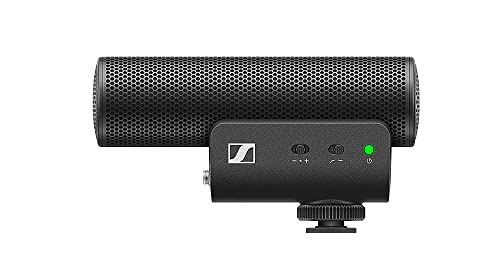
Sennheiser MKE 400
A three-stage gain switch lets shooters adjust levels between takes without opening a laptop. Metal reinforcement in the housing survives the knocks of event and documentary work. Rycote Lyre suspension isolates the capsule from vibration coming through the camera body.
Pros
- AAA battery is easy to find and replace on location
- Metal housing holds up to documentary and event use
- Onboard gain switch speeds up on-set adjustments
Cons
- No headphone monitoring jack on the mic itself
- Included foam windscreen alone does little against real wind

Comica CVM-VM10 II
Output ships preset to a usable level, so new shooters skip learning gain staging on day one. A single AAA battery powers the mic, and both foam and furry windshields come in the box. The metal body feels sturdier than the price tag suggests.
Pros
- Low cost of entry for someone buying a first shotgun mic
- Includes two windshield types instead of just one
- Works right away with no app or pairing step
Cons
- No adjustable gain control on the unit itself
- Battery compartment feels less durable than pricier mics

Movo VXR10 Pro
A built-in shockmount replaces the separate accessory most budget shotguns require, cutting handling noise on handheld DSLR rigs. A switchable low-cut filter tames traffic rumble and HVAC hum. A single 9V battery powers extended shoots.
Pros
- Built-in shockmount removes the need for a separate mount
- Switchable low-cut filter helps in noisy rooms or outdoors
- Priced for DSLR and mirrorless hybrid shooters on a budget
Cons
- 9V battery is bulkier to carry than AAA cells
- Windshield is sold separately from the base kit

Saramonic Blink 500 Pro B2
Two transmitters and a compact receiver cover two speakers for less than flagship wireless kits cost. A small OLED screen on the receiver shows battery level and channel status at a glance. Clips attach to a collar, lapel, or strap without extra hardware.
Pros
- Two-person wireless coverage at a lower price point
- OLED screen makes battery checks quick mid-shoot
- Clips fit collars, lapels, and straps without adapters
Cons
- Shorter transmission range than premium wireless systems
- No internal backup recording if the signal drops
How they stack up
| # | Model | Polar pattern | Best for | Score | Price |
|---|---|---|---|---|---|
| 1 | Rode VideoMic Pro Plus | Supercardioid | Best overall | 9.4 | Check price |
| 2 | DJI Mic 2 (2-Transmitter Kit) | Up to 820 feet | Best for interviews | 9.2 | Check price |
| 3 | Rode VideoMicro II | Cardioid | Best budget | 8.7 | Check price |
| 4 | Sennheiser MKE 400 | Supercardioid | Best for run-and-gun video | 8.9 | Check price |
| 5 | Comica CVM-VM10 II | Supercardioid | Best for beginners | 8.2 | Check price |
| 6 | Movo VXR10 Pro | Supercardioid | Best for DSLR shooters on a budget | 8.0 | Check price |
| 7 | Saramonic Blink 500 Pro B2 | Up to 328 feet | Best value wireless | 8.4 | Check price |
Good to know
What is the best camera microphone for beginners?
The Comica CVM-VM10 II and Rode VideoMicro II both mount without gain adjustment, which suits a first-time buyer.
Do camera microphones need batteries?
Some do and some don’t. Plug-in-powered mics like the VideoMicro II draw power from the camera, while shotguns like the Sennheiser MKE 400 run on a AAA cell.
Can a camera microphone work with a phone too?
Many shotgun mics ship with a TRRS cable for phones alongside the standard TRS cable for cameras, so check the included accessories before buying.
Shotgun mic vs wireless lavalier, which fits better?
A shotgun suits single-subject, close-range video, while a wireless lavalier suits interviews, moving subjects, or two-person dialogue.
Is a supercardioid mic better than cardioid for video?
Supercardioid rejects more side noise, which helps in busy environments, though cardioid still performs fine in a quiet indoor room.
How do you cut wind noise on a camera mic?
Fit a furry windshield over the standard foam cover, and switch on a low-cut filter if the mic includes one.
What connector do most camera microphones use?
Most mirrorless and DSLR cameras take a 3.5mm TRS mic input, though some compact mics include both TRS and TRRS cables.
Are wireless camera microphones worth it for a solo creator?
A creator filming from a fixed desk setup gains less from wireless than a moving vlogger or interviewer would.
Which mic has the longest wireless range?
The DJI Mic 2 reaches up to 820 feet, well past the 328 feet the Saramonic Blink 500 Pro B2 covers.
Final word
Solo shooters get the best mix of directional pickup and runtime from the Rode VideoMic Pro Plus. Anyone recording interviews or multi-person dialogue should reach for the DJI Mic 2 instead, since wireless clips stay near each speaker no matter where the camera sits.