How to Choose a Camera Tripod That Won’t Wobble
Manfrotto Befree Advanced Travel Tripod balances a compact travel size with genuine stability for most photographers. Peak Design Travel Tripod packs down smaller than anything else here for backpackers. K&F Concept SA254M1 covers the budget end with a genuinely usable ball head.
Manfrotto Befree Advanced suits the widest range of shooters, folding small for travel while still holding a full frame body steady. Peak Design Travel Tripod folds tighter than anything else in this lineup. Budget shoppers get a genuinely usable ball head from the K&F Concept SA254M1.
Maximum height gets quoted with the center column fully raised, which is a tripod’s least stable configuration. We compared folded lengths, leg section counts, lock mechanisms, head types and materials. Owner reports on vibration in wind and long-term lock wear also shaped this ranking.
What we recommend

Manfrotto Befree Advanced Travel Tripod
Folded length runs about forty centimeters, yet the legs extend high enough for standing shots without raising the center column. A separate friction dial on the ball head allows dialing in resistance for a heavy lens instead of fighting one lock. Most people can carry this daily and still trust it for a long exposure.
Pros
- Genuinely stable for its folded size
- Separate friction control on the ball head
- Fast M-lock legs deploy in seconds
Cons
- Aluminum version adds noticeable weight
- Center column limits very low angle shots
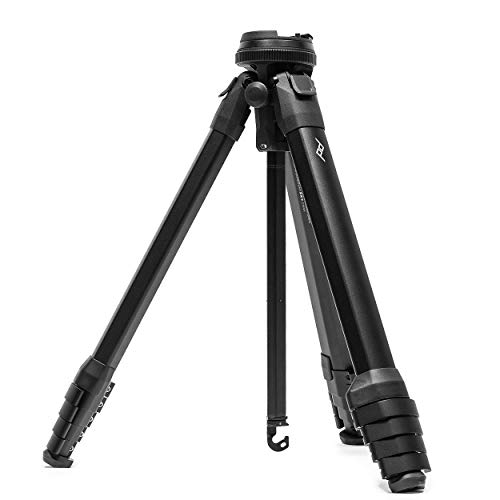
Peak Design Travel Tripod (Aluminum)
Three legs nest around the center column with almost no wasted air, giving a folded diameter closer to a water bottle than a tripod. A single ring lock operates the integrated ball head, paired with a magnetic quick release plate. Owners report the packed size is what actually gets it taken on trips.
Pros
- Exceptionally compact once folded down
- Single ring lock speeds up head adjustment
- Magnetic plate mounts a camera instantly
Cons
- Head cannot be swapped for another model
- Narrow legs flex under heavy telephoto lenses

Vanguard Alta Pro 2+ 263AB
A center column pivots through a wide arc and locks horizontally, turning overhead and ground level shots into a quick adjustment instead of a wrestling match. Leg angles set independently across three positions. Bulk increases over a travel tripod, but that flexibility earns its keep for product, macro and studio work.
Pros
- Highly flexible column positioning options
- Three independent leg angle settings
- Stays solid at full extended height
Cons
- Too bulky to pack for travel
- Heavier than travel-focused rivals

Benro Mach3 TMA28A
Wide diameter aluminum tubes and dual action twist locks seal against grit, useful on a beach or riverbank. Removing the center column lets the legs splay flat to the ground. Based on specifications, this ranks among the more rigid tripods here at full extension in wind.
Pros
- Very rigid when fully extended
- Sealed twist locks resist sand intrusion
- Removable column enables ground level shots
Cons
- Head sold separately in some kit versions
- Heavier to carry on long hikes

JOBY GorillaPod 5K Kit
Segmented legs wrap around railings, branches and posts, reaching camera positions no conventional tripod can. A 5 kilogram rating comfortably takes a mirrorless body with a mid range zoom. Most owners treat it as a supplement to a full tripod, not a replacement, and it tends to live permanently in the bag.
Pros
- Mounts in places tripods physically cannot
- Light enough to carry on every trip
- Solid ball head for this product class
Cons
- Low working height on flat ground
- Joints loosen after years of heavy use

SIRUI AM-284 Carbon Fiber Tripod
Eight layer carbon fiber tubes cut weight while damping vibration better than aluminum, which shows up as sharper long exposures on breezy days. Legs invert for compact folding, and the column detaches for low shots. Hikers who want real support without resenting the climb are the intended buyer.
Pros
- Excellent stiffness relative to its weight
- Damps vibration noticeably better than aluminum
- High load rating for the weight class
Cons
- Head usually sold as a separate purchase
- Carbon construction costs more than aluminum

K&F Concept SA254M1 Tripod
An entry-level package includes a ball head with a separate pan lock, twist lock legs and one leg that detaches into a monopod. Rigidity does not match the premium options here, and the head creeps slightly under heavier lenses. A lightweight mirrorless setup suits this tripod’s actual capability.
Pros
- Converts to a monopod when needed
- Complete kit ships with a carry bag
- Lightest option in this price bracket
Cons
- Head creeps under heavier lens weight
- Less rigid at full leg extension
The lineup, side by side
| # | Model | Folded length | Best for | Score | Price |
|---|---|---|---|---|---|
| 1 | Manfrotto Befree Advanced Travel Tripod | About 40 cm | Best overall | 9.4 | Check price |
| 2 | Peak Design Travel Tripod (Aluminum) | About 39 cm | Best value | 9.2 | Check price |
| 3 | Vanguard Alta Pro 2+ 263AB | About 71 cm | Best for macro and low angles | 9.0 | Check price |
| 4 | Benro Mach3 TMA28A | About 61 cm | Best for landscapes | 8.8 | Check price |
| 5 | JOBY GorillaPod 5K Kit | 5 kg | Best flexible support | 8.6 | Check price |
| 6 | SIRUI AM-284 Carbon Fiber Tripod | 8 layer carbon fiber | Best carbon fiber | 8.3 | Check price |
| 7 | K&F Concept SA254M1 Tripod | About 45 cm | Best budget | 8.0 | Check price |
How to pick the right one
What actually makes a tripod stable Quoted maximum height almost always includes a fully raised center column, the least stable configuration a tripod offers. Real stability comes from top leg section diameter, section count and material. Fewer, thicker sections outperform many thin ones. Pick a tripod that reaches eye level with the column down, treating the column as an occasional convenience.
Twist locks versus flip locks Twist locks seal better against sand and dust and release every section in one grip once the technique clicks. Flip locks work faster for beginners and show at a glance whether a section is locked. Both wear with age, though twist locks are usually easier to service by unscrewing and cleaning the collar.
Choosing a head for your subject A ball head stays the default choice, fast and compact for landscapes, portraits and general work. A separate friction dial stops a heavy lens from flopping the moment the lock releases. Three way pan and tilt heads suit architecture and product work where level lines matter most. Gimbal heads exist specifically for long telephoto wildlife lenses.
Carbon fiber, aluminum and realistic load ratings Carbon fiber weighs roughly a quarter less than aluminum at equal stiffness and damps vibration faster, which matters past one second of exposure. Aluminum costs less and shrugs off knocks better. Treat any stated load rating as a ceiling under ideal conditions, and plan to use no more than half of it. Hanging a bag from the center hook adds stability, provided the bag stays still in wind.
Questions worth asking
How tall should my tripod be?
Pick one that puts the camera at eye level with legs extended and the column down. Relying on the column to reach eye level adds vibration exactly where it hurts a shot most.
Is carbon fiber worth the extra cost over aluminum?
Yes, if the tripod travels any real distance. Carbon saves meaningful weight and damps vibration faster, visible in long exposures. Aluminum wins for studio or car-based use where knocks matter more than weight.
What load rating do I actually need?
Add up the weight of the heaviest body, lens and any accessory, then choose gear rated for at least twice that total. Ratings assume ideal static conditions, and operating near the limit lets the head creep after locking.
Should I buy a ball head or a pan and tilt head?
A ball head is faster and more compact, suiting most photography. A three way pan and tilt head gives precise independent control per axis, useful for architecture or copy work. Long telephoto wildlife calls for a gimbal head instead.
Can a photo tripod be used for video?
It can, but a ball head will not produce smooth pans. Video needs a fluid head with adjustable drag on pan and tilt. Many tripod legs accept a fluid head separately, so the legs stay while the top changes.
How do I reduce tripod vibration in wind?
Keep the center column down, spread legs to their widest stable angle, and hang a bag from the center hook so it rests against a leg instead of swinging. A remote release or self timer removes shake added by touching the camera.
Do I need an Arca Swiss quick release plate?
It saves real time. Arca Swiss plates are the most widely supported standard, letting a camera move between tripods, monopods and clamps without rethreading anything. Proprietary plates work fine but lock a user into one brand.
How do I clean a tripod after use at the beach?
Rinse the legs in fresh water before salt dries, then unscrew the twist lock collars and wipe each section before letting everything dry fully. Sand trapped inside locks is the leading cause of gritty, failing leg sections.
Which tripod works best for macro and product photography?
Vanguard Alta Pro 2+ 263AB pivots its center column through a wide arc for overhead and ground level angles. Three independently adjustable leg positions add further flexibility. That range makes it better suited to studio work than to travel.
The verdict
Manfrotto Befree Advanced is the tripod most photographers should own, packing small without sacrificing the stability that makes carrying one worthwhile. Choose the Peak Design Travel Tripod when folded size decides the purchase, and the Vanguard Alta Pro 2+ 263AB for macro or product work where a pivoting column changes what is possible.