What Car Wash Tools Actually Prevent Swirl Marks?
Sun Joe’s SPX3000 pressure washer leads, since rinsing grit off before contact prevents most wash damage. MATCC’s Foam Cannon adds a pre soak stage that loosens dirt further. Meguiar’s X3002 mitt handles the contact stage safely once foam has done its work.
Rinsing away loose grit before anything touches the paint is the single biggest swirl mark preventer, which puts the Sun Joe SPX3000 pressure washer first. MATCC’s Foam Cannon extends that idea, coating the car in thick foam that loosens dirt while you wait. Meguiar’s X3002 mitt finishes the job, with deep fibers that lift grit away instead of grinding it in.
Speed usually drives tool choice, but what a tool does with the dirt it removes matters more. A flat faced sponge traps grit against paint and drags it in circles, the exact mechanism behind fine scratches visible in sunlight. Order matters too, since a wheel brush used on paint transfers brake dust straight onto a panel. We compared grit handling, paint safety, flow requirements and build durability, then weighed those against what owners report about results on dark paint, where every mistake shows.
How to pick the right one
Why most paint scratches come from washing, not the road Fine circular haze on dark paint under direct sun is almost always wash induced, created when grit gets trapped between a wash medium and the clear coat and dragged across it. That reframes the whole tool question: the goal is removing dirt before contact, then lifting the rest away instead of dragging it. A pressure rinse, a foam pre soak and a deep pile mitt address that sequence directly.
How the two bucket method with a grit guard works One bucket holds shampoo solution, the other holds clean rinse water, each fitted with a grit guard at the bottom. Rinsing the mitt in the clean bucket after every panel, then scrubbing it against the guard, drops grit through before reloading from the shampoo bucket. Shampoo stays clean this way, and removed grit stays at the bottom of the rinse bucket instead of returning to the paint.
Why wheels need their own dedicated tools Brake dust is metallic and abrasive, making it the worst contaminant paint can meet. Wheels and tires need washing before the body, using brushes and mitts kept exclusively for that job, rinsed thoroughly before paint work starts. Color coding wheel tools differently is the simplest way to stop them getting mixed up in a shared garage.
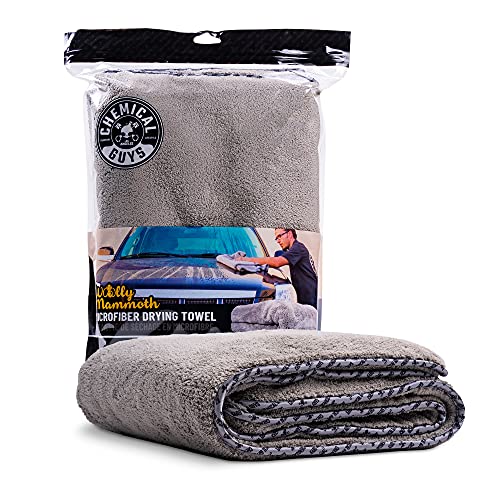
Drying as a contact stage that can still scratch Air drying leaves water spots from dissolved minerals, while a stiff or contaminated towel adds scratches at the very last step. Lay a large twisted loop microfiber towel on the panel and draw it gently rather than pressing or rubbing. Keeping separate towels for lower panels, plus a wide fan rinse that sheets water off first, leaves far less to dry.
The shortlist, ranked

Sun Joe SPX3000 Electric Pressure Washer
Real pressure lifts loose grit and road film that a mitt would otherwise drag across paint, making this the highest value purchase for anyone who cares about finish. Two onboard detergent tanks switch between products without stopping mid wash. Five quick change nozzles cover everything from wheels to a wide, gentle rinse.
Pros
- Clears grit before anything touches paint
- Two detergent tanks switch products fast
- Nozzle range spans wheels through paint
Cons
- Short hose usually needs an extension
- Corded design limits how far it reaches

MATCC Foam Cannon
Thick, clinging foam dwells on paint long enough to soften and lift dirt before contact, cutting down how much contact washing follows. An adjustable knob controls foam thickness, and the spray pattern widens or narrows on demand. Results depend heavily on the shampoo used, and it only works attached to a pressure washer.
Pros
- Thick foam dwells and lifts dirt first
- Adjustable thickness and spray pattern
- Cuts down contact washing required
Cons
- Does nothing without a pressure washer
- Foam quality depends on the shampoo chosen

Meguiar’s X3002 Microfiber Wash Mitt
Long microfiber strands hold water and pull grit up into the pile, away from paint, which beats a sponge on anything that matters. Plenty of soapy water means it glides instead of dragging. Dropping it on the ground ruins that advantage instantly, since embedded grit then scratches on the next pass.
Pros
- Lifts grit away from the paint surface
- Holds plenty of soapy water for glide
- Machine washable for repeated use
Cons
- Ruined if dropped on the ground
- Needs separate laundering without softener

The Rag Company Dry Me A River Drying Towel
Twisted loop microfiber absorbs enough that a whole panel dries in one pass with almost no pressure applied. Large sizing cuts the number of passes needed, which limits chances to drag a missed particle. Water weighs the towel down on bigger vehicles, so it needs wringing partway through.
Pros
- Dries a panel with almost no pressure
- Very high absorption per pass
- Large size cuts the number of passes
Cons
- Gets heavy and needs wringing out
- Pile can snag on badges and trim

Grit Guard Insert
A plastic grid sits in the bottom of a wash bucket, letting released grit fall through and stay below where a mitt cannot pick it back up. Cost here runs lowest of anything on this list, arguably with the best ratio of price to paint saved. Working only happens if the mitt actually gets rinsed against it every time.
Pros
- Very low cost for the paint protection
- Keeps released grit away from the mitt
- Nothing to wear out or maintain
Cons
- Only helps if paired with the two bucket habit
- Needs a bucket with the right diameter

Mothers 155700 Wheel Brush
Soft flagged bristles on a long flexible shaft reach through spokes into the wheel barrel, where brake dust actually builds up. Tips stay gentle enough for painted and polished wheel finishes. Keeping this tool dedicated to wheels is what stops brake dust migrating onto paint elsewhere.
Pros
- Reaches inside the wheel barrel fully
- Soft tips stay safe on finished wheels
- Keeps wheel contamination off paint tools
Cons
- Awkward on tight spoke patterns
- Bristles need thorough rinsing between wheels
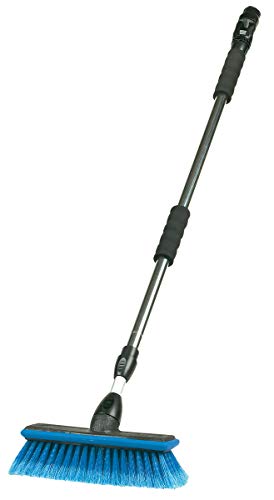
Carrand 93089 Deluxe Flow-Thru Wash Brush
An extending handle reaches vans, roof panels and anything too tall to reach across, without standing on a wheel arch. Water runs through the head continuously, flushing bristles as you scrub. Any brush trades some paint safety against a mitt, so it works best kept for high or heavily soiled areas.
Pros
- Reaches roofs and high panels safely
- Continuous water flow flushes the bristles
- Extends and locks at several lengths
Cons
- Less paint safe than a mitt overall
- Needs frequent rinsing to stay clean
How they stack up
| # | Model | Power | Best for | Score | Price |
|---|---|---|---|---|---|
| 1 | Sun Joe SPX3000 Electric Pressure Washer | Electric corded motor | Best overall | 9.4 | Check price |
| 2 | MATCC Foam Cannon | Pressure washer foam cannon | Best pre soak | 9.2 | Check price |
| 3 | Meguiar’s X3002 Microfiber Wash Mitt | Deep pile microfibre | Best wash mitt | 9.0 | Check price |
| 4 | The Rag Company Dry Me A River Drying Towel | Twisted loop microfibre | Best drying towel | 8.7 | Check price |
| 5 | Grit Guard Insert | Bucket insert grid | Best cheap upgrade | 8.5 | Check price |
| 6 | Mothers 155700 Wheel Brush | Soft flagged tip bristles | Best wheel tool | 8.2 | Check price |
| 7 | Carrand 93089 Deluxe Flow-Thru Wash Brush | Flow through wash brush | Best for large vehicles | 8.0 | Check price |
Common questions
Can a pressure washer damage car paint?
Yes, if a narrow high pressure tip runs too close to the surface, especially near edges, badges or already lifting paint. A wide angle tip at a sensible distance, worked at an angle rather than straight on, keeps sound paint safe.
Do I need a foam cannon or is a foam gun enough?
A cannon connects to a pressure washer and produces thicker, longer dwelling foam. A foam gun runs off a garden hose and makes a thinner soap layer. Owning a pressure washer already makes the cannon the better tool; without one, a foam gun still beats going straight in with a mitt.
Is a sponge really that bad for paint?
A flat faced sponge gives grit nowhere to go, so anything it picks up sits trapped between the sponge and paint. Deep pile microfiber lets particles move up into the fibers instead, away from the surface. Dark paint shows the difference within a few washes.
How often should I replace a wash mitt?
Replace it once the pile mats down, feels rough, or after it hits the ground and cannot be fully cleaned. Washing mitts separately, without fabric softener and on low heat, extends life considerably, since softener coats fibers and stops them lifting dirt.
Can I use dish soap as car shampoo?
It strips grease, which means it also strips wax and sealant and dries out plastic and rubber trim. Dedicated car shampoo cleans without removing protection and lubricates enough for a mitt to glide. Dish soap has a role only when deliberately stripping old protection before reapplying it.
What order should I wash a car in?
Wheels and tires go first with dedicated tools, then a rinse, then foam and dwell time, then another rinse, then contact washing from the roof down so dirty water runs onto areas not yet cleaned. Finish with a final rinse and immediate drying before water can spot.
Are wash brushes ever safe on paint?
For high roofs on vans and large vehicles, a soft flow through brush works as a practical compromise, used only on well soaked panels and rinsed constantly. A mitt stays safer for anything within reach. Never run a brush over a dry panel or visible grit.
How do I avoid water spots after washing?
Wash in shade on a cool panel, rinse with a wide sheeting flow so most water runs off, then dry immediately with a large absorbent towel. Hard water areas form spots fast, so work one section at a time and dry as you go rather than washing the whole car first.
Our pick
Paint results depend on sequence as much as tools, so start with the Sun Joe SPX3000 pressure washer to clear grit before anything touches the surface. Add the MATCC Foam Cannon so dirt lifts rather than gets scrubbed loose. Finish the contact stage with the Meguiar’s X3002 mitt and two buckets, a sequence that prevents most of the swirl marks people blame on the road.