A Changing Pad That Actually Keeps Baby in Place
Keekaroo Peanut Changer tops the list since its seamless surface skips fabric covers entirely. Skip Hop’s Contoured Changing Pad delivers the best value among covered options. Summer Infant’s Contoured pad works well as a dependable, low cost second station.
Keekaroo Peanut Changer leads this list for parents who want fewer things to wash, followed by Skip Hop’s Contoured pad and the budget friendly Summer Infant model. Each design cradles a squirmy baby and speeds up cleanup after the inevitable mess.
A changing pad looks simple until a slippery surface, a weak strap or a cover that needs constant washing turns a quick change into a chore. We compared contour depth, safety belt design, how easily the surface wipes clean and what materials each pad uses, drawing on specifications and what parents report after months of daily use.
What matters most
What actually keeps a baby safe on a changing pad? Contoured or raised walls cradle a baby and reduce how far a roll can travel before a hand catches it. A working safety strap matters just as much, and the pad itself needs secure mounting to the dresser or a genuinely non-skid base. No pad substitutes for a hand kept on the baby at all times. Deep contours paired with an anti-slip bottom, like the Munchkin Secure Grip, meaningfully cut the risk of a squirmy roll.
Wipeable surface or washable cover: which suits your routine? Seamless wipeable pads, like the Keekaroo Peanut, save real laundry time since a spill gets cleaned with a wipe and the change moves on. Covered pads feel softer against skin and often cost less upfront. Covers need washing constantly though, which pushes many parents to keep two on hand so one is always ready. The choice mostly comes down to tolerance for laundry versus a slightly firmer surface.
How much does contour depth matter? A good contour keeps a baby centered and settled, which speeds up changes and lowers stress for everyone involved. Deeper walls help more with an older, wrigglier baby, while a slight incline helps some infants stay calm. Firmer foam wipes clean more easily, so a thin liner or cover adds softness exactly where it is wanted without giving up that easy cleanup.
What size and material should you check before buying? Measure the top of the dresser or changing table before ordering, since pad dimensions vary more than expected. Parents focused on materials can choose organic cotton and non-toxic surfaces, like the Naturepedic pad, while others prioritize a fully waterproof, seamless build instead. Either direction works, but confirm the surface genuinely wipes clean and has no seams that trap moisture underneath.
The shortlist, ranked

Keekaroo Peanut Changer
Peanut Changer is a seamless, soft foam design with a waterproof surface that wipes clean directly, so no cover ever needs washing. High side and end walls cradle a baby securely during a change. Foam density holds up for years, often lasting through more than one child.
Pros
- Wipes clean with no cover to wash
- High contoured walls on every side
- Durable foam lasts across multiple kids
Cons
- Costs more upfront than covered pads
- Firm surface benefits from a thin liner

Skip Hop Contoured Changing Pad
A well contoured foam pad wrapped in a water resistant, quilted cover, with a safety strap and security buckle for mounting to a dresser. Comfort, safety and price land in a genuine sweet spot here. The removable cover machine washes without fuss.
Pros
- Strong contour with real comfort
- Washable cover included in the box
- Mounting hardware secures it to a dresser
Cons
- Cover needs regular washing
- Cover can bunch after repeated use
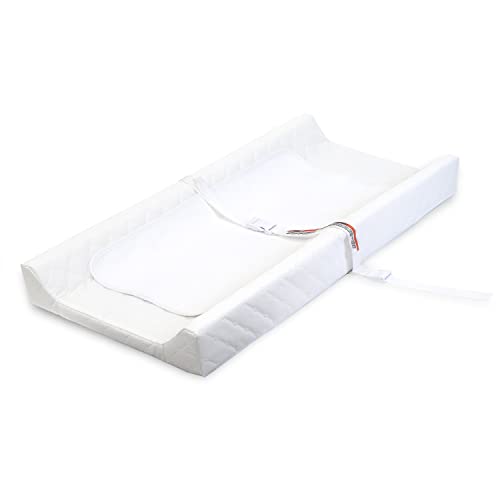
Summer Infant Contoured Changing Pad
A no frills contoured pad with a quilted, wipeable surface plus a safety strap and security buckle. Essentials get covered at a low price, which suits a second changing station or a tighter nursery budget. Foam runs thinner than premium pads but still does the job.
Pros
- Very affordable for the contour and strap it offers
- Lightweight design mounts easily
- Wipeable quilted top handles quick messes
Cons
- Thinner foam than premium pads
- Materials feel basic next to pricier options

Munchkin Secure Grip Changing Pad
Non-skid material on the bottom plus four mounting points keep this pad anchored to a dresser, backed by a safety belt to hold a baby in place. The waterproof quilted surface wipes down fast. Extra grip gives parents real peace of mind during a squirmy change.
Pros
- Excellent anti-slip base resists shifting
- Four-point mounting adds real security
- Surface wipes clean in seconds
Cons
- Comfort cover sold separately
- Foam runs firm compared to plusher pads

Hatch Baby Grow Smart Changing Pad
The Grow doubles as a smart scale, weighing a baby during each change and logging growth and diaper data through a companion app. It suits parents who want to track feeding and weight trends without a separate device. Price runs well above a standard changing pad.
Pros
- Built-in scale delivers accurate readings
- App logs weight and diaper trends automatically
- Sturdy contoured shape supports normal changes
Cons
- Expensive relative to a basic changing pad
- Depends on an app and a power source

Naturepedic Organic Changing Pad
Organic cotton covers a waterproof, non-toxic surface free of common flame retardants, which appeals to parents prioritizing materials over price. Walls run high on every side for solid containment. Construction quality matches the premium price tag.
Pros
- Non-toxic organic materials throughout
- High walls on all sides for containment
- Certified construction backs up the claims
Cons
- Premium price relative to standard pads
- Surface benefits from an added liner

LA Baby Combo Waterproof Contour Changing Pad
A lightweight contoured pad bundled with a terry cover and safety strap, easy to move between rooms or bring to a grandparent’s house. The waterproof core wipes clean underneath the cover. An included cover adds softness at a friendly price.
Pros
- Soft cover included in the bundle
- Light weight makes it easy to relocate
- Affordable price for a complete set
Cons
- Foam density trails premium options
- Cover needs frequent washing
Side by side
| # | Model | Surface | Best for | Score | Price |
|---|---|---|---|---|---|
| 1 | Keekaroo Peanut Changer | Seamless waterproof foam | Best overall | 9.4 | Check price |
| 2 | Skip Hop Contoured Changing Pad | Water-resistant quilted cover | Best value | 9.1 | Check price |
| 3 | Summer Infant Contoured Changing Pad | Quilted wipeable | Best budget | 8.8 | Check price |
| 4 | Munchkin Secure Grip Changing Pad | Waterproof quilted | Best for security | 8.6 | Check price |
| 5 | Hatch Baby Grow Smart Changing Pad | Smart scale pad | Best for tracking | 8.4 | Check price |
| 6 | Naturepedic Organic Changing Pad | Waterproof organic cotton | Best organic | 8.2 | Check price |
| 7 | LA Baby Combo Waterproof Contour Changing Pad | Waterproof core with terry cover | Best for portability | 8.0 | Check price |
Good to know
Do you actually need a dedicated changing pad?
A dedicated pad gives a baby a safe, contoured spot and protects furniture from messes. Many parents find changes go faster and cleaner than relying on a folded towel or a portable mat alone.
Are wipeable pads better than pads with a cover?
Wipeable pads like the Keekaroo Peanut cut out laundry entirely, since cleanup is just a wipe. Covered pads feel softer and cost less upfront, but the cover needs regular washing, so the answer depends on tolerance for extra laundry.
How do you secure a changing pad to a dresser?
Most pads include a security strap or bracket that screws into the back of the dresser, and some add a non-skid base for extra grip. Always attach the hardware and use the safety belt, since babies can roll without warning.
What size changing pad fits a standard dresser?
Measure the dresser or changing table top first. A standard contoured pad runs around 16 by 32 inches, but confirm it sits securely with room left for the mounting strap.
Is a contoured pad safer than a flat mat?
Raised walls on a contoured pad help keep a baby centered, which adds a layer of security compared with a flat mat. The safety strap and constant supervision still matter most, but contours lower the chance of a roll.
When should parents stop using a changing pad?
Most families use one until the baby grows too active and mobile to change safely on a raised surface, often somewhere between 12 and 24 months. Many switch to changing on the floor after that point.
How do you clean a changing pad properly?
For wipeable surfaces, a baby wipe or a mild soapy cloth followed by drying handles most messes. For pads with covers, remove and machine wash the cover regularly, and wipe the waterproof core underneath as needed.
Are organic changing pads worth the extra cost?
For parents avoiding flame retardants and synthetic materials, organic pads like the Naturepedic use certified cotton and non-toxic surfaces. They cost more, but that premium buys real peace of mind on materials.
Can a changing pad travel between rooms?
Lightweight, portable options like the LA Baby Combo pad move easily between a nursery and a guest room, or even to a grandparent’s house. Heavier premium pads like the Keekaroo tend to stay fixed in one spot instead.
The bottom line
For most nurseries the Keekaroo Peanut Changer earns its higher price, since wiping it clean beats washing covers every day and it lasts through multiple children. Choose the Skip Hop Contoured pad for a comfortable, well priced covered option, or the Summer Infant pad when budget matters most.


