How to Pick a Cold Brew Coffee Maker for Smoother Results
Takeya Patented Deluxe Cold Brew Coffee Maker leads with an airtight lid and a fine mesh core that brews and stores in one bottle. OXO Brew Compact Cold Brew Coffee Maker pours the cleanest cup through paper. Hario Mizudashi keeps the start simplest with three glass parts.
Takeya’s Patented Deluxe Cold Brew Coffee Maker is the pick for fridge brewing you pour straight from the bottle, thanks to a leakproof lid and a removable fine mesh core. Sediment averse drinkers should choose the paper filtered OXO Brew Compact, and the Hario Mizudashi is the cheapest simple start.
Steeping coffee in cold water is the easy part, so these makers differ mainly in filtering, fridge fit, and cleanup. We compared filter designs, capacities, seals, and disassembly steps across seven models sold on Amazon, alongside what owners report after months of weekly brewing.
The best picks, ranked

Takeya Patented Deluxe Cold Brew Coffee Maker
Everything happens in one BPA free Tritan pitcher: load the mesh core, add water, steep in the fridge, lift the core out, and pour. An airtight lid lets you shake the bottle to saturate grounds and store it on its side without leaks. Fine sediment does slip through the mesh, which paper systems avoid.
Pros
- Leakproof lid allows shaking and side storage
- One vessel brews, filters, and stores
- Reusable mesh core costs nothing to run
Cons
- Some fine sediment reaches the cup
- Tall bottle will not fit shorter fridge doors
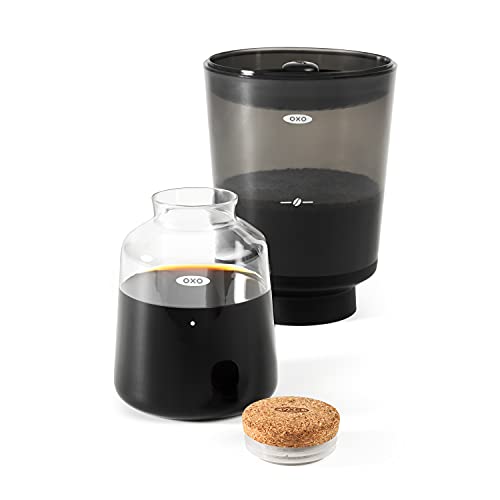
OXO Brew Compact Cold Brew Coffee Maker
A rainmaker lid showers water evenly across the bed of grounds, and the finished concentrate drains through paper into a lidded glass carafe. That paper stage strips out the silt mesh systems leave behind. Multiple components mean more washing and more cupboard space than a single bottle.
Pros
- Paper filtering yields an exceptionally clean concentrate
- Rainmaker lid saturates grounds evenly
- Small footprint suits tight counters
Cons
- Several parts to wash and store
- Paper filters are an ongoing supply

Hario Mizudashi Cold Brew Coffee Pot
Three parts make up the whole system: a heatproof glass jug, a fine mesh basket, and a lid. Its slim profile slots into most fridge door shelves, a practical win owners mention constantly. Glass rinses clean and holds no odours, though one slip on a tile floor ends it.
Pros
- Slim jug fits fridge door shelves
- Cleanup involves only three pieces
- Glass body never retains coffee smells
Cons
- Breakable if dropped
- Brews drinking strength, not concentrate

Toddy Cold Brew System
Toddy’s large format setup brews a week’s worth of concentrate, draining it through a felt pad into a glass decanter. Felt filtration produces the smoothest, lowest sediment result of any system here. Cupboard space and pad care are the costs, since felt must be rinsed and kept wet between uses.
Pros
- One brew covers a full week of drinks
- Felt pad delivers a notably smooth concentrate
- Strength adjusts per glass at dilution
Cons
- Bulky between brewing sessions
- Felt pads demand rinsing and wet storage

County Line Kitchen Mason Jar Cold Brew Maker
A stainless mesh filter fits a wide mouth mason jar, keeping parts minimal and replacement glass cheap. Thick jar walls shrug off fridge knocks, and the metal lid seals tight. Mesh here runs coarser than paper, so the last pour carries some sediment.
Pros
- Wide mouth loads and empties easily
- Jar doubles as sturdy storage
- Few parts, all simple to clean
Cons
- Sediment collects in the final glass
- Full 2 quart jar is heavy to handle

Bodum Bean Cold Brew Coffee Maker
Borosilicate glass wrapped in a silicone sleeve gives this carafe grip and protection, and it looks tidy enough to serve from at the table. After steeping, the plunger style filter unit lifts out so extraction stops. Capacity of about 1.5 litres covers a small household for days.
Pros
- Silicone sleeve protects and improves grip
- Removing the filter halts extraction cleanly
- Generous batch size for its class
Cons
- Wide body needs shelf space, not door space
- Filter unit traps grounds and needs thorough rinsing
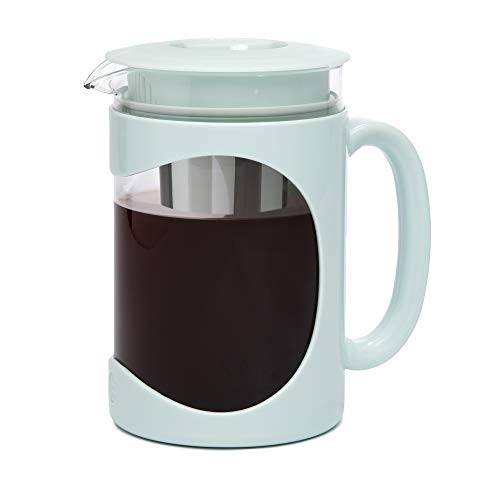
Primula Burke Deluxe Cold Brew Coffee Maker
Essentials only: a borosilicate glass carafe, a lift out stainless mesh core, and a non slip silicone base. Roughly 1.6 litres of ready cold brew covers several days of iced coffee. Build quality trails Takeya and OXO, and the lid is not made for sideways storage.
Pros
- Cheapest full size carafe here
- Silicone base keeps it planted on counters
- Mesh core lifts out without mess
Cons
- Lid seal is not fully leakproof
- Fit and finish feel basic
How to choose
Should you brew concentrate or ready to drink cold brew? Concentrate systems like the Toddy and OXO Brew Compact store compactly and let each drinker set their own strength with water or milk. Ready to drink makers such as the Hario Mizudashi skip the maths so you pour and go. Households with mixed tastes lean concentrate; solo drinkers who want zero morning decisions lean ready to drink.
What filter type makes the cleanest cold brew? Mesh runs free forever but passes the finest particles, which settle as silt in the last glass. Paper in the OXO and felt in the Toddy trap that material and pour noticeably cleaner. Choose by whether sediment annoys you more than buying or maintaining filters.
What grind size and steep time work best? Grind coarse, at French press level, because fine grounds clog filters and extract bitterness. Twelve to twenty four hours covers most recipes; sixteen in the fridge is a reliable start. Longer steeps build strength and eventually harshness, so adjust by taste rather than the clock alone.
Will the maker actually fit your fridge? Measure before buying, because fridge fit is the regret owners mention most. Takeya’s tall bottle needs full shelf height, and the wide Bodum Bean claims shelf space rather than door space. Slim designs like the Hario Mizudashi exist precisely because door shelves are the handiest daily spot.
How they stack up
| # | Model | Capacity | Best for | Score | Price |
|---|---|---|---|---|---|
| 1 | Takeya Patented Deluxe Cold Brew Coffee Maker | About 1 litre or 2 quart versions | Best overall | 9.4 | Check price |
| 2 | OXO Brew Compact Cold Brew Coffee Maker | Makes about 20 ounces of concentrate | Best for a clean cup | 9.2 | Check price |
| 3 | Hario Mizudashi Cold Brew Coffee Pot | About 600ml or 1 litre versions | Best value | 9.0 | Check price |
| 4 | Toddy Cold Brew System | Makes several servings of concentrate | Best for large batches | 8.8 | Check price |
| 5 | County Line Kitchen Mason Jar Cold Brew Maker | 1 quart or 2 quart jars | Best for small kitchens | 8.6 | Check price |
| 6 | Bodum Bean Cold Brew Coffee Maker | About 1.5 litres | Best for pouring and serving | 8.3 | Check price |
| 7 | Primula Burke Deluxe Cold Brew Coffee Maker | About 1.6 litres | Best budget | 8.0 | Check price |
Good to know
How long should cold brew steep in the fridge?
Sixteen to eighteen hours is a dependable starting window, with most recipes falling between twelve and twenty four. Counter steeping runs faster but should stay short for food safety. Taste at intervals on early batches and lock in your preference.
What coffee to water ratio is best for cold brew?
Around one part coffee to eight parts water by weight suits ready to drink strength. Concentrate calls for one to four or one to five, diluted in the glass. Beans and roast level shift the ideal, so treat these as starting points.
What grind size should I use for cold brew?
Coarse, matching a French press grind. Fine particles clog mesh and paper, stall filtering, and push the flavour harsh. Bitterness after a normal steep usually traces back to grind, not time.
How long does cold brew last in the fridge?
Sealed concentrate stays good for roughly a week to ten days. Diluted, ready to drink brew is best within a few days. Pull the grounds out as soon as steeping ends, because continued contact keeps extracting and shortens the window.
Is cold brew really less acidic than hot coffee?
It reliably tastes smoother, and cold extraction does pull a different balance of compounds from the grounds. How big the difference is depends on bean and recipe. Treat lower acidity as a flavour trait rather than a health claim.
Can I make cold brew without a special maker?
Yes. A jar plus a strainer lined with a paper filter does the job, which is roughly what the County Line Kitchen system formalises in sturdier form. Dedicated makers mostly reduce mess and simplify the filtering step.
Which coffee beans are best for cold brew?
Medium and dark roasts are popular because chocolate and nut notes carry through clearly. Light roasts brew brighter, almost tea like. Freshly roasted whole beans, ground coarse just before steeping, beat any specific origin choice.
How do you clean a cold brew coffee maker?
Dump grounds promptly and rinse the filter before oils dry into the mesh. Wash everything in warm soapy water. Give reusable mesh an occasional soak in coffee cleaner, and store Toddy felt pads wet in the fridge between uses.
Can a cold brew maker also make iced tea?
Most mesh based models handle loose leaf or bagged tea without changes, and Hario markets the Mizudashi for both jobs. Tea steeps far faster than coffee, often four to eight hours cold. Rinse well afterwards so flavours do not cross.
The verdict
Takeya’s Patented Deluxe Cold Brew Coffee Maker earns the fridge spot by handling brewing, filtering, and storage in one leakproof bottle. Choose the OXO Brew Compact if sediment free cups matter most, and the Toddy system when a household drinks its way through a batch every week.


