How to Pick Concealed Hinges That Stay Aligned
Blum’s CLIP top BLUMOTION leads for its built in damper and tool free clip on installation. Grass Tiomos comes closest with adjustable closing force for mixed door weights. Ravinte’s Soft Close Concealed Hinges cover a full kitchen at the lowest cost per door.
A concealed hinge that still closes quietly in ten years starts with Blum’s CLIP top BLUMOTION, thanks to a damper built into the arm rather than bolted on. Grass Tiomos comes very close with a cleaner path to adjustable closing force. Ravinte’s Soft Close Concealed Hinges make sense once thirty hinges are needed at once.
The same door can need a full overlay, half overlay or inset hinge depending on what sits beside it, and face frame cabinets need different hardware entirely from frameless ones. We compared overlay ranges, cup sizes, opening angles and what owners report about long term damper performance across seven current hinges.
What matters most
Work out your overlay before anything else Full overlay means the door covers the entire side panel. Half overlay means two doors share one panel. Inset means the door sits flush inside the opening. Fitting a full overlay hinge where a half overlay belongs leaves doors fouling each other, and no adjustment fixes that. Open the cabinet, check how the door sits against the side panel, and buy accordingly.
Face frame and frameless need different hardware Frameless cabinets, sometimes called European or full access, use a hinge plate that screws straight to the side panel. Face frame cabinets carry a timber frame across the front, which needs either a face frame specific hinge or a special mounting plate. Fitting a frameless hinge to a face frame cabinet is the second most common mistake buyers make.
Matching cup size and boring depth Almost every concealed hinge uses a 35mm cup, drilled to a specific depth with a forstner bit. Measure an existing bore before ordering replacements, since a small number of hinges use 26mm cups instead. When drilling fresh, set the depth stop carefully, since too deep breaks through the door face and too shallow stops the hinge sitting flat.
Comparing soft close damper types Integrated dampers, like those in Blum’s CLIP top BLUMOTION and Hettich’s Sensys, sit sealed inside the hinge and keep their action for years. Clip on dampers attach to a standard hinge, cost less and retrofit easily, but tend to lose resistance sooner. Fitting a kitchen once favors integrated dampers, while quietening an existing kitchen cheaply favors clip on adapters.
The top picks, ranked

Blum CLIP top BLUMOTION 110 Degree Soft Close Hinge
Cabinet makers specify this by default, with the soft close damper sealed inside the hinge arm rather than added afterward. A clip mechanism lets the door snap on and off the mounting plate without a screwdriver, speeding up painting and adjustment. Owners report the closing action stays consistent years after cheaper dampers go soft.
Pros
- Damper is sealed in rather than clipped on
- Snaps on and off the plate without tools
- Holds its adjustment without creeping over time
Cons
- Mounting plates are usually sold separately
- Costs several times more than a generic hinge

Grass Tiomos 110 Degree Soft Close Hinge
This Austrian hinge lets you dial the damper between settings, useful when one kitchen mixes lightweight doors with heavy solid timber. All three adjustment axes stay reachable from the front, even with the door already hung. Owners report it is the easiest premium hinge to fine tune after installation.
Pros
- Closing force adjusts for heavy or light doors
- Every adjustment reaches from the front
- Feels solid through the full swing
Cons
- Stocked less widely than Blum
- Plate system will not cross fit rival hinges

Hettich Sensys 8645i Soft Close Hinge
A damper tucked inside the cup keeps this hinge’s arm slim, which opens up a wider door thickness range than most rivals allow. The narrower profile also frees interior cabinet space next to the hinge. Owners report it controls thick solid doors without the slam lighter dampers permit.
Pros
- Controls heavy solid timber doors calmly
- Slim arm frees up cabinet interior space
- Damper sits protected inside the cup
Cons
- Fewer plate options across retail listings
- Cup boring depth must be precise
Ravinte Soft Close Concealed Cabinet Hinges
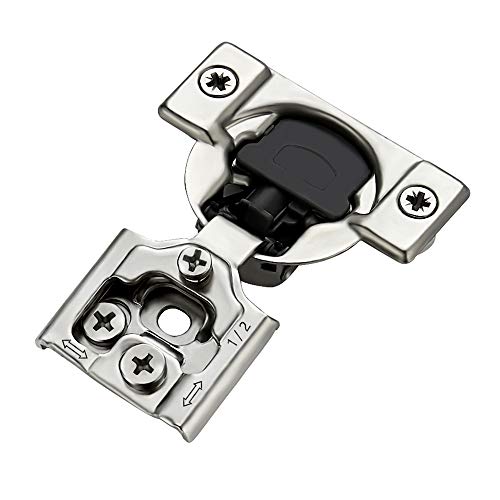
Packs sized for whole kitchens split into full overlay, half overlay and inset versions, so each door position gets the right match. Three way adjustment corrects the usual alignment issues on older cabinet boxes. Owners report quiet closing and lasting alignment, provided the correct overlay is ordered from the start.
Pros
- Pack pricing makes a full kitchen affordable
- Separate versions cover every overlay type
- Adjustment range handles older cabinet boxes
Cons
- Damper feels softer than premium European hinges
- Overlay type cannot change after ordering

DecoBasics Soft Close Cabinet Hinges
A frameless European style hinge pairs a clip on arm with a damper built into the cup, aimed at flat pack and modern cabinet boxes. Mounting plates ship in the box, avoiding the common mistake of ordering hinges only to find plates sold separately. Owners report straightforward installation where 35mm cups are already bored.
Pros
- Plates included, no separate purchase needed
- Clip on arm simplifies removing a door
- Suits standard flat pack cabinet boxes
Cons
- Not designed for face frame cabinets
- Arm finish marks fairly easily
Liberty H1530C Soft Close Overlay Hinge
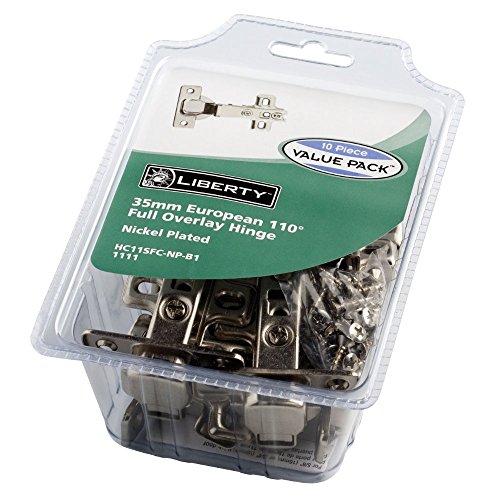
Traditional face frame cabinets need this style, since most European hinges will not fit without extra hardware. Wide retail stocking makes replacing a single failed hinge realistic years later. Owners report it as the simplest route to soft close doors on older American style kitchens.
Pros
- Fits face frame cabinets without adapters
- Easy to source replacements years later
- Adjusts with a simple screwdriver
Cons
- Opening angle trails frameless rivals
- Arm sits bulkier inside the cabinet
Homdiy Soft Close Concealed Cabinet Hinges
Small and large packs make this the practical choice for replacing failed hinges rather than fitting a showpiece kitchen. The standard 35mm cup and three way adjustment cover typical needs. Owners report reliable, quiet closing with a less refined feel than the European brands above.
Pros
- Cheapest route to soft close on existing cabinets
- Standard cup size fits most bored doors
- Sold in small packs for single replacements
Cons
- Damper action feels less controlled at the end
- Plating scratches during installation
How they compare
| # | Model | Opening angle | Best for | Score | Price |
|---|---|---|---|---|---|
| 1 | Blum CLIP top BLUMOTION 110 Degree Soft Close Hinge | 110 degrees | Best overall | 9.4 | Check price |
| 2 | Grass Tiomos 110 Degree Soft Close Hinge | 110 degrees | Best for adjustment control | 9.2 | Check price |
| 3 | Hettich Sensys 8645i Soft Close Hinge | 110 degrees | Best for thick doors | 9.0 | Check price |
| 4 | Ravinte Soft Close Concealed Cabinet Hinges | 105 to 110 degrees | Best value for a full kitchen | 8.8 | Check price |
| 5 | DecoBasics Soft Close Cabinet Hinges | 105 degrees | Best for frameless cabinets | 8.6 | Check price |
| 6 | Liberty H1530C Soft Close Overlay Hinge | Face frame cabinets | Best for face frame cabinets | 8.3 | Check price |
| 7 | Homdiy Soft Close Concealed Cabinet Hinges | 105 degrees | Best budget | 8.0 | Check price |
Common questions
How do I know if my cabinets are face frame or frameless?
Open a door and check the front edge of the cabinet box. A flat timber frame around the opening that the door closes against means face frame. Seeing straight into the box with only the side panel edge visible means frameless.
What does a 110 degree opening angle mean?
It measures how far the door swings open. A 110 degree hinge lets a door pass square, enough to pull out drawers or trays inside most cabinets. Wider angles near 155 degrees exist for corner and blind cabinets needing full interior access.
Can I add soft close to existing standard hinges?
Often yes, since clip on damper adapters fit onto the arm of many standard concealed hinges and slow the last part of the swing. They cost little and remove easily, though they feel less controlled than an integrated damper.
My cabinet doors will not line up. Can hinges fix that?
Concealed hinges adjust three ways: side to side, in and out, and up and down. A screwdriver corrects most misalignment on hung doors within minutes. A door that still will not line up at the end of the range points to a boring or box out of square.
What size hole do concealed hinges need?
Nearly all use a 35mm cup, drilled with a forstner bit to a depth set by the specific hinge, commonly 11 to 13mm. Check the manufacturer’s boring pattern, since the distance from door edge to cup center varies and affects overlay.
How many hinges does one cabinet door need?
Two hinges cover most doors up to roughly 900mm tall. Taller or heavier doors, especially solid timber, need three, and full height pantry doors often need four.
Do concealed hinges work on glass cabinet doors?
Standard hinges do not, since they need a cup bored into the door. Glass door hinges use a clamp or a hole drilled through the glass instead, sold as a separate product line.
Are soft close hinges worth it on every cabinet door?
Constantly used kitchen and bathroom doors benefit most, since soft close stops slam and reduces wear on the door and box. Rarely opened cabinets do fine with standard self closing hinges at a lower cost.
Blum vs Grass, which soft close hinge is better?
Blum’s CLIP top BLUMOTION wins on tool free installation and consistent long term damping. Grass Tiomos matches it closely and adds adjustable closing force for mixed door weights.
The bottom line
Blum’s CLIP top BLUMOTION remains the hinge to install once and forget, and Grass Tiomos stands as a genuine equal wherever adjustable closing force matters. Ravinte’s Soft Close Concealed Hinges deliver quiet doors across a whole kitchen on a sensible budget, provided the correct overlay ships for every position.