7 Cordless Leaf Blowers Ranked by Power and Runtime
The EGO Power+ LB6504 is our top cordless leaf blower for its strong 650 CFM airflow, long run time and quiet operation. The Greenworks Pro 80V suits large yards, while the DeWalt DCBL722B is ideal for anyone already invested in the 20V MAX battery system.
If you want the short answer, the EGO Power+ LB6504 is the cordless leaf blower most homeowners should buy, thanks to its blend of high airflow, comfortable balance and genuinely long run time on a single charge.
Choosing a cordless blower is tricky because marketing numbers rarely tell the full story: peak MPH and CFM are often measured separately, and run time drops sharply at full power. To rank these, we compared published specifications, manufacturer run-time claims and patterns in verified owner feedback, weighting airflow at working speed, battery life, weight and noise over headline figures.
The best picks, ranked

EGO Power+ LB6504
The LB6504 pairs a variable-speed trigger with a turbo boost that reaches 650 CFM, enough to move wet leaves and light debris across a driveway. Owners report the included 5.0Ah battery lasts long enough for most suburban yards, and the balanced design keeps wrist strain low.
Pros
- Strong turbo airflow for wet leaves
- Long run time from included 5.0Ah battery
- Comfortable, well-balanced handling
Cons
- Heavier than smaller 40V models
- Turbo mode drains the battery quickly

Greenworks Pro 80V Cordless Blower
With a brushless motor and 80V platform, this Greenworks blower delivers steady axial airflow suited to clearing large open lawns. Based on specifications it favors sustained output over peak bursts, and owners note the cruise-control lever helps reduce hand fatigue on long sessions.
Pros
- High-voltage platform for sustained power
- Cruise control reduces fatigue
- Lighter than many 56V rivals
Cons
- Battery ecosystem is pricier to expand
- Peak air speed trails top models

DeWalt DCBL722B 20V MAX Blower
Sold as a bare tool, the DCBL722B is the obvious pick if you already own DeWalt 20V MAX batteries. Its brushless motor and variable-speed trigger with lock make it easy to control, though owners point out it is built for cleanup rather than moving heavy wet piles.
Pros
- Very light and easy to maneuver
- Uses existing DeWalt 20V MAX batteries
- Variable speed with trigger lock
Cons
- Battery not included
- Not ideal for large or wet debris

Ryobi 40V HP Whisper Series Jet Fan (RY404100)
The RY404100 posts high headline numbers for airflow and speed while staying quieter than many rivals in the Whisper Series lineup. Owners report it clears dry leaves quickly, and the wide Ryobi 40V ecosystem makes adding batteries straightforward.
Pros
- High peak airflow and speed on paper
- Quieter than most competitors
- Large, affordable 40V battery ecosystem
Cons
- Run time drops fast at full power
- Peak figures are not sustained
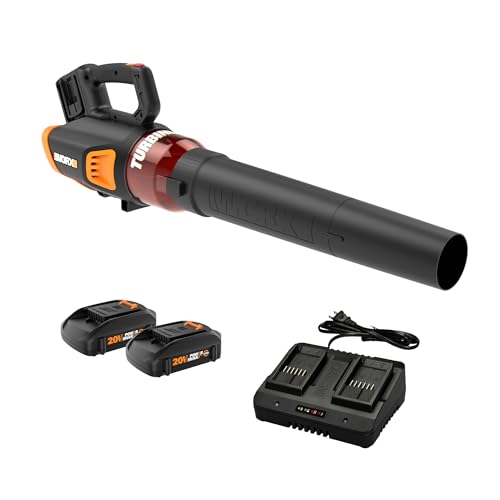
Worx WG584 40V Turbine Blower
The WG584 runs on two 20V batteries for a combined 40V output and uses a turbine fan design with hyper-stream and wide-nozzle attachments. Owners like the two included batteries and charger, though it is aimed more at driveways and patios than sprawling lawns.
Pros
- Two batteries and charger included
- Swappable nozzles for different tasks
- Reasonable weight for the power
Cons
- Uses two battery slots at once
- Better for cleanup than large yards

Makita XBU02Z 18V X2 LXT Blower
The XBU02Z runs two 18V LXT batteries in series for 36V output and appeals to owners already in the Makita cordless system. Sold bare, it offers cruise control and a slim profile, making it comfortable for shorter cleanup sessions around the home.
Pros
- Fits the popular Makita LXT system
- Cruise control for steady output
- Slim, controllable profile
Cons
- Batteries sold separately
- Needs two 18V packs to run
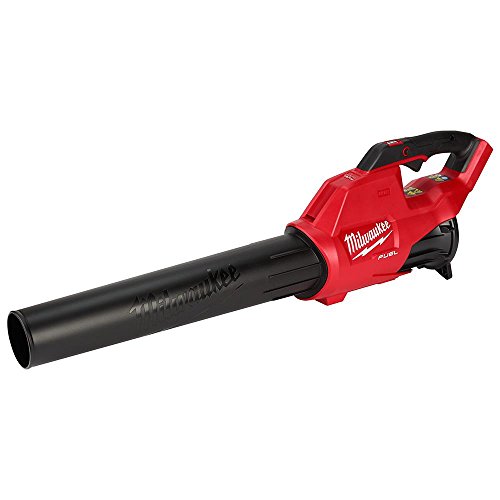
Milwaukee M18 Fuel Blower (2724-20)
Built for jobsite cleanup, the M18 Fuel blower fits Milwaukee’s professional battery platform and delivers consistent airflow with a durable brushless motor. Sold as a bare tool, it is a natural fit for contractors who already carry M18 packs, though homeowners may find lighter options easier.
Pros
- Rugged, jobsite-ready build
- Works with the M18 tool platform
- Consistent brushless performance
Cons
- Battery not included
- Overkill for small yards
How they compare
| # | Model | Air volume | Best for | Score | Price |
|---|---|---|---|---|---|
| 1 | EGO Power+ LB6504 | 650 CFM | Best overall | 9.4 | Check price |
| 2 | Greenworks Pro 80V Cordless Blower | 580 CFM | Best for large yards | 9.1 | Check price |
| 3 | DeWalt DCBL722B 20V MAX Blower | 450 CFM | Best for tool-system owners | 8.9 | Check price |
| 4 | Ryobi 40V HP Whisper Series Jet Fan (RY404100) | 730 CFM | Best value | 8.6 | Check price |
| 5 | Worx WG584 40V Turbine Blower | 480 CFM | Best for two-battery power | 8.4 | Check price |
| 6 | Makita XBU02Z 18V X2 LXT Blower | 473 CFM | Best for compact handling | 8.2 | Check price |
| 7 | Milwaukee M18 Fuel Blower (2724-20) | 450 CFM | Best for pro contractors | 8.0 | Check price |
How to choose
How much airflow do you actually need? Airflow matters more than air speed for most yard work, and it is measured in cubic feet per minute (CFM). For a small yard or hard surfaces, 350 to 500 CFM is usually plenty. Larger lots or wet, matted leaves benefit from 550 CFM or more. Watch for blowers that advertise peak MPH and CFM separately, since those numbers are rarely reached at the same time.
Battery voltage and run time Higher voltage platforms like 56V and 80V generally sustain power better under load, while 18V and 20V tools prioritize light weight. Run time depends heavily on the speed setting: a battery rated for 90 minutes on low may last only 15 to 20 minutes on turbo. If you have a large yard, look for a larger amp-hour battery or plan to keep a spare charged.
Weight, balance and noise A blower that feels light in the store can strain your wrist after 20 minutes. Balanced designs and cruise-control levers reduce fatigue by letting you hold a steady speed without squeezing the trigger. Cordless models are also noticeably quieter than gas, which matters in neighborhoods with noise rules, though turbo modes still get loud.
Should you buy into a battery system? Bare-tool models like the DeWalt, Makita and Milwaukee blowers are excellent value if you already own compatible batteries, since you skip paying for another pack. If you are starting fresh, factor the cost of a battery and charger into your decision and consider which other tools you might add to the same platform later.
Frequently asked questions
Are cordless leaf blowers powerful enough for a big yard?
Yes, higher-voltage models such as the EGO 56V and Greenworks 80V can handle large suburban lots, especially with a spare battery. For very large or wooded properties with heavy wet leaves, a gas or backpack blower may still be more efficient.
What is more important, CFM or MPH?
CFM, or air volume, moves piles of leaves and is usually the more important number. MPH, or air speed, helps dislodge stuck or wet debris. The best blowers balance both, but for general cleanup prioritize CFM.
How long do cordless leaf blower batteries last per charge?
Run time varies widely with the speed setting. Many blowers run 60 to 90 minutes on low but only 15 to 20 minutes on turbo. Larger amp-hour batteries extend run time, and a second battery lets you keep working while one charges.
Do bare-tool blowers come with a battery?
No. Bare-tool models like the DeWalt DCBL722B, Makita XBU02Z and Milwaukee M18 Fuel are sold without a battery or charger. They are best for people who already own compatible packs from the same brand.
Are cordless blowers quieter than gas?
Generally yes. Cordless blowers run noticeably quieter than gas models, which helps in neighborhoods with noise ordinances. Turbo modes still produce significant noise, so hearing protection is wise for long sessions.
Can a cordless leaf blower move wet leaves?
Higher-CFM models can move damp and lightly matted leaves, especially in turbo mode. Very wet, compacted piles remain difficult for any handheld blower and may need to dry or be raked first.
How much maintenance do cordless blowers need?
Very little. With no engine, oil or spark plug, maintenance is mostly keeping the intake vents clear and storing batteries in moderate temperatures. This is a major advantage over gas blowers.
Is a higher voltage always better?
Not always. Higher voltage platforms sustain power better under load, but they add weight and cost. For small yards and hard surfaces, an 18V or 40V blower is often lighter and more than adequate.
Should I match my blower to tools I already own?
If you already own cordless tools, staying within the same battery system saves money because you can reuse batteries and chargers. This is why bare-tool options are popular among people invested in a brand.
The verdict
For most homeowners, the EGO Power+ LB6504 offers the best mix of airflow, run time and comfortable handling. If you own a large yard, the Greenworks Pro 80V sustains power well, while battery-system owners will get the best value from the bare-tool DeWalt, Makita or Milwaukee options.