Cricut vs Silhouette: Picking a Craft Cutting Machine
The Cricut Maker 3 leads with the widest material range and strongest cutting force of the group. The Silhouette Cameo 5 suits anyone wanting offline software and open file handling, and the Cricut Joy Xtra is the compact pick for cards and labels.
Most crafters land best with the Cricut Maker 3, while the Silhouette Cameo 5 fits people who want offline software and the compact Cricut Joy Xtra suits cards, labels and small vinyl work.
Choosing a cutting machine really means choosing a software ecosystem, since the blade still cuts vinyl in five years but the app you’re locked into decides whether that stays pleasant. We compared published cutting force figures, supported material lists, mat free roll capability and blade compatibility, then weighed those against recurring owner complaints about subscriptions, cloud requirements and blades that don’t carry over between generations.
Before you buy
Which software fits how you’ll actually use the machine? Cricut Design Space is easy to learn but wants an account and an internet connection, and its full design library sits behind a subscription. Silhouette Studio runs offline and grows more powerful once learned, though SVG import needs a paid upgrade. Brother’s Canvas Workspace lands in between. Test each interface before buying, since you’ll spend more time in the app than watching the blade cut.
How much cutting force do you actually need? Force ratings show what a machine can push a blade through. A few hundred grams handles vinyl, paper and cardstock. Several thousand grams is required for leather, chipboard and thin wood. Plans limited to decals and shirt transfers mean a low force machine saves money without limiting the work.
Does mat free cutting matter for your projects? Machines that feed material from a roll without a cutting mat produce banners and long decals in one pass, and they save the recurring cost of replacement mats. The catch: mat free operation usually needs the manufacturer’s own branded rolls, worth factoring into running costs beyond the machine price.
What do blades and mats cost over a year of use? Blades dull, mats lose their tack, and vinyl gets bought by the roll. A realistic first year of casual use runs through a couple of replacement mats, a spare blade and a steady supply of material. Proprietary blade formats tie a machine to one supplier, worth checking before committing to an ecosystem.
The best picks, ranked
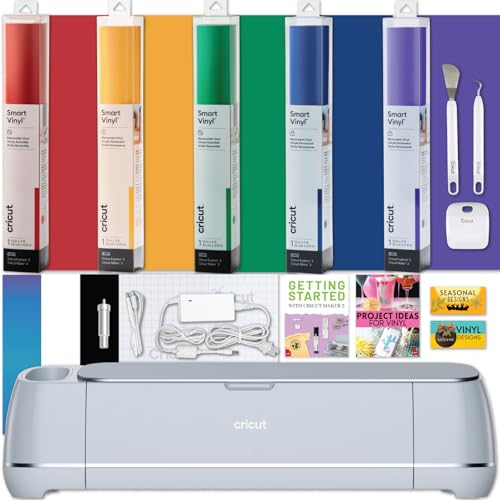
Cricut Maker 3
Buy the Maker 3 if you don’t yet know what you’ll want to cut, since its adaptive tool system swaps in rotary blades, knife blades and scoring wheels alongside the standard fine point. Fabric without a stabiliser, thin balsa and leather all sit within its range. Smart Materials feed from a roll without a mat, a feature long vinyl banner projects benefit from most.
Pros
- Widest material range of any machine here
- Rotary and knife blades open up fabric and wood
- Mat free roll cutting for long projects
Cons
- Design Space requires an account and internet for most work
- Extra tool heads add up quickly

Silhouette Cameo 5
Cloud dependence bothers plenty of crafters, and Silhouette Studio answers that by running locally while opening files made elsewhere. A dual carriage lets you cut and sketch in one pass, and roll feeding works with the optional accessory. The base software version limits some import formats until upgraded, the main caveat to weigh.
Pros
- Software runs without an internet connection
- Strong cutting force for thick materials
- Dual carriage saves swapping tools mid project
Cons
- SVG import needs a paid software upgrade
- Interface is less beginner friendly than Design Space

Cricut Explore 3
Vinyl, iron on, cardstock and paper projects run at the same speed here as on the Maker 3 for meaningfully less money. The adaptive tool system stays out, so no rotary blade for unbonded fabric and no knife blade for thicker stock. Shirt transfers and decals, the common case for most buyers, never hit that ceiling.
Pros
- Same speed and mat free feeding as the Maker 3
- Well matched to vinyl and heat transfer work
- Cheaper entry into the Cricut ecosystem
Cons
- No rotary or knife blade support
- Same Design Space account dependency
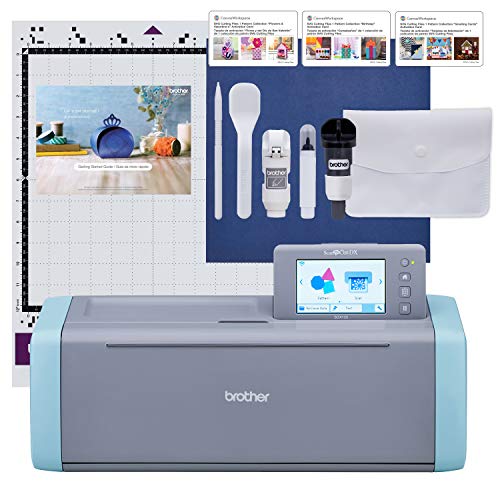
Brother ScanNCut DX SDX125
An onboard scanner and touchscreen let the ScanNCut work entirely without a computer, unique among this group. Scan a hand drawn shape or printed image and the machine cuts around it, genuinely useful for scrapbooking and reusing printed material. An auto blade senses material thickness and adjusts depth, removing much of the trial and error.
Pros
- Works with no computer or subscription
- Scanner handles hand drawn and printed shapes
- Auto blade removes depth guesswork
Cons
- Smaller design library than Cricut or Silhouette
- Bulkier than comparable machines
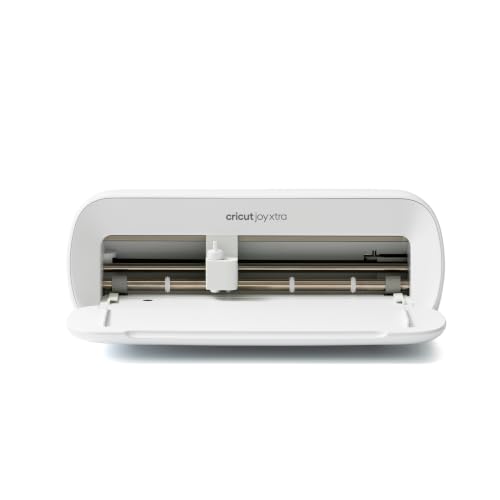
Cricut Joy Xtra
Sitting between the tiny original Joy and full sized machines, the Joy Xtra cuts up to about eight and a half inches wide, enough for cards, labels, mugs and most shirt designs. Light weight makes it easy to put away between projects, the real draw for a home without a dedicated craft room. Print then cut is supported here, unlike the original Joy.
Pros
- Small enough to store in a cupboard
- Handles print then cut stickers
- Cheapest route into mat free cutting
Cons
- Narrower cutting width limits larger projects
- Uses its own smaller blades and mats

Silhouette Portrait 4
The small Silhouette cuts up to eight inches wide while keeping the strong cutting force and offline software of its bigger sibling. That mix of low price and high force is unusual, letting it handle thicker cardstock than its size implies. Silhouette’s file freedom comes without the desk space the Cameo needs.
Pros
- High cutting force for a small machine
- Offline software with no account required
- Low cost entry to the Silhouette ecosystem
Cons
- Eight inch width rules out larger designs
- Roll feeding needs an optional accessory

Siser Juliet Electronic Cutter
Siser makes heat transfer vinyl, so this cutter ships with preset settings tuned to its own materials, removing guesswork around blade depth and force. Bundled Leonardo software stays straightforward and works offline. Fabric, wood and mixed media sit outside its focus, so apparel decoration bulk buyers get the most from it.
Pros
- Material presets remove settings guesswork
- Strong choice for shirt and apparel work
- Offline software included
Cons
- Smaller community and fewer tutorials
- Not aimed at fabric, wood or mixed media
The lineup, side by side
| # | Model | Cutting force | Best for | Score | Price |
|---|---|---|---|---|---|
| 1 | Cricut Maker 3 | Up to around 4000 grams | Best overall | 9.4 | Check price |
| 2 | Silhouette Cameo 5 | Up to around 5000 grams | Best for file freedom | 9.2 | Check price |
| 3 | Cricut Explore 3 | Around 400 grams | Best value | 9.0 | Check price |
| 4 | Brother ScanNCut DX SDX125 | Yes, touchscreen and onboard designs | Best for scanning designs | 8.8 | Check price |
| 5 | Cricut Joy Xtra | Roughly 8.5 inches | Best compact machine | 8.6 | Check price |
| 6 | Silhouette Portrait 4 | Roughly 8 inches | Best budget | 8.3 | Check price |
| 7 | Siser Juliet Electronic Cutter | Roughly 12 inches | Best for heat transfer vinyl | 8.0 | Check price |
Questions worth asking
Which cutting machine is best for beginners?
Cricut machines are generally easier to start with, since Design Space walks users through material settings and community tutorials run deep. The Explore 3 or Joy Xtra work as the usual starting points for vinyl and paper focused crafters.
Do I need a subscription to use a Cricut?
No. Uploading your own designs and using the machine works without paying a subscription. Cricut Access unlocks the built in image and font library, convenient but optional if you make or buy your own files.
Can these machines cut fabric?
The Cricut Maker 3 cuts unbonded fabric with its rotary blade, the cleanest solution here. Other machines cut fabric if it’s backed with a stabiliser or fusible interfacing, though results run less reliable on stretchy or loosely woven material.
What is the difference between the Cricut Maker 3 and Explore 3?
Speed and mat free cutting stay the same across both. The Maker 3 adds the adaptive tool system with much higher cutting force, unlocking fabric, leather, balsa and thicker board. The Explore 3 covers vinyl, iron on, paper and cardstock.
Can I use my own SVG files on a cutting machine?
Yes on Cricut and Brother without extra cost. Silhouette requires upgrading from the free base version of Silhouette Studio for SVG import, a common surprise for new owners.
How long does a cutting blade last?
It depends entirely on material. Vinyl and paper are gentle, so a blade may last many months of casual use. Cardstock, glitter vinyl and chipboard dull blades quickly. Ragged edges and torn corners signal it’s time to change one.
Do cutting mats need replacing?
Yes, tack fades over time. Cleaning with a lint roller and lukewarm water extends their life considerably. Expect periodic replacement, and keep the protective film to cover the mat between uses.
Can a cutting machine print?
No, they cut and draw rather than print. Print then cut workflows involve printing on your own printer and letting the machine read registration marks to cut precisely around the printed design, the standard way most stickers get made.
Cricut vs Silhouette, which should I buy?
Cricut suits beginners who want guided software and mat free convenience. Silhouette suits people who want offline software, their own files without upgrade fees, and higher raw cutting force at a given price point.
The bottom line
The Cricut Maker 3 suits most people, since it won’t run out of headroom as projects get more ambitious. Choose the Silhouette Cameo 5 instead when working offline and using your own files without upgrade fees matters, and the Cricut Joy Xtra when desk space is the real constraint.