How to Keep a Cuttlebone in Place Without a Mess
The Living World Cuttlebone Holder takes the top spot for its firm clamp and simple bar mount. The Prevue Pet Products Birdie Basics holder suits larger cages with thicker bars, and the Kaytee Cuttlebone with clip bundles the bone and mount together for a first bird.
Grip and staying power on standard cage bars put the Living World Cuttlebone Holder ahead of the pack here. Bigger cages with thicker bars fit the Prevue Pet Products Birdie Basics holder better, and a bone plus mount bundled in one purchase makes the Kaytee Cuttlebone the simplest starting point.
Cuttlebone holders look interchangeable but aren’t, since bar spacing, bar thickness and bird strength vary enormously between a budgie cage and a conure cage. A clip that holds beautifully on thin wire slides straight off a heavier bar, and a bone mounted too loosely gets pried off and dropped into the substrate where it turns mouldy. We compared clamp mechanisms, stated materials, bar compatibility and adjustability, then checked owner reports about rust, chewed plastic and birds that treat the holder itself as a toy.
How to pick the right one
What to check about your cage bars first The most common reason a holder fails is a clamp opening that doesn’t match the bar diameter. Too wide and it rotates or slides down; too narrow and it won’t seat at all. Measure a bar before ordering, or at minimum check whether the listing targets thin wire cages or heavier parrot cages. Spacing between bars matters too, since some clamps need two adjacent bars to sit square.
How grip needs to hold up as the bone wears thin A cuttlebone starts thick and ends up as a wafer, and a holder gripping only at the original thickness drops the remainder on the cage floor. Adjustable or spring loaded clamps solve this, as do designs that pierce the soft side rather than squeezing the edges. Bones landing in the substrate get soiled and should be replaced rather than reattached.
Where placement changes whether a bird uses it Mount the cuttlebone near a favourite perch and at roughly chest height, so nibbling becomes an easy sideways move rather than a deliberate trip. Avoid mounting it directly above food or water dishes, since falling flakes foul both. Keep it clear of the main flight path in small cages, where a bone in the way gets ignored or knocked down.
Materials, hygiene and rust over time Metal inside a humid cage corrodes eventually, and rust flakes have no place near a bird. Stainless or coated fittings last longest, while bare wire clips often show rust within a season. Take the holder out during cage cleaning, wash it in hot water without harsh detergent, and dry it fully before refitting. Replace plastic that’s been chewed into sharp edges.
What we recommend
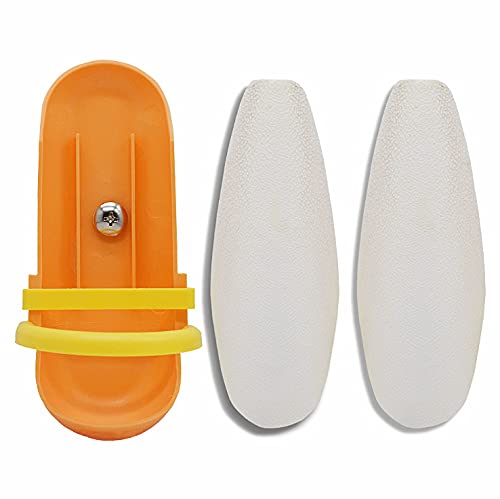
Living World Cuttlebone Holder
A straightforward clamp bites into the soft side of the cuttlebone while a mount tightens against the cage bar. Grip stays tight as the bone thins out, exactly where looser designs let go. Plastic construction keeps the holder light enough that it won’t stress thin cage wire.
Pros
- Holds the bone firmly as it wears down
- Simple to reposition on the bars
- Light enough for thin wire cages
Cons
- Not strong enough for determined large parrots
- Plastic can crack if overtightened

Prevue Pet Products Birdie Basics Cuttlebone Holder
Prevue builds this for the heavier bars on larger cages, seating properly where small clips just wobble. Sturdy metalwork resists being twisted loose by a curious beak. Small finch cages don’t need this much holder, and it can prove awkward to fit on very thin wire.
Pros
- Fits heavier bars that defeat small clips
- Resists being twisted off by strong beaks
- Sturdy enough to survive cage cleaning
Cons
- Too bulky for small finch cages
- Loose fit on very thin wire

Kaytee Cuttlebone with Attachment Clip
Kaytee bundles a natural cuttlebone with a wire clip, the least fussy way to get calcium into a cage on day one. Budgies and cockatiels manage fine with the basic clip. Once the bone is gone, the clip reuses well, though it grips thinner replacements less securely.
Pros
- Bone and holder in one purchase
- Hooks on in seconds without tools
- Clip is reusable with replacement bones
Cons
- Grip loosens as the bone wears thin
- Wire hook can be knocked off by active birds

Penn-Plax Cuttlebone Holder
This slim holder takes up very little cage real estate, which matters in a small budgie or finch setup where every perch line counts. It mounts flush against the bars instead of sticking into flight space. Compact sizing means oversized cuttlebones won’t fit.
Pros
- Takes up minimal cage space
- Sits flush instead of intruding on flight paths
- Easy to remove for cleaning
Cons
- Will not fit large cuttlebones
- Light clip is easy for bigger birds to dislodge

SunGrow Cuttlebone Holder for Birds
SunGrow built adjustability in, so the same holder works with a thick new bone and a thin nearly finished one. Fewer bones end up on the cage floor at the halfway point as a result. Adjustment hardware adds a few small parts worth checking after cleaning.
Pros
- Adjusts as the cuttlebone wears down
- Works with several bone thicknesses
- Straightforward to fit without tools
Cons
- Small parts can loosen over time
- Plastic finish scratches easily
RYPET Bird Cuttlebone Holder
RYPET usually sells these in multiples, handy across several cages or as a spare after a chewing incident. Build stays basic and clearly aimed at small birds rather than parrots. Budgies and finches get perfectly adequate grip from the simple design.
Pros
- Multiple holders in one purchase
- Simple design with nothing to jam
- Light enough for delicate cage wire
Cons
- Not durable enough for parrots
- Grip is looser than clamp style holders
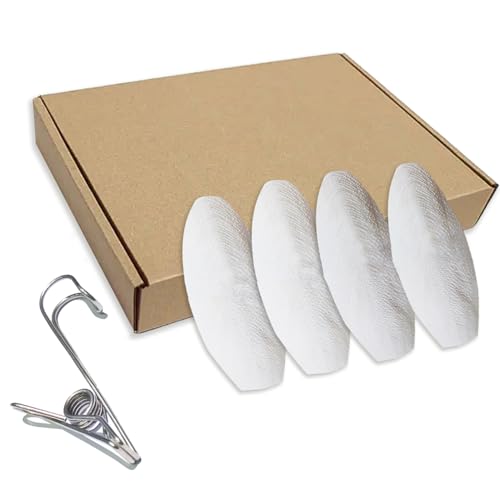
Bonka Bird Toys Cuttlebone Holder
Bonka builds gear for birds that destroy bird gear, using tougher materials than the typical thin plastic clip. A bird treating every fitting as a toy gets far less satisfaction here. The trade off is a heavier fitting suited only to sturdier cages.
Pros
- Stands up to persistent beak attention
- Metal components resist bending
- Stays put on wider spaced bars
Cons
- Too heavy for thin wire cages
- Bulkier than simple clips
How they stack up
| # | Model | Material | Best for | Score | Price |
|---|---|---|---|---|---|
| 1 | Living World Cuttlebone Holder | Moulded plastic with metal fastener | Best overall | 9.4 | Check price |
| 2 | Prevue Pet Products Birdie Basics Cuttlebone Holder | Metal with plastic components | Best for larger cages | 9.2 | Check price |
| 3 | Kaytee Cuttlebone with Attachment Clip | Wire clip with natural cuttlebone | Best value | 9.0 | Check price |
| 4 | Penn-Plax Cuttlebone Holder | Plastic body | Best for small cages | 8.8 | Check price |
| 5 | SunGrow Cuttlebone Holder for Birds | Plastic with adjustable fitting | Best for adjustability | 8.6 | Check price |
| 6 | RYPET Bird Cuttlebone Holder | Plastic and wire | Best budget | 8.3 | Check price |
| 7 | Bonka Bird Toys Cuttlebone Holder | Reinforced plastic and metal | Best for chewers | 8.0 | Check price |
Good to know
Do birds actually need a cuttlebone?
Most pet birds benefit from one as a calcium source and for beak conditioning. It isn’t the only way to supply calcium, and some birds ignore cuttlebone entirely in favour of mineral blocks. Ask an avian vet if a bird shows no interest at all, since calcium needs vary by species and by whether a hen is laying.
Which side of the cuttlebone faces the bird?
The soft, powdery side should face outward so the bird can scrape it easily. The hard shiny side goes against the holder. Fitting it backwards is a common reason birds seem to ignore a new cuttlebone.
How often should a cuttlebone be replaced?
Replace it once worn thin, soiled with droppings, or showing damp or mouldy patches. Some birds go through one in weeks and others take months, so judge by condition rather than a calendar.
Will a holder fit any cuttlebone size?
No. Compact holders suit small and medium bones, and large bones need a wider clamp. Check the holder description against the bone size you buy, since mismatches are the usual cause of a bone falling out on day one.
Can a cuttlebone just sit on the cage floor instead?
It can, but it gets soiled fast and birds often stop using it. A floor bone also collects moisture, which encourages mould. A holder keeps it clean, dry and within easy reach of a perch.
Are metal cuttlebone holders safe inside a cage?
Coated or stainless fittings work fine and last well. Avoid anything showing rust or flaking coating, and never use fittings containing zinc or lead, which are toxic to birds. When in doubt, choose plastic bodied holders with minimal exposed metal.
My bird keeps knocking the cuttlebone holder off, what now?
Switch to a clamp style holder that tightens onto the bar instead of a hook that lifts off. Mounting it lower, where the bird has less leverage, also helps. Persistent chewers usually need a reinforced holder rather than a lighter one.
Can the same holder work for mineral blocks?
Many can, since mineral blocks come in similar sizes and often include a mounting hole. Blocks weigh more than cuttlebone, so a clamp with a firm grip is safer than a thin wire clip. Check block dimensions against the holder before assuming a fit.
Best cuttlebone holder for budgies vs larger parrots?
Budgies and other small birds do well with lighter clip style holders like Living World or Penn-Plax on thin wire. Larger parrots and conures need the heavier clamp and metal build of the Prevue Birdie Basics or Bonka holder, since standard clips don’t survive a strong beak.
Final word
The Living World Cuttlebone Holder works as the sensible default for most small bird cages, gripping well and holding up as the bone thins. Larger cages with heavier bars match better with the Prevue Pet Products Birdie Basics holder, and the Kaytee Cuttlebone with clip remains the easiest way to get a bone mounted the same day it arrives.


