Dog ID Tags Ranked for Engraving That Actually Lasts
GoTags Personalized Stainless Steel Pet ID Tags top this list for engraving that stays legible for years. Boomerang Tags CollarTag slides onto the collar for a silent fit. Dynotag Smart QR Pet ID Tags add a scannable online profile with editable contact details.
For a tag that stays readable for years, GoTags Personalized Stainless Steel Pet ID Tags are the ones to buy. Boomerang Tags CollarTag slides flat onto the collar and stays silent. Dynotag Smart QR tags add an online profile any finder can scan.
ID tags look nearly identical in listings while differing in the one detail that matters most, whether the lettering is stamped deep into metal or lightly etched onto a coating that wears off. We compared engraving methods, base materials, attachment hardware and digital features across seven current tags, weighing what owners report about legibility after a year of daily wear.
Our top picks

GoTags Personalized Stainless Steel Pet ID Tag
Deep engraving cuts into solid stainless steel here instead of marking a surface coating, so lettering stays readable long after cheaper tags go blank. Both sides can carry text, leaving room for a name plus two phone numbers. The included split ring is the weak point, and many owners swap it for a stronger clip.
Pros
- Engraving stays legible for years
- Two-sided design fits extra contact details
- Stainless resists rust and scratching
Cons
- Supplied split ring is basic
- Metal-on-metal jingle against the collar clip

Boomerang Tags CollarTag
This curved plate slides directly onto the collar strap and sits flush, so it makes no noise and cannot snag on crates or fencing. Stainless steel engraving on both sides holds up under daily wear. Ordering the correct collar width matters, and moving it between collars means sliding it off each time.
Pros
- Completely silent in use
- Cannot fall off a failing split ring
- Nothing protrudes to snag on crates or brush
Cons
- Must match the exact collar width
- Awkward to move between multiple collars
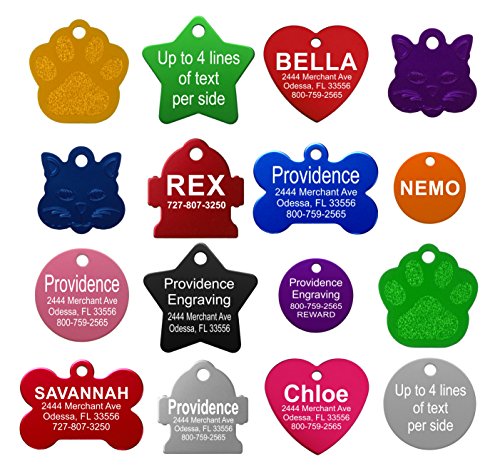
Providence Engraving Custom Pet ID Tags
Laser engraved stainless steel and anodised aluminium tags come at a low outlay here, across a wide range of shapes and colours. Stainless versions hold up best over time, while coloured aluminium shows wear at the edges sooner. Fast turnaround and deep customisation keep owners reordering.
Pros
- Low cost with plenty of style choice
- Laser engraving reads crisp and clear
- Small and large sizes fit different breeds
Cons
- Anodised colour wears at the edges
- Aluminium is less durable than steel
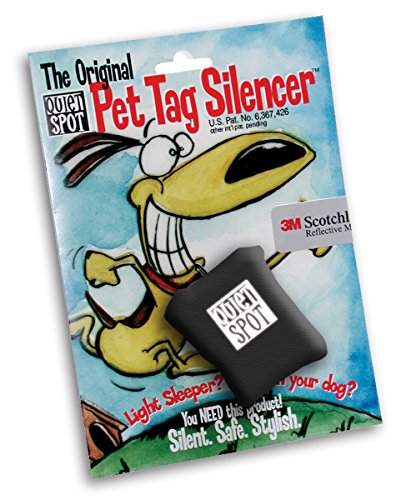
Quiet Spot Tag Silencer
A neoprene pouch holds tags an owner already has and clips onto the collar, cutting jingling almost entirely. It is the cheapest fix for a household bothered by noise at night. Contact details sit hidden inside, so a finder has to open the pouch to read them.
Pros
- Silences tags already owned
- Very inexpensive fix
- Protects tag surfaces from wear
Cons
- Hides details from a quick glance
- Adds some bulk to the collar

Dynotag Smart QR Pet ID Tag
A QR code and short web address lead to an online profile the owner controls, so contact details, vet information and medical notes update without buying a new tag. No subscription applies to the standard service. Finding a smartphone with signal is required, so pairing it with engraved details is worth doing.
Pros
- Contact details update online any time
- Room for medical and vet notes
- No recurring subscription on the standard plan
Cons
- Needs a finder with a smartphone and signal
- Printed surface wears faster than deep engraving

Road iD Pet ID Tag
A rubber housing and a locking attachment form the base of this tag, addressing the split ring, the most common failure point on cheaper designs. Laser engraved plates read clearly, and the rubber surround cuts noise against the collar. Style options run more limited than novelty tag sellers offer.
Pros
- Attachment resists working loose
- Rubber housing muffles collar noise
- Clear multi-line engraving
Cons
- Fewer design choices available
- Rubber can discolour over time

LuckyPet Brass Pet ID Tag
Solid brass runs heavier and softer than stainless, developing a patina many owners like on leather collars. Lettering cuts deep enough to stay readable as the surface ages naturally. Weight makes this tag better suited to medium and large dogs than to small breeds or cats.
Pros
- Deep engraving in solid metal
- Classic look that suits leather collars
- Ages without losing legibility
Cons
- Heavy for small dogs
- Brass scratches more easily than steel
How they compare
| # | Model | Material | Best for | Score | Price |
|---|---|---|---|---|---|
| 1 | GoTags Personalized Stainless Steel Pet ID Tag | Solid stainless steel | Best overall | 9.4 | Check price |
| 2 | Boomerang Tags CollarTag | Slides onto collar strap | Best silent tag | 9.2 | Check price |
| 3 | Providence Engraving Custom Pet ID Tags | Stainless steel or anodised aluminium | Best value | 9.0 | Check price |
| 4 | Quiet Spot Tag Silencer | Neoprene tag pouch | Best for silencing existing tags | 8.8 | Check price |
| 5 | Dynotag Smart QR Pet ID Tag | QR code and web link tag | Best digital option | 8.6 | Check price |
| 6 | Road iD Pet ID Tag | Engraved plate in rubber housing | Best attachment security | 8.3 | Check price |
| 7 | LuckyPet Brass Pet ID Tag | Solid brass | Best traditional metal | 8.0 | Check price |
How to choose
Why engraving method matters more than material Going blank is the failure owners describe most often with ID tags. That happens when text sits etched into a thin coating or printed on the surface instead of cut into metal underneath. Deep engraved stainless, like GoTags and Boomerang use, stays readable through years of rubbing against a buckle. Anodised aluminium looks bright at first but wears at the edges soonest.
What information belongs on the tag A phone number ranks as the single most important item, with a second number as backup. Many owners leave the dog’s name off deliberately, since a stranger calling a dog by name can lure it away. A short line such as needs medication can prompt a finder to act quickly rather than assume the dog will find its own way home.
Solving jingling and snag risks Dangling tags jingle constantly, which bothers light sleepers and startles nervous dogs, and they can catch on crate bars or fencing. Slide-on plates like the Boomerang CollarTag remove both problems entirely. Pouches such as the Quiet Spot muffle tags an owner already has. Hidden details take a moment longer for a finder to read, which is the trade-off.
Tags versus microchips: do you need both? A tag gets a dog home fastest, since anyone can read it immediately, but it can fall off. A microchip cannot fall off, though it needs a scanner and an up to date registration to work. QR tags such as the Dynotag sit between the two options. Most owners are best served using engraved tags and a registered chip together.
Good to know
What information should go on a dog ID tag?
A phone number is essential, ideally two. Many owners add a city or the word microchipped, and some include a brief medical note. Opinion is split on including the dog’s name, since it makes it easier for a stranger to call the dog over.
Which tag material lasts the longest?
Deeply engraved stainless steel generally outlasts everything else, resisting rust while holding its lettering. Brass lasts well too, though it runs softer and heavier. Anodised aluminium looks bright but wears at the edges, and plastic tags fade fastest.
How do I stop tags from jingling at night?
Switching to a slide-on collar plate like the Boomerang Tags CollarTag removes the noise entirely. A silencer pouch such as the Quiet Spot works over existing tags. Some owners simply remove dangling tags indoors, though that leaves a dog unidentified if it slips out.
Are QR code pet tags worth buying?
They add flexibility, since contact and medical details update without ordering a new tag, and they can store more information than metal allows. Finding a smartphone with signal is required, so pairing them with engraved details works better than relying on QR alone.
Why do tags keep falling off collars?
The thin split ring supplied with most tags is usually the culprit, since it gradually works open under load. Replacing it with a stainless steel S-biner or small locking carabiner solves the problem for most owners. Slide-on plates avoid the issue entirely.
What size tag should I get for my dog?
Match the tag to the dog rather than the amount of text needed. Small breeds struggle with heavy tags bouncing against the chest, while a tiny tag on a large dog is hard to read. Two-sided engraving allows a smaller tag without losing information.
Do I still need a tag if my dog is microchipped?
Yes. A microchip needs a scanner and a correctly registered database entry to help, while a tag is readable instantly by whoever finds the dog. Many places also require a visible ID tag by law for dogs in public.
How often should I replace a dog ID tag?
Check it every few months and replace it once text becomes hard to read at arm’s length, or whenever a phone number changes. Cheap coated tags often need yearly replacement, while deeply engraved steel tags routinely last several years.
Our pick
GoTags Personalized Stainless Steel Pet ID Tags remain the easiest recommendation for most dogs, with deep engraving that outlasts the collar it hangs on. Households tired of jingling should pick the Boomerang Tags CollarTag, while owners managing medical details get real value from the updatable Dynotag Smart QR tag.


