How to Keep Renovation Dust Out With Barriers
ZipWall’s ZP4 Spring Loaded Pole kit seals a room fastest, bracing plastic sheeting floor to ceiling without tape. ZipWall’s ZipDoor Kit closes a single doorway in minutes for trades walking through repeatedly. Warp Brothers Coverall Plastic Sheeting covers large areas cheapest for a one off job.
ZipWall’s ZP4 Spring Loaded Pole kit heads this list because four poles and a sheet of plastic seal a room in under ten minutes, without tape touching the ceiling or walls. ZipWall’s ZipDoor Kit answers faster when a single doorway is the only opening, and Warp Brothers Coverall sheeting covers large areas for the least outlay on a one off job.
Fine dust from drywall sanding, tile cutting or floor removal travels far further than most people expect, and a poorly sealed room means finding it on skirting boards two floors away for weeks. We compared published pole height ranges, clamping hardware, seal designs and reusability across current listings, alongside recurring owner feedback about setup speed, then ranked on how completely each system contains the mess.
The top picks, ranked

ZipWall ZP4 Spring Loaded Pole Dust Barrier Kit
Professional renovators favor this system for its speed: four spring loaded poles brace plastic sheeting from floor to ceiling without tape touching finished surfaces. Grip discs hold the sheeting against pole heads without tearing it. Owners report a full room seal takes under ten minutes once you have done it twice.
Pros
- No tape touches painted walls or ceilings
- Setup and teardown both run fast
- Poles last across countless jobs
Cons
- Sheeting sells separately from the kit
- Standard poles top out near ten feet

ZipWall ZipDoor Standard Door Kit
A pre cut sheet with a built in zip covers a standard doorway here, letting trades walk through repeatedly without breaking the seal. Supplied adhesive strips attach it to the door frame rather than crossing the wall. Choose this when one door is the only gap that needs closing.
Pros
- Trades pass through without breaking the seal
- Fits standard frames without measuring
- Survives several jobs before replacement
Cons
- Adhesive can mark painted door frames
- Covers only a doorway, not open spans

Trimaco E-Z Up Pole Dust Barrier System
Trimaco’s poles handle the same job as the ZipWall set for less, using a twist lock rather than a spring mechanism. Setup runs slightly slower since tension gets adjusted by hand. For occasional home renovation rather than daily trade use, that tradeoff makes sense.
Pros
- Costs meaningfully less than ZipWall
- Uses the same floor to ceiling approach
- Collapses compact for storage
Cons
- Twist lock installs slower than spring loaded
- Tension needs occasional readjustment

ZipWall AZ2 ZipPole Spring Loaded Poles
This pair extends higher than the standard ZP4 poles, which matters in older properties and converted spaces with taller ceilings. Both poles share the same spring loaded head and grip disc system. Many buyers add a pair to supplement an existing kit rather than replacing it.
Pros
- Reaches ceilings standard poles cannot
- Shares the same fast spring mechanism
- Pairs easily with existing ZipWall kits
Cons
- Ships as only two poles per pack
- Takes up more storage length collapsed
Surface Shields ZipUp Door Dust Barrier Kit
An adhesive backed zip applies to your own plastic sheeting here, offering a cheaper route to a zipped doorway that you then cut open. It takes more work than a pre made ZipDoor but flexes to seal an opening of any shape. Treat it as consumable rather than reusable.
Pros
- Works on non standard shaped openings
- Costs very little per doorway sealed
- Applies simply to any sheeting you choose
Cons
- Works as a single use consumable only
- Requires cutting the sheet accurately

3M Hand-Masker Dust Protection System
Tape and film apply together in one pass here, the fastest way to seal doorways, windows and cabinet runs where poles are impractical. This is a masking tool rather than a room dividing system, so it complements poles instead of replacing them. The dispenser takes a little practice to run smoothly.
Pros
- Applies tape and film in one motion
- Excels on windows and cabinet runs
- Dispenser itself lasts for years
Cons
- Does not substitute for a pole barrier
- Film refills add a recurring cost
Warp Brothers Coverall Plastic Sheeting
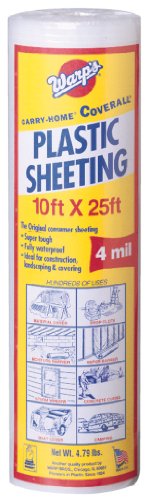
Every pole system needs sheeting, and this supplies it in large folded sheets you cut to size. It handles easily while staying thick enough to hold against a pole head fitted with a grip disc. Dispose of it as consumable, with the trapped dust bundled inside.
Pros
- Covers a large span for the lowest cost
- Cuts easily to fit any opening
- Bundles away with dust trapped inside
Cons
- Tears under rough handling
- Needs grip discs at pole heads due to thin gauge
How they stack up
| # | Model | Pole range | Best for | Score | Price |
|---|---|---|---|---|---|
| 1 | ZipWall ZP4 Spring Loaded Pole Dust Barrier Kit | Extends to around 10ft ceilings | Best overall | 9.4 | Check price |
| 2 | ZipWall ZipDoor Standard Door Kit | Standard door frames | Best for single doorways | 9.2 | Check price |
| 3 | Trimaco E-Z Up Pole Dust Barrier System | Adjustable to around 10ft | Best value pole system | 9.0 | Check price |
| 4 | ZipWall AZ2 ZipPole Spring Loaded Poles | Extends beyond standard 10ft poles | Best for high ceilings | 8.8 | Check price |
| 5 | Surface Shields ZipUp Door Dust Barrier Kit | Adhesive zip strips | Best budget doorway seal | 8.6 | Check price |
| 6 | 3M Hand-Masker Dust Protection System | Tape and film dispenser | Best for taped edges | 8.3 | Check price |
| 7 | Warp Brothers Coverall Plastic Sheeting | Polyethylene film | Best budget sheeting | 8.0 | Check price |
Before you buy
Why poles beat tape on finished surfaces Taping plastic to a painted wall or ceiling takes a long time and often removes paint when pulled off. Spring loaded poles brace between floor and ceiling instead, holding sheeting under tension without touching the decoration. For any already finished room, that difference separates a clean job from a repainting job.
Sealing the gaps a doorway barrier misses A barrier across the doorway covers only part of the containment job. Fine dust travels through the return air path, so cover HVAC vents in the work area and seal the gap under any adjoining door. Owners report dust turning up in distant rooms almost always traces back to an uncovered vent rather than a leaky sheet.
Choosing an entry method for how often people walk through A plain taped sheet works fine if the room stays sealed until dust settles. A zipped door pays for itself immediately when trades carry materials in and out all day, since peeling back a taped sheet releases a cloud each time. Both ZipDoor and the Surface Shields zip strips solve that specific problem.
Weighing reusable hardware against consumables Poles and dispensers count as hardware that lasts for years and gets cheaper with every job. Sheeting, adhesive zips and masking film count as consumables bought fresh each time. A single renovation favors consumable heavy approaches, while repeated renovating or trade work favors buying pole hardware once and consuming only sheeting.
Questions worth asking
Do dust barriers really contain drywall dust?
A properly sealed barrier makes a very large difference, though nothing works perfectly. The combination that succeeds pairs poles with sheeting, a zipped entry, covered air vents and negative pressure from a fan venting outward.
What thickness of plastic sheeting works best?
Thin gauge film handles easily and works fine for most dust containment, especially with grip discs at the pole heads. Heavier gauge earns its cost when a barrier stays up for weeks or people brush past it repeatedly.
Can a dust barrier work on a sloped or textured ceiling?
Spring loaded poles work on both. A small pad under the pole head spreads the load on textured surfaces and avoids marking. Sloped ceilings need poles set at a slight angle, which ZipWall’s pivoting heads accommodate.
Will pole systems damage a finished ceiling?
They are designed not to, using padded heads that spread pressure across the surface. The real risk is over extending the pole, which can dimple plasterboard. Extend until firm rather than until it strains against the ceiling.
Do you still need a dust extractor with a barrier in place?
Yes, and the two work together. A barrier stops dust from leaving the room, while extraction at the tool stops it from becoming airborne in the first place. Containment alone means working in a fog and cleaning far more afterward.
How do you keep negative pressure in a sealed room?
An air scrubber or a box fan venting out of a window pulls air outward, so any leaks in the barrier draw clean air in rather than push dust out. This cheap addition improves containment noticeably.
Can dust barrier systems be reused on future jobs?
Poles and the Hand-Masker dispenser last indefinitely across many jobs. ZipDoor kits survive several jobs before replacement. Adhesive zip strips and plain sheeting work as single use items, so budget for those each time.
What is the fastest way to seal a single doorway?
A pre made ZipDoor kit attaches to the frame and is ready to walk through within a couple of minutes. Building the same setup from sheeting and an adhesive zip costs less but takes longer and needs careful cutting.
ZipWall ZP4 vs Trimaco E-Z Up: which pole system wins?
ZipWall’s spring loaded poles erect faster and hold tension automatically, worth it for daily trade use. Trimaco’s twist lock poles cost less and suit occasional home renovation just as well. Frequency of use should decide between them.
The bottom line
For anyone doing more than a single afternoon of dusty work, the ZipWall ZP4 pole kit pays back fastest, since it seals a room without taping anything to finished surfaces. Add a ZipDoor kit when trades will walk in and out all day, because a taped sheet loses its seal the moment someone pulls it aside. Pair either with inexpensive Warp Brothers Coverall sheeting and cover the air vents, the step most people skip and later regret.