How Deep Does an Elevated Garden Bed Need to Be?
Vego Garden Elevated Raised Garden Bed leads this list for its steel construction and generous soil depth. Keter Easy Grow assembles fastest and includes a self watering reservoir. Greenes Fence Cedar Elevated Garden Bed suits gardeners who want untreated natural wood.
Vego Garden Elevated Raised Garden Bed tops this list for standing height growing. Keter Easy Grow is the simplest to set up, with a built in reservoir. Greenes Fence Cedar bed suits anyone who prefers natural timber over metal or resin.
Elevated beds fix the kneeling problem, then introduce two new ones catalogue photos rarely show. Shallow soil dries out fast in summer heat. A bed full of wet soil is heavy for a frame balanced on four legs. Depth and structure matter more than looks here. We ranked these seven using published soil depth, working height, materials, drainage design and owner reports on leg stability and drying speed.
Our top picks

Vego Garden Elevated Raised Garden Bed
Coated galvanised steel replaces wood or thin resin in this build, so the bed resists rot, warping and brittleness across seasons outdoors. Soil depth stays generous at a comfortable standing height. Panels bolt together into a rigid box rather than relying on friction fit. Owners report the metal holds its shape under a full load of wet soil better than plastic competitors.
Pros
- Metal frame resists rot and warping
- Stays rigid under a full load of wet soil
- Coated finish resists rust at the joints
Cons
- Assembly involves many bolts and takes time
- Metal panels warm quickly in direct sun

Keter Easy Grow Elevated Garden Bed
Weather resistant resin forms the body here, with a self watering reservoir and level indicator built into the base. That reservoir directly addresses the biggest weakness of elevated growing: fast drying. Assembly needs no tools and takes minutes. Soil depth runs shallower than metal or timber beds, so salads, herbs and compact crops suit it better than root vegetables.
Pros
- Reservoir cuts daily watering considerably
- Assembles in minutes without tools
- Resin never needs rot treatment
Cons
- Soil depth limits deep rooted crops
- Resin can fade after several seasons in sun

Greenes Fence Cedar Elevated Garden Bed
Untreated North American cedar forms this frame, naturally resisting rot without chemical treatment near edible crops. Boards slot into corner posts for simple assembly. Cedar will silver with age and eventually decay, so expect a strong run of seasons rather than the indefinite life of metal. Gardeners who want nothing but wood touching their soil tend to choose this one.
Pros
- Untreated wood suits edible growing
- Cedar resists rot naturally
- Fits a traditional garden look
Cons
- Wood will eventually weather and decay
- Heavier to move once assembled

Yaheetech Elevated Wooden Raised Garden Bed
Fir replaces pricier cedar in this frame, which keeps the cost well below other wooden beds. A fabric liner slows moisture from reaching the timber underneath. This is a practical way to test whether elevated growing suits your household before spending more. Expect to reline or treat the exterior after a couple of seasons given the softer wood.
Pros
- Low cost way to try elevated growing
- Liner included rather than sold separately
- Simple assembly with basic tools
Cons
- Fir resists rot less than cedar
- Slatted base flexes under heavy wet soil
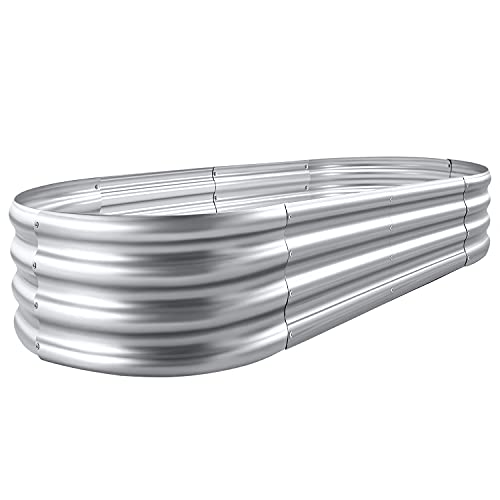
Land Guard Galvanized Elevated Garden Bed
Galvanised steel here costs noticeably less than premium metal brands while keeping the core advantage: a frame that will not rot. Panel gauge runs thinner, so assembly care matters more. Owners report solid performance provided the bed sits on firm, level ground and gets filled evenly. A perforated base keeps drainage free flowing.
Pros
- Metal durability at a lower cost
- Perforated base drains freely
- Neutral finish suits most gardens
Cons
- Panels are thinner than premium steel beds
- Edges need care during assembly
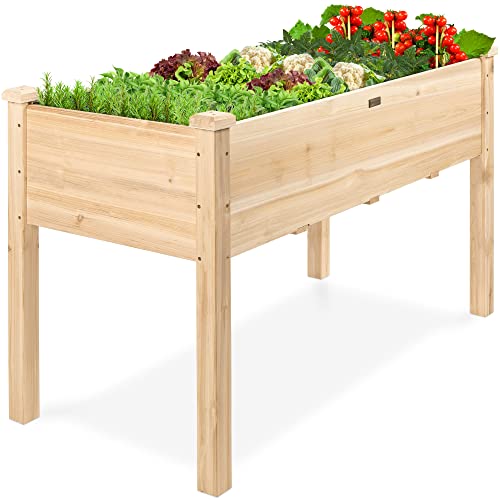
Best Choice Products Elevated Raised Garden Bed
A compact wooden planter box on legs, built for a balcony or patio where a full sized bed will not fit. A lower shelf usually holds tools and pots, a genuinely useful feature in a tight space. Soil volume stays modest, so plan on herbs, salads and a couple of compact crops rather than a full plot. Light overall weight makes repositioning easy when empty.
Pros
- Fits small patios and balconies
- Storage shelf keeps tools within reach
- Light enough to reposition when empty
Cons
- Small soil volume dries out quickly
- Liner needs periodic replacement

Outsunny Raised Garden Bed with Legs
Simple and shallow by design, this tray suits cut and come again salads, herbs and seedlings rather than deep rooted crops. A narrow width lets most gardeners reach the back without stretching. Tomatoes and root vegetables are not the target here. For the crops it is built for, the shallow tray warms and drains quickly come spring.
Pros
- Ideal depth for salads and herbs
- Narrow reach suits limited mobility
- Warms early in spring for seedlings
Cons
- Too shallow for deep rooted vegetables
- Needs watering more often than deep beds
How they stack up
| # | Model | Material | Best for | Score | Price |
|---|---|---|---|---|---|
| 1 | Vego Garden Elevated Raised Garden Bed | Coated galvanised steel panels | Best overall | 9.4 | Check price |
| 2 | Keter Easy Grow Elevated Garden Bed | Weather resistant resin | Best for self watering | 9.2 | Check price |
| 3 | Greenes Fence Cedar Elevated Garden Bed | Untreated cedar boards | Best for natural wood | 9.0 | Check price |
| 4 | Yaheetech Elevated Wooden Raised Garden Bed | Fir wood frame | Best for budget wood | 8.7 | Check price |
| 5 | Land Guard Galvanized Elevated Garden Bed | Galvanised steel | Best for value metal | 8.5 | Check price |
| 6 | Best Choice Products Elevated Raised Garden Bed | Wood frame with liner | Best for patios | 8.2 | Check price |
| 7 | Outsunny Raised Garden Bed with Legs | Wood with protective coating | Best for herbs and salads | 8.0 | Check price |
Before you buy
How deep does an elevated garden bed need to be? Soil depth is the specification that separates a productive bed from a disappointing one. Salads, herbs, spinach and radishes thrive in six to eight inches. Bush beans, peppers and compact courgettes want ten to twelve. Tomatoes, carrots and potatoes need closer to eighteen inches to perform. Many elevated beds are shallow trays on tall legs, so check the soil depth spec rather than the overall height.
Why do elevated beds dry out so fast? Air reaches an elevated bed from every side and underneath, so it drains and dries far faster than a ground level bed. A shallow bed can need watering twice a day during midsummer heat. Self watering designs like the Keter Easy Grow reservoir help considerably. Mulching the surface with straw or bark also cuts evaporation, and water retentive compost outperforms simply watering more often.
Can a garden bed on legs handle the weight of wet soil? Damp soil weighs roughly 70 to 100 pounds per cubic foot, so even a modest elevated bed can hold several hundred pounds once watered. That load rests entirely on four legs and their joints. Metal frames such as Vego and Land Guard handle it best, while slatted wooden bases are the ones that sag over time. Setting the bed on firm, level ground rather than soft lawn also reduces stress on the frame.
Is cedar or metal better for an elevated garden bed? Untreated cedar is naturally rot resistant and remains the traditional choice for edible growing, since nothing leaches into the soil. Fir and pine cost less but decay faster unless lined. Galvanised and coated steel beds last longer than any timber option and are now common for vegetable growing. Check what treatment a wooden bed received, and add a food safe liner if you want extra separation from the timber.
Good to know
How deep should an elevated garden bed be?
Six to eight inches works for salads and herbs, ten to twelve inches suits most bush vegetables, and eighteen inches or more is needed for tomatoes, carrots and potatoes. Check the stated soil depth rather than the total height, since many beds put a shallow tray on tall legs.
Do elevated beds dry out faster?
Yes, noticeably. Air circulates on all sides and underneath, so evaporation runs much higher than in a ground level bed. Expect daily watering in warm weather and twice daily for shallow beds in a heatwave. Mulching and self watering reservoirs both reduce the burden considerably.
What soil mix should I use?
A common approach is roughly equal parts quality compost, topsoil and an aerating material such as perlite or coarse bark. Avoid filling with garden soil alone, which compacts badly in a container. Because the volume is limited, refresh the top few inches with fresh compost each season.
Can I leave an elevated bed outside in winter?
Metal and resin beds handle winter without issue. Wooden beds last longer if the soil is kept from constantly saturating the timber, which a liner helps with. In hard frost areas, remember that a raised bed freezes through more completely than ground soil, which affects perennial plantings.
How much soil will I need to fill one?
Multiply the length, width and soil depth in feet to get cubic feet, then divide by 27 for cubic yards. A typical elevated bed takes somewhere between four and twelve cubic feet. Buying compost in bulk bags is usually far more economical than small retail bags once you pass a few cubic feet.
Are metal garden beds safe for vegetables?
Modern coated galvanised steel beds are widely used for food growing and are considered safe by most gardening sources. The zinc coating is stable in typical garden soil pH. If you want extra reassurance, a fabric liner between the metal and the soil is an easy addition.
Will an elevated bed keep pests out?
It helps against slugs, rabbits and ground level pests, since they have to climb a leg to reach the crop, and copper tape on the legs improves that further. It does nothing for birds, caterpillars or aphids, so netting and hoops are still worth adding for brassicas and soft fruit.
Can I put one on a balcony or deck?
Yes, but check the weight first. A filled bed can exceed several hundred pounds, which matters on older balconies and raised decks. Compact patio planters such as the Best Choice Products bed are far lighter. Also use a drip tray or plan for water running out of the base onto the surface below.
What is the best elevated garden bed for bad knees or limited mobility?
Any bed with a soil surface at or near waist height removes the need to kneel or bend, which is the main benefit for knee or back pain. The Vego Garden and Keter Easy Grow both put the growing surface at a comfortable standing height.
Do elevated garden beds need a liner?
Resin and metal beds do not need one, since the material itself resists rot and corrosion. Wooden beds benefit from a fabric liner between soil and timber, which slows moisture damage and can extend the frame’s life by a season or more.
Final word
Vego Garden Elevated Raised Garden Bed earns the top spot because steel construction avoids the rot and warping that eventually catches every wooden bed, and its soil depth supports real vegetable growing. Choose the Keter Easy Grow when daily watering is the bigger obstacle. Pick the Greenes Fence Cedar bed for a natural, untreated timber look.