Ergonomic Mice That Ease Wrist and Forearm Strain
The Logitech MX Master 3S is our top ergonomic mouse for its sculpted shape, quiet clicks and long battery life. The Logitech MX Vertical suits anyone who wants a full 57 degree handshake angle, while the Logitech Lift is the better fit for small and medium hands.
If you want one ergonomic mouse that works for most desks, the Logitech MX Master 3S is the safest pick, with the Logitech MX Vertical for a steeper handshake angle and the Logitech Lift for smaller hands. Trackball users should look at the Logitech ERGO M575 instead.
Ergonomic mice are tricky because comfort depends on your hand size and how you already hold a mouse, so a shape that relieves one person can irritate another. We compared published dimensions, grip angles, button counts, sensor specifications and connectivity, then weighed what owners report about long sessions, and ranked the seven below on fit range, control and everyday practicality.
The top picks, ranked

Logitech MX Master 3S
The MX Master 3S pairs a tall sculpted body with a thumb rest that keeps the wrist off the desk without forcing a full vertical position. Its MagSpeed wheel and quiet switches make long document and spreadsheet days less tiring. Owners report it works well on glass and other awkward surfaces thanks to the 8000 DPI sensor.
Pros
- Sculpted shape supports the palm and thumb
- Quiet clicks suit shared offices
- Pairs with three devices and flows between them
Cons
- Too large for smaller hands
- Right hand only

Logitech MX Vertical
The MX Vertical holds the forearm at a 57 degree angle that reduces the twist through the wrist compared with a flat mouse. Logitech pairs that with a textured rubber flank and a cursor speed switch for finer control. Based on specifications it charges over USB C and runs for months per charge.
Pros
- Steep angle takes pressure off the wrist
- Textured surface keeps the grip stable
- Works wired while charging
Cons
- Vertical grip needs an adjustment period
- Fewer programmable buttons than the MX Master
Logitech Lift Vertical Ergonomic Mouse
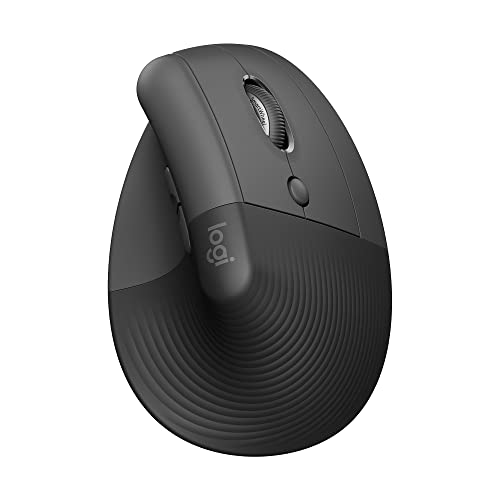
The Lift takes the same vertical idea as the MX Vertical and shrinks it for smaller palms, which is where many vertical mice fall down. It uses a 57 degree angle with SilentTouch switches and a soft thumb rest. A left hand version exists, which is rare in this shape.
Pros
- Sized for small to medium hands
- Quiet switches
- Left hand version available
Cons
- Uses a replaceable battery rather than recharging
- Lighter build than the MX Vertical

Logitech ERGO M575 Trackball Mouse
A thumb trackball keeps the whole hand still, which suits cramped desks and anyone whose pain flares with repeated arm movement. The M575 has a sculpted shell and a smooth ball that lifts out for cleaning. Owners report the learning curve takes a few days before precision returns.
Pros
- The hand and arm stay still while working
- Needs almost no desk space
- Very long battery life
Cons
- Trackball control takes practice
- Ball housing needs occasional cleaning

Kensington Pro Fit Ergo Vertical Wireless Mouse
Kensington uses a 60 degree slope with a wide base that stops the mouse tipping during quick movements. It offers dual wireless connection and a DPI switch on top for changing sensitivity between tasks. Based on specifications it targets medium to large hands.
Pros
- Wide base feels planted
- Straightforward dual wireless pairing
- Sensitivity switch on top
Cons
- Lower maximum DPI than rivals
- Plain plastic finish

Anker 2.4G Wireless Vertical Ergonomic Optical Mouse
This is the mouse most people try first when they want to know whether a vertical shape helps. It has three DPI settings, back and forward buttons and a simple USB receiver with no software required. Owners report the build feels basic but the shape does the job.
Pros
- Low cost way to try a vertical grip
- Plug and play with no drivers
- Includes browser navigation buttons
Cons
- Plastic build feels light
- No Bluetooth option

Microsoft Sculpt Ergonomic Mouse
The Sculpt uses a rounded dome rather than a vertical wall, which fills the palm and reduces the need to arch the hand. A Windows button and four way scroll wheel sit within thumb reach. It suits people who find full vertical mice too extreme a change.
Pros
- Gentle shape change from a standard mouse
- Fills the palm and reduces arching
- Four way scroll wheel
Cons
- No Bluetooth, the receiver must stay plugged in
- Less wrist relief than a true vertical
Before you buy
Match the grip angle to your symptoms A flat mouse forces the forearm bones to cross, which is what many people feel as a burning ache along the wrist. Vertical mice at 57 to 60 degrees remove most of that twist, while sculpted mice like the MX Master reduce it only partly. If the pain sits in your wrist and forearm, a steeper angle usually helps most. If the discomfort is in the fingers or thumb, a trackball that removes arm movement may be the better answer.
Measure your hand before you choose Hand length from wrist crease to middle fingertip is the single most useful number here. Under roughly 17cm counts as small, and full size vertical mice such as the MX Vertical often feel like a stretch. That is exactly the gap the Logitech Lift fills. Comparing the published length, width and height of each mouse against your own measurement avoids the most common ergonomic mouse mistake, which is buying a shape that is right in theory and too big in practice.
Buttons, sensor and surface Programmable side buttons matter more on an ergonomic mouse than a standard one, because assigning copy, paste or browser navigation reduces how often you reach for the keyboard. Sensor DPI matters less than most listings suggest, but a higher figure helps on large or high resolution displays since the cursor crosses the screen with less arm travel. Darkfield style sensors also cope with glass desks, which cheaper optical sensors struggle with.
Connection type and power Bluetooth keeps the USB port free and suits laptops, while a dedicated receiver tends to feel slightly more responsive and works during boot and in BIOS screens. Rechargeable models remove battery shopping but need a cable now and then, whereas AA powered mice often run a year or more per cell. If you move between a laptop and a desktop, multi device pairing is worth prioritising over almost every other feature.
Side by side
| # | Model | Design | Best for | Score | Price |
|---|---|---|---|---|---|
| 1 | Logitech MX Master 3S | Sculpted right hand | Best overall | 9.4 | Check price |
| 2 | Logitech MX Vertical | 57 degrees | Best for wrist pain relief | 9.2 | Check price |
| 3 | Logitech Lift Vertical Ergonomic Mouse | 57 degrees | Best for small and medium hands | 9.0 | Check price |
| 4 | Logitech ERGO M575 Trackball Mouse | Thumb operated trackball | Best trackball | 8.8 | Check price |
| 5 | Kensington Pro Fit Ergo Vertical Wireless Mouse | 60 degrees | Best value vertical | 8.6 | Check price |
| 6 | Anker 2.4G Wireless Vertical Ergonomic Optical Mouse | Vertical right hand | Best budget | 8.3 | Check price |
| 7 | Microsoft Sculpt Ergonomic Mouse | Domed ergonomic shell | Best for a domed palm rest | 8.0 | Check price |
Good to know
Does a vertical mouse actually reduce wrist pain?
It changes forearm rotation, which is the mechanical cause of a lot of mousing discomfort. Owners commonly report relief within a week or two, though a mouse alone will not fix pain caused by desk height, chair position or long unbroken sessions.
How long does it take to get used to a vertical mouse?
Most people describe two to five days of slower, slightly clumsy cursor work before it feels normal. Precision tasks such as photo editing tend to take the longest to come back.
Is a trackball better than a vertical mouse?
They solve different problems. A vertical mouse fixes forearm twist, while a trackball removes arm and shoulder movement entirely. Choose a trackball if your desk space is small or if repeated arm sweeping is what aggravates your symptoms.
Do I need a mouse pad with an ergonomic mouse?
Not usually. Most of these use sensors that track fine on wood or laminate, and the Darkfield sensor in the MX Master 3S even handles glass. A pad still helps if your desk is textured or very glossy.
Are there ergonomic mice for left handed users?
Fewer than there should be, but the Logitech Lift comes in a dedicated left hand version, and trackballs like the ERGO M575 can be used with either hand after some practice.
What DPI setting should I use?
Pick the lowest setting that still lets you cross the screen with a comfortable forearm movement. Higher DPI reduces arm travel, which matters on wide or 4K monitors, but too high makes fine clicking harder.
Will an ergonomic mouse work for gaming?
Casual gaming is fine on most of these. Competitive shooters are a different matter, since vertical shapes and trackballs sacrifice the fast flick movements that flat gaming mice are built around.
Bluetooth or a USB receiver?
A receiver is more reliable during startup and in BIOS menus and feels marginally quicker. Bluetooth saves a port and is easier on laptops. Several models here offer both, which is the most flexible option.
The bottom line
For most desks the Logitech MX Master 3S remains the balanced choice, combining a supportive sculpted shape with the button layout and multi device switching that make long working days easier. If your wrist pain is the reason you are shopping, step up to the full 57 degree angle of the MX Vertical, or the smaller Logitech Lift if standard vertical mice have felt oversized. Anyone short on desk space should try the ERGO M575 trackball instead.