Top Expansion Cards to Boost Your Desktop’s Capabilities
The TP-Link TX401 is our top pick for its exceptional 10Gbps networking performance and broad compatibility, making it ideal for power users and small offices, though it requires a PCIe 3.0 x4 slot and adequate cooling.
Expansion cards are the gateway to upgrading your desktop’s functionality. Whether you need more USB ports, faster networking, or additional storage, the right card can transform your PC. This roundup highlights the best options across various needs.
We evaluated each card based on specifications, user reviews, and compatibility. From budget-friendly SATA cards to high-end 10G adapters, our selections cover a range of performance levels and budgets.
The top picks, ranked
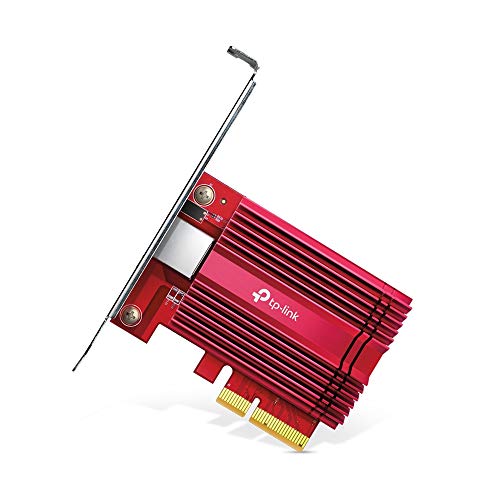
TP-Link TX401 10G PCIe Network Adapter
The TP-Link TX401 delivers blazing 10Gbps speeds over copper cabling, making it perfect for NAS transfers and heavy network workloads. It supports PCIe 3.0 x4 and offers a single RJ45 port with auto-negotiation down to 1Gbps. Users praise its stable drivers and easy installation, though it runs warm under load.
Pros
- Exceptional 10Gbps throughput
- Broad OS support (Windows, Linux)
- Reliable brand and drivers
Cons
- Requires active cooling in tight cases
- Higher price point

StarTech.com 4 Port PCIe USB 3.0 Card
StarTech’s PEXUSB3S44V adds four USB 3.0 ports via a PCIe x4 slot, each with up to 5Gbps transfer speeds. It includes a SATA power connector for additional power delivery, making it suitable for high-power devices. Users find it reliable for external drives and VR headsets.
Pros
- Four independent USB channels
- Easy plug-and-play setup
- Works with standard power supply
Cons
- No USB-C ports
- May require extra power cable

SABRENT M.2 NVMe PCIe Adapter Card
Sabrent’s EC-SDNE supports a single M.2 NVMe SSD up to 22110 size, offering PCIe 3.0 x4 speeds. It comes with a low-profile bracket for small form factor PCs. Owners appreciate its simplicity and solid build quality, though it lacks RAID support.
Pros
- Supports large M.2 drives
- Includes low-profile bracket
- Plug and play with NVMe
Cons
- Single slot only
- No heatsink included

Syba SI-PEX40064 SATA III 4 Port PCIe Card
The Syba SI-PEX40064 provides four SATA III ports via PCIe 2.0 x1, ideal for connecting extra HDDs or SSDs. It supports port multiplier and bootable RAID, though performance is limited by the x1 interface. Users find it a cost-effective way to expand storage.
Pros
- Very affordable
- Bootable RAID support
- Works with most OSes
Cons
- Limited bandwidth (x1)
- No hardware RAID

FebSmart USB 3.0 5-Port PCIe Expansion Card
This FebSmart card adds five USB 3.0 ports (two internal headers) through a PCIe x4 interface, delivering 5Gbps shared bandwidth. It includes a 4-pin power connector for stable power. Users like the internal headers for front panel connections, but note the shared bandwidth.
Pros
- Includes internal USB headers
- Good price per port
- Works with standard PC cases
Cons
- Shared bandwidth among ports
- Limited to USB 3.0 speeds

ASUS XG-C100C 10G PCIe Network Adapter
ASUS XG-C100C offers 10Gbps networking with a stylish heatsink and supports both copper and SFP+ via an included module. It uses the Aquantia AQC107 chipset and works on Windows and Linux. Gamers and content creators enjoy its low latency and high throughput.
Pros
- SFP+ and RJ45 flexibility
- Attractive design
- Reliable performance
Cons
- Premium price
- May require firmware updates

Vantec UG-PCE240 2 Port SATA III PCIe Card
Vantec’s card adds two SATA III ports using PCIe 2.0 x1, perfect for adding a couple of drives without breaking the bank. It features a Marvell controller and supports bootable drives. Users mention it is straightforward to install, but it may not support advanced RAID.
Pros
- Easy to install
- Low cost
- Stable performance
Cons
- Only two ports
- No RAID support
Before you buy
How they compare
| # | Model | Interface | Best for | Score | Price |
|---|---|---|---|---|---|
| 1 | TP-Link TX401 10G PCIe Network Adapter | PCIe 3.0 x4 | High-speed wired networking | 9.4 | Check price |
| 2 | StarTech.com 4 Port PCIe USB 3.0 Card | PCIe x4 (also fits x8/x16) | Adding USB 3.0 ports | 9.1 | Check price |
| 3 | SABRENT M.2 NVMe PCIe Adapter Card | PCIe 3.0 x4 | Expanding NVMe storage | 9.0 | Check price |
| 4 | Syba SI-PEX40064 SATA III 4 Port PCIe Card | PCIe 2.0 x1 | Adding SATA ports | 8.8 | Check price |
| 5 | FebSmart USB 3.0 5-Port PCIe Expansion Card | PCIe x4 | Multiple USB devices | 8.7 | Check price |
| 6 | ASUS XG-C100C 10G PCIe Network Adapter | PCIe 3.0 x4 | Gaming and high-end builds | 9.2 | Check price |
| 7 | Vantec UG-PCE240 2 Port SATA III PCIe Card | PCIe 2.0 x1 | Simple storage expansion | 8.4 | Check price |
Good to know
What is an expansion card?
An expansion card is a circuit board that slots into a computer’s motherboard to add functionality, such as extra USB ports, network connectivity, or storage interfaces.
How do I know what PCIe slot I have?
Check your motherboard manual or use system tools like CPU-Z. Look for PCIe x1, x4, x8, or x16 slots, and note the generation (e.g., PCIe 3.0).
Can I use a PCIe 3.0 card in a PCIe 4.0 slot?
Yes, PCIe is backward and forward compatible. The card will operate at the speed of the slower generation, so a PCIe 3.0 card in a 4.0 slot will run at 3.0 speeds.
Do expansion cards work with laptops?
Most expansion cards are for desktop PCs. Laptops use ExpressCard, M.2 slots, or Thunderbolt docks instead. Some external enclosures might work via USB or Thunderbolt.
What is the difference between USB 3.0 and USB 3.1?
USB 3.0 offers up to 5Gbps, while USB 3.1 Gen 2 offers up to 10Gbps. Many newer cards support USB 3.1, but check the specifications.
Can I add more SATA ports to my PC?
Yes, using a SATA expansion card. These cards provide additional SATA ports, often supporting RAID modes. Ensure your power supply has enough connectors for extra drives.
Do expansion cards require drivers?
Most do, especially for advanced features. Windows often includes generic drivers, but for optimal performance, install the manufacturer’s drivers.
What is a low-profile bracket?
A low-profile bracket is shorter, allowing cards to fit in small form factor cases. Many cards come with both full-height and low-profile brackets.
Can I use multiple expansion cards simultaneously?
Yes, as long as you have available PCIe slots and sufficient power and cooling. Some cards may interfere with each other due to space, so plan accordingly.
Are expansion cards hot-swappable?
No, expansion cards are not designed for hot-swapping. You should power off the computer before installing or removing them.
The verdict
For most users needing extra USB or storage, the FebSmart USB card or Syba SATA card offer the best value. If you require top-tier network speeds, the TP-Link TX401 is the clear winner for its performance and reliability. Choose based on your primary need, but for a balanced upgrade, the StarTech USB 3.0 card is a solid all-rounder.