Faster Backups Start With the Right External Drive
Samsung’s T7 Portable SSD leads this lineup with fast, compact all-around performance for most buyers. Outdoor and job site users should pick the SanDisk Extreme Portable SSD V2 for its IP55 rating against dust and rain. Buyers archiving large libraries on a budget get the most capacity from the WD My Passport.
Samsung’s T7 Portable SSD suits most buyers who want fast transfers without hard drive bulk, though it costs more per gigabyte than spinning storage.
Capacity, transfer speed and drop resistance vary sharply between drives, so this comparison weighs published specifications, owner feedback on durability and how each model fits use cases like gaming, photography and travel backup.
The best picks, ranked
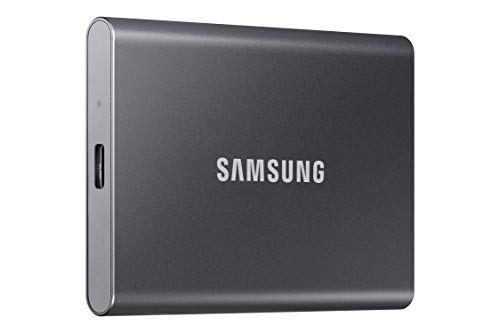
Samsung T7 Portable SSD
Flash memory inside the T7 delivers read speeds up to 1050MB/s over USB 3.2 Gen 2. Samsung packs it into a 58 gram aluminum shell that ships in 500GB, 1TB and 2TB sizes. A security enabled variant adds AES 256-bit hardware encryption for locked folders.
Pros
- Slips into a jacket pocket at just 58 grams
- Handles 4K video editing without dropped frames
- Works across Mac, Windows and Android devices
Cons
- Skips any IP rating against water or dust
- Runs a higher cost per terabyte than hard drives
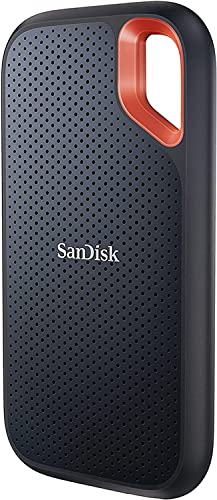
SanDisk Extreme Portable SSD V2
Dust and water spray resist the SanDisk Extreme thanks to its IP55 rating. A silicone jacket wraps the shell to absorb drops, while read speeds still reach 1050MB/s over USB 3.2 Gen 2. Capacities span 500GB to 4TB, and a molded carabiner loop clips onto a bag strap.
Pros
- IP55 sealing shrugs off dust and light rain
- Silicone housing cushions accidental drops
- Scales up to 4TB for larger libraries
Cons
- Bulkier footprint than the Samsung T7
- Ships with a USB-C cable only, no USB-A adapter
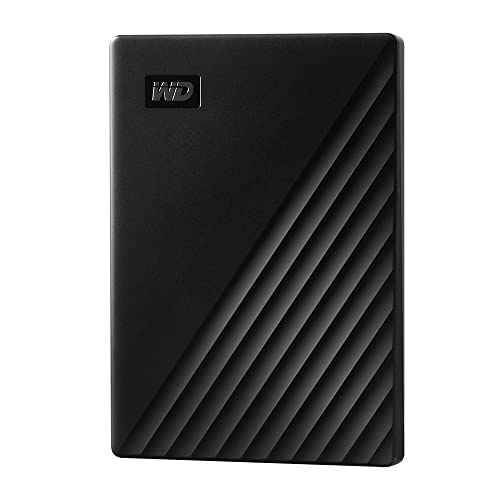
WD My Passport Portable Hard Drive
Spinning platters inside the My Passport reach capacities up to 5TB for a fraction of SSD pricing per terabyte. USB 3.0 handles the connection, and bundled WD Backup software automates scheduled backups. An optional password lock adds 256-bit AES hardware encryption.
Pros
- Delivers the lowest cost per terabyte here
- Reaches 5TB for sprawling photo and video archives
- Includes WD Backup software at no extra cost
Cons
- Trails every SSD in this lineup on transfer speed
- Spinning platters make it more fragile in a fall

Crucial X9 Portable SSD
Crucial prices the X9 below most flash drives while still hitting 1050MB/s over USB 3.2 Gen 2. An aluminum shell houses 1TB, 2TB and 4TB options. Both Mac and PC recognize it immediately since Crucial preformats every unit for cross platform use.
Pros
- Matches premium SSD speeds at a lower price
- Reads and writes on Mac and PC without reformatting
- Stays light and compact for daily commutes
Cons
- Offers no password protection or encryption option
- Carries no IP rating against dust or water
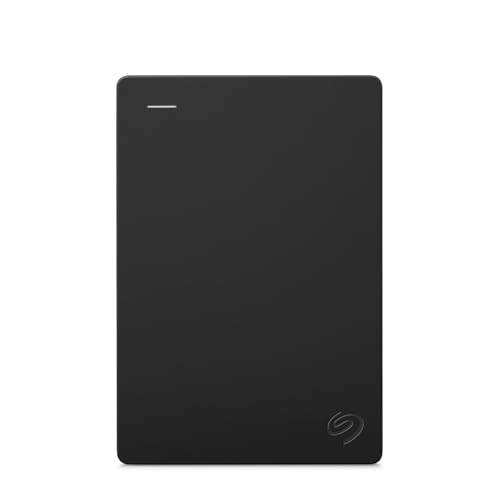
Seagate Expansion Portable Drive
Seagate strips the Expansion down to a plug and play hard drive with no software to install. Capacities climb to 5TB for straightforward file dumps over USB 3.0. Plastic housing keeps both weight and price below rugged alternatives.
Pros
- Starts transferring files the moment it’s plugged in
- Holds up to 5TB for bulk backup jobs
- Costs less per terabyte than rugged competitors
Cons
- Plastic shell offers little protection from drops
- Feels noticeably slower next to any SSD on this list

LaCie Rugged Mini
A rubber bumper wraps the LaCie Rugged Mini’s hard drive mechanism, rated to survive drops from about 1.2 meters. Closing the port cover blocks light rain and dust. Capacities top out at 5TB over a USB 3.0 connection.
Pros
- Rubber bumper absorbs drops up to 1.2 meters
- Sealed port cover blocks dust and light rain
- Bright orange design stands out inside a gear bag
Cons
- Spinning disk trades speed for durability
- Weighs more than any flash based drive here
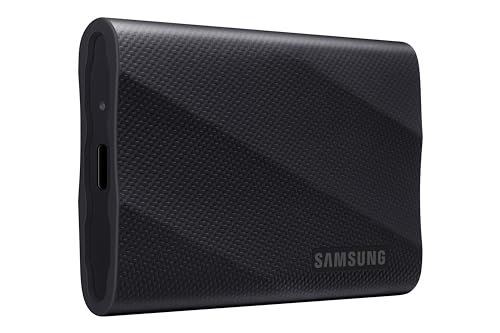
Samsung T9 Portable SSD
USB 3.2 Gen 2×2 lets the T9 hit read speeds up to 2000MB/s, nearly double the T7. Samsung wraps it in a rubberized frame for grip and light shock absorption. PS5 and Xbox Series X both recognize it for expanding game storage.
Pros
- Doubles the T7’s throughput for large file transfers
- Rubberized frame adds grip and shock resistance
- Confirmed compatible with PS5 and Xbox Series X
Cons
- Needs a USB 3.2 Gen 2×2 port to reach full speed
- Costs more than the standard T7 at the same capacity
How they stack up
| # | Model | Interface | Best for | Score | Price |
|---|---|---|---|---|---|
| 1 | Samsung T7 Portable SSD | USB 3.2 Gen 2 | Best overall | 9.4 | Check price |
| 2 | SanDisk Extreme Portable SSD V2 | USB 3.2 Gen 2 | Best for rugged and outdoor use | 9.2 | Check price |
| 3 | WD My Passport Portable Hard Drive | USB 3.0 | Best value for large capacity | 9.0 | Check price |
| 4 | Crucial X9 Portable SSD | USB 3.2 Gen 2 | Best budget SSD | 8.8 | Check price |
| 5 | Seagate Expansion Portable Drive | USB 3.0 | Best for bulk backup | 8.6 | Check price |
| 6 | LaCie Rugged Mini | USB 3.0 | Best for drop protection | 8.3 | Check price |
| 7 | Samsung T9 Portable SSD | USB 3.2 Gen 2×2 | Best for gaming and speed | 8.0 | Check price |
Before you buy
Flash Storage vs Hard Drives: The Real Difference Flash memory has no moving parts, so an SSD like the Samsung T7 survives drops better than a spinning hard drive. Read speeds show the gap clearly: 1050MB/s over USB 3.2 Gen 2 versus roughly 130MB/s on a typical USB 3.0 hard drive. Hard drives such as the WD My Passport still win on cost per terabyte, which suits files you rarely open. Active projects call for an SSD; cold archives can stay on a hard drive.
How Much Capacity Do You Actually Need Photo and document backups rarely pass 1TB, so a Crucial X9 at that size covers most casual users. Raw 4K footage fills drives fast, pushing video editors and podcasters toward 2TB or more. Families archiving years of photos and old computer backups benefit from the WD My Passport’s higher tiers, which stretch to several terabytes. Extra capacity beyond your actual files adds cost without improving speed.
Best External Drives for Travel and Outdoor Use Dust, water and impact hit drives hard on construction sites, campsites and boats. An IP55 rating protects the SanDisk Extreme Portable SSD V2 against dust and water spray, and its silicone shell absorbs minor drops. LaCie’s Rugged Mini goes further with a rubber bumper rated for 1.2 meter drops, though a hard drive spins inside it. Field editors should also check cable type, since some rugged drives ship with USB-C only.
Which Drive Works Best for Consoles and Multiple Computers PlayStation and Xbox both benefit from sustained speeds that avoid load time penalties, and the Samsung T9’s USB 3.2 Gen 2×2 support delivers that. Households backing up several computers to one drive should look for bundled software, like the WD Backup app included with the My Passport. Seagate’s Expansion skips extra software entirely, favoring plug and play capacity for bulk file dumps. Confirm a drive’s file system works with both Mac and Windows before formatting it for shared use.
Questions worth asking
What is the best external storage for a gaming console?
The Samsung T9 Portable SSD suits PS5 and Xbox Series X well because USB 3.2 Gen 2×2 supports the sustained read speeds consoles use for game loading. Console ports may still cap actual throughput below the drive’s rated maximum.
How much external storage do I actually need?
Document and photo backups usually fit inside 1TB, while 4K video projects and large game libraries often need 2TB or more. Check your current file sizes before buying, since unused capacity doesn’t improve speed.
Which is better, an SSD or a hard drive for backups?
SSDs like the Samsung T7 transfer files faster and survive drops better because they carry no moving parts. Hard drives such as the WD My Passport cost less per terabyte, which works fine for archives you rarely open.
Can external storage work with both Mac and Windows?
Most drives ship formatted in exFAT or NTFS, and exFAT runs natively on both systems without reformatting. Some WD My Passport units arrive in NTFS and may need reformatting to exFAT for full Mac compatibility.
Is the Samsung T7 fast enough for video editing?
A rated 1050MB/s read speed over USB 3.2 Gen 2 handles most 1080p and 4K editing workflows smoothly. Editors working with uncompressed 8K footage may prefer the faster Samsung T9 instead.
What’s the best external drive for photographers?
The Crucial X9 Portable SSD offers enough speed for offloading RAW photo files in the field without hard drive bulk. Growing archives may outgrow its 4TB ceiling, pushing photographers toward a second drive.
Samsung T7 vs SanDisk Extreme Portable SSD V2: which holds up better outdoors?
An IP55 rating gives the SanDisk Extreme Portable SSD V2 dust and water resistance that the Samsung T7 lacks entirely. Anyone shooting or working outdoors regularly should lean toward the SanDisk model for that protection.
Does a rugged external drive really need drop protection?
Drop protection matters most for anyone carrying a drive in a bag, on a bike or around a job site where falls happen. The LaCie Rugged Mini’s rubber bumper is rated for drops from about 1.2 meters, cutting the odds of losing data after a fall.
How long does an external SSD last compared to a hard drive?
SSDs have no moving parts to wear out mechanically, which generally makes them more resilient to drops and vibration over time. Hard drives can still last for years under light use, but their spinning platters remain more vulnerable to physical shock.
Our pick
Samsung’s T7 Portable SSD earns the top spot for its balance of speed, compact size and broad compatibility. Fieldwork or outdoor shooting calls for the SanDisk Extreme Portable SSD V2 instead, thanks to its IP55 rating. Budget archivists building a large photo or video library will stretch their money further with the WD My Passport.


