How to Pick a Gas Strut That Won’t Slam or Sag
Apexstone 100N gas struts suit cabinet doors and light lids best, with mounting brackets included in the box. Stabilus Lift-O-Mat fits heavier automotive and industrial jobs. For overhead kitchen cabinets, Blum AVENTOS HK-XS beats a plain strut with its built-in soft close action.
For cabinet doors, toolbox lids and small hatches, Apexstone’s 100N strut and included brackets answer the question directly. Stabilus Lift-O-Mat suits heavier automotive and industrial jobs, while Blum AVENTOS HK-XS engineers a cleaner solution for overhead kitchen cabinetry.
Listings mix three separate measurements: force rating, extended length and stroke. Getting one wrong means a lid that slams shut or refuses to close. We compared published force ratings, length ranges, end fitting styles and included hardware, then grouped picks by the job they suit.
Our top picks
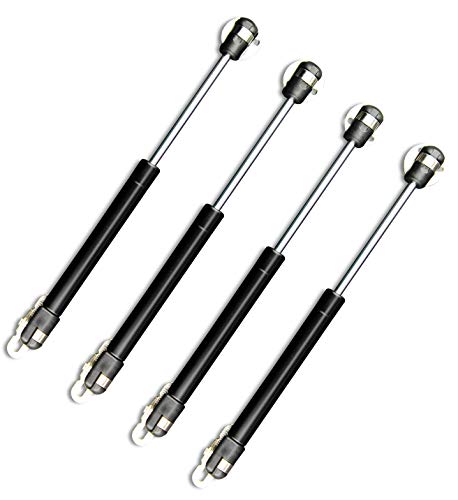
Apexstone 100N Gas Strut
Apexstone sells one strut body across a wide range of force ratings. The 100N version covers most cabinet doors, storage bench lids and light hatches. Each pair ships with ball stud brackets and screws, removing the usual hardware scramble.
Pros
- Brackets and screws included in the box
- Wide range of force ratings in one body
- Ball stud fitting suits DIY installs
Cons
- Not rated for heavy vehicle hatches
- Wrong force choice ruins the fit

Stabilus Lift-O-Mat Gas Spring
Stabilus supplies gas springs to vehicle manufacturers, and Lift-O-Mat is the version sold direct to consumers. Build quality and seal life explain why owners pick it over generic replacements for tailgates, hoods and RV compartment doors. Matching the original length and force takes care, since the line spans hundreds of variants.
Pros
- Manufacturer grade seals and rod finish
- Huge range of force and length variants
- Well suited to outdoor and vehicle use
Cons
- Hardware often sold separately
- Choosing the right variant takes research

Blum AVENTOS HK-XS Lift System
AVENTOS HK-XS is a compact mechanical lift arm built for small upper cabinet doors, not a bare strut. It holds the door at any point in its travel and closes with Blum’s soft close action, something a plain strut can’t do. It costs more and only suits cabinetry, but for kitchens it’s the cleanest solution here.
Pros
- Stops at any point in the door travel
- Adjustable force without swapping parts
- Soft close feel on the way down
Cons
- Only suits cabinet doors, not hatches
- Costs more than a plain strut pair

SUSPA C16 Series Gas Spring
SUSPA’s C16 series is a workhorse used in storage beds, furniture lids and equipment enclosures. Its larger bore gives more capacity than small cabinet struts, so it copes with heavy plywood and upholstered lids. Replacement buyers should record the extended length and force stamped on the old unit before ordering.
Pros
- Handles heavy furniture lids
- Long stated cycle life
- Consistent damping through the stroke
Cons
- Overkill for light cabinet doors
- End fittings often sold separately

Camloc Gas Strut
Camloc builds gas struts for machinery guards, access panels and industrial enclosures, where damping behaviour matters more than price. Locking and damped variants extend the range beyond what ordinary cabinet struts offer. It’s more product than a home shelf lid needs, but a sensible choice for workshop equipment.
Pros
- Damped and locking variants available
- Built for repeated industrial cycling
- Broad choice of end fittings
Cons
- Pricier than DIY grade struts
- Sizing charts assume engineering knowledge

Attwood Gas Spring Lift Support
Attwood focuses on marine hardware, and its gas springs use stainless fittings built for constant salt exposure. That corrosion resistance is the whole reason to choose it over a cheaper garage strut for a deck hatch or livewell lid. Force options run narrower than industrial lines, so check that your lid weight falls inside the range.
Pros
- Corrosion resistant fittings for marine use
- Straightforward ball socket mounting
- Sized sensibly for hatch lids
Cons
- Limited force rating choices
- Not the cheapest option for indoor jobs

Seachoice Gas Spring Lift Support
Seachoice covers the same marine and utility hatch brief as Attwood for noticeably less money, a reasonable pick for a trailer lid or shed hatch. Fit and finish take a step down, and owners report shorter service life in constant salt spray. For seasonal or sheltered use, that trade off is easy to accept.
Pros
- Low cost for a rated lift support
- Common sizes readily available
- Fits standard ball stud brackets
Cons
- Shorter life in heavy salt exposure
- Finish quality stays basic
How to pick the right one
How much force does a gas strut need? Force is quoted in newtons or pounds, not the weight of your lid. Weigh the lid, then divide that figure between the number of struts you plan to use. Mounting position matters too, since a strut placed closer to the hinge needs far more force than one placed further out. Suppliers publish calculators for exactly this, and it’s worth running the numbers before drilling, since an overpowered strut fights the lid closed and an underpowered one lets it drop.
What do extended length, compressed length and stroke mean? Every strut carries three numbers that must fit the opening. Extended length is the full open measurement, pin to pin. Compressed length is the closed measurement, and stroke is the difference between the two. When replacing a failed strut, measure the old one extended and note the force stamped on its body, since listings sort by those exact figures. Designing from scratch works backward: pick the door travel you want, then choose a stroke that delivers it.
Which end fittings and hardware are included? Ball stud sockets are the most common DIY fitting, since they snap on and pivot freely. Kits like Apexstone include the studs already. Eyelet and clevis ends need a pin or bolt through a bracket, and suit heavier industrial work better. Check what’s in the box before ordering, since many automotive and industrial struts ship as bare bodies with threaded ends, assuming you already own the connectors.
Should a gas strut mount rod up or rod down? Gas struts last longest mounted rod down, since gravity keeps the seal lubricated by the internal oil. Rod up installations still work, but tend to wear out sooner. Struts also lose pressure gradually over years of use, which is why an old one stops holding a lid at the top of its travel. Replacing both sides together keeps the movement even and avoids twisting the lid.
Compared at a glance
| # | Model | Force rating | Best for | Score | Price |
|---|---|---|---|---|---|
| 1 | Apexstone 100N Gas Strut | 100N, roughly 22lb | Best overall | 9.4 | Check price |
| 2 | Stabilus Lift-O-Mat Gas Spring | Lift-O-Mat series | Best for vehicles and heavy lids | 9.2 | Check price |
| 3 | Blum AVENTOS HK-XS Lift System | Compact lift mechanism | Best for overhead kitchen cabinets | 9.0 | Check price |
| 4 | SUSPA C16 Series Gas Spring | C16 | Best for furniture and bed frames | 8.8 | Check price |
| 5 | Camloc Gas Strut | Machine guards and access panels | Best for machinery and enclosures | 8.6 | Check price |
| 6 | Attwood Gas Spring Lift Support | Boat hatches and lockers | Best for boats and marine hatches | 8.3 | Check price |
| 7 | Seachoice Gas Spring Lift Support | Hatches, trailers, utility lids | Best budget pick | 8.0 | Check price |
Questions worth asking
How do I know what force gas strut I need?
Weigh the lid, divide by the number of struts, then adjust for mounting geometry. A strut fitted near the hinge needs far more force than one fitted toward the edge. Manufacturer calculators handle this math, and sizing one step down is safer than one step up.
What does 100N mean on a gas strut?
It’s the force the strut pushes with when compressed, roughly 22 pounds. Higher numbers push harder. Cabinet strut ratings typically run from about 30N to 200N, while vehicle and furniture units go much higher.
Should the rod point up or down?
Rod down is preferred wherever possible. That orientation keeps the internal seal bathed in oil, extending life and keeping the damping consistent. Rod up installs still work but wear out sooner.
Can a gas strut be refilled or repressurised?
Some industrial struts include a fill valve, but most cabinet and vehicle units are sealed. Once they lose pressure, replacement is the practical fix. Never drill or puncture a sealed strut, since it holds real internal pressure.
Why does my lid slam shut near the end?
Standard struts push hardest when compressed and lose force near full extension, so a lid can drop through the last part of its travel. Moving the mount further from the hinge, stepping up the force rating, or choosing a damped strut all fix it.
Do gas struts work in cold weather?
They work, but the gas inside contracts as temperatures fall. A strut that holds a lid fine in summer may not hold it in winter. Outdoor installs should carry some headroom in the force rating.
Do I need one strut or two?
Two suits anything wide, since a single strut twists the lid and loads one hinge unevenly. Narrow toolbox lids and small cabinet doors usually manage fine with one. When using a pair, halve the required force per strut.
How long do gas struts last?
Quality units are rated for tens of thousands of cycles, which in home use usually means years, not months. Owners report the first failure sign is a lid that no longer stays fully open, a sign of slow pressure loss rather than sudden failure.
Gas strut vs hydraulic hinge, which is better for cabinets?
A plain gas strut is cheaper and easier to fit. A hydraulic hinge or lift system like Blum AVENTOS holds the door at any point and adds soft close, which suits overhead kitchen cabinets better.
Final word
Apexstone 100N struts cover most home cabinet and lid jobs and include the brackets needed, making them the sensible default. Move up to Stabilus Lift-O-Mat or SUSPA C16 for vehicle tailgates and heavy furniture. Choose Blum AVENTOS HK-XS when the job is an overhead kitchen cabinet, where a mechanical lift arm simply works better.


