9 Inline Skates for Smooth Rides on Trails and Rinks
Rollerblade Macroblade 80 combines 80mm wheels with a supportive shell for general fitness skating. Rollerblade Zetrablade offers a steadier, more stable frame for total beginners. K2 Skate Kinetic 80 trades some support for a softer, more comfortable boot.
Rollerblade Macroblade 80 balances speed, support and comfort well enough to suit most fitness skaters. Complete beginners tend to progress faster on the steadier Rollerblade Zetrablade. Skaters who want a soft, forgiving boot should look toward the K2 Skate Kinetic 80 instead.
Confusion is common here, since the same wheel size can feel completely different depending on boot stiffness and frame material, and marketing rarely explains who a skate actually suits. We compared wheel diameter, bearing ratings, frame construction and closure systems, then weighed what owners report about sizing, break in time and heel lift on longer sessions.
The best picks, ranked

Rollerblade Macroblade 80 Inline Skates
80mm wheels roll efficiently here, and an aluminium frame transfers stride energy cleanly into forward motion. A supportive shell holds the ankle in place without feeling like a ski boot. Owners report comfort across multi mile sessions once the liner breaks in.
Pros
- Aluminium frame improves power transfer
- Balanced support for longer distances
- Three point closure locks the heel down
Cons
- Stiffer than casual skates out of the box
- Not ideal for rough or broken pavement

Rollerblade Zetrablade Inline Skates
Stability takes priority over speed here, which matters most while still learning to control edges and stop. Lower bearing ratings keep pace manageable for new skaters. Owners report the supportive shell builds confidence quickly during early sessions.
Pros
- Very stable and confidence inspiring
- Slower roll suits learning to brake
- Durable shell tolerates falls and scrapes
Cons
- Composite frame flexes under strong strides
- Skaters tend to outgrow it within a season or two

K2 Skate Kinetic 80 Inline Skates
Soft boot construction defines K2’s reputation, and this skate feels closer to a trainer than a rigid shell. Comfort arrives immediately for skaters who dislike hard plastic against the ankle. Based on specifications, ILQ 7 rated bearings pair with 80mm wheels for smooth rolling.
Pros
- Comfortable from the very first session
- Breathable soft boot runs cooler
- Good rolling efficiency for the price
Cons
- Less lateral support than a hard shell
- Soft boot compresses with heavy use over time

K2 Skate F.I.T. 84 Boa Inline Skates
A Boa dial replaces laces with a cable tightened in seconds, genuinely useful once feet swell partway through a long skate. Wheels at 84mm roll a touch faster than the common 80mm size. Owners report the dial allows micro adjustments without stopping to relace.
Pros
- Fast, precise fit adjustment on the move
- Larger wheels carry speed a bit better
- Aluminium frame gives a firmer response
Cons
- Boa cable is a potential failure point
- Costs more than comparable lace models
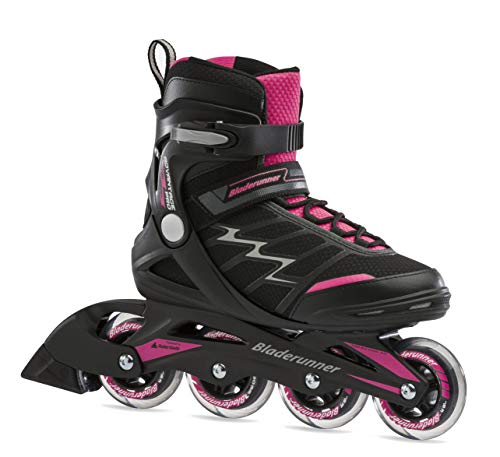
Bladerunner by Rollerblade Advantage Pro XT Inline Skates
Rollerblade’s entry brand delivers a competent recreational skate here without premium pricing attached. Boot support handles casual path skating comfortably. Based on specifications, SG5 bearings and a composite frame keep costs down without cutting corners on fit.
Pros
- Affordable way to find out if you enjoy skating
- Familiar Rollerblade closure system
- Comfortable liner for casual outings
Cons
- Wheels and bearings wear quickly with regular use
- Limited support for aggressive strides

Powerslide Next 80 Inline Skates
City surfaces drove this skate’s design, pairing a rigid shell with a frame built to absorb kerb and rough tarmac hits. Response matters more than plush comfort for the experienced skaters it targets. Owners report a precise fit that rewards accurate sizing.
Pros
- Rigid construction gives excellent control
- Frame handles urban impacts well
- Wheels and frame are upgradeable later
Cons
- Firm fit is unforgiving for beginners
- Less padded than recreational models

Roller Derby Aerio Q-60 Inline Skates
Occasional skaters on smooth paths who want comfort with minimal fuss are the target here. A lightweight boot and moderate wheel size keep speeds friendly rather than aggressive. Owners treat it as a leisure skate more than a dedicated fitness tool.
Pros
- Comfortable and easy to get moving in
- Light on the foot for casual outings
- Straightforward maintenance and upkeep
Cons
- Not built for high mileage use
- Softer support wears thin on long sessions
What matters most
What wheel size should I look for in inline skates? Recreational skates cluster around 76mm to 84mm wheels, balancing roll efficiency against a low, stable stance. Wheels of 90mm and above carry speed better and roll over cracks more easily, but they raise your centre of gravity and complicate slow manoeuvring. New skaters do best staying at 80mm or below until stopping feels automatic.
Do bearing ratings like ABEC actually matter? Ratings such as ABEC, SG and ILQ describe manufacturing tolerance, not real world speed. Higher numbers spin more freely, but wheel hardness, stride technique and how clean the bearings stay matter far more day to day. A mid range bearing that gets cleaned occasionally will outperform a premium bearing full of grit.
Hard boot or soft boot, which fits your skating style? Hard shell skates give precise support and last longer, though they need correct sizing since there is little give. Soft boots feel comfortable immediately and breathe better, at the cost of lateral support that fades as padding compresses. Boa dials and ratchet buckles adjust tension quickly, which matters more on long sessions than around the block.
What protective gear do I need before my first skate? Wrist guards rank as the single most valuable item, since the instinct in any fall is to catch yourself with your hands. A helmet comes next, with knee pads recommended while learning. Practising the heel brake on grass or carpet first helps, since the most common beginner injury comes from discovering at speed that stopping is not automatic.
How they compare
| # | Model | Wheel size | Best for | Score | Price |
|---|---|---|---|---|---|
| 1 | Rollerblade Macroblade 80 Inline Skates | 80mm | Best overall | 9.4 | Check price |
| 2 | Rollerblade Zetrablade Inline Skates | 80mm | Best for beginners | 9.2 | Check price |
| 3 | K2 Skate Kinetic 80 Inline Skates | 80mm | Best value | 9.0 | Check price |
| 4 | K2 Skate F.I.T. 84 Boa Inline Skates | 84mm | Best fit adjustment | 8.8 | Check price |
| 5 | Bladerunner by Rollerblade Advantage Pro XT Inline Skates | 80mm | Best budget | 8.6 | Check price |
| 6 | Powerslide Next 80 Inline Skates | 80mm | Best for urban skating | 8.3 | Check price |
| 7 | Roller Derby Aerio Q-60 Inline Skates | 80mm | Best for casual weekend use | 8.0 | Check price |
Good to know
What size inline skates should I buy?
Most brands run close to street shoe size, though Rollerblade and K2 fit differently from each other. Measure your foot in centimetres and check the brand’s own size chart, expecting a snug fit with toes just brushing the front when standing upright.
Are bigger wheels better for beginners?
No. Larger wheels roll faster and sit higher, which makes balance harder while still learning edges and braking. Starting at 80mm or smaller and moving up once stopping feels reliable works better for most new skaters.
How long do inline skate wheels last?
Lifespan depends entirely on surface and rider weight, but a regular skater typically rotates wheels every few weeks and replaces them once or twice a season. Rotating front to back and flipping wheels evens out coning on the inside edge.
Do I need a heel brake on inline skates?
Beginners should keep the heel brake fitted, since it offers the most controllable way to stop. Experienced skaters often remove it once they can T-stop or power slide reliably, but removing it early carries no real advantage.
Can I skate on rough or broken pavement?
You can, but small wheels transmit every crack and slow you down noticeably. Larger, softer wheels help considerably on broken tarmac, and an aluminium frame handles repeated impacts better than a composite one.
How do I clean inline skate bearings?
Pop the shields off, soak the bearings in a degreaser, dry them fully, then apply a couple of drops of bearing oil. Owners report that skating through water or fine dust is the main cause of a sudden loss of roll, and cleaning usually restores it.
Are hard boot or soft boot skates better for fitness?
Hard boots suit precise control, higher speeds and longer service life. Soft boots suit comfort, ventilation and casual use. Skating several times a week for fitness favours a hard or hybrid shell that holds its shape.
How do I stop my feet going numb while skating?
Numbness usually comes from over tightening the instep buckle rather than the boot being too small. Loosening the middle closure while keeping the cuff firm and the toe area relaxed, plus checking the liner is not bunching under the arch, generally fixes it.
Which inline skates are best for city commuting?
Powerslide Next 80 handles kerbs and rough tarmac best thanks to its rigid shell and aluminium frame. Rollerblade Macroblade 80 works well too for smoother commutes. Both trade some beginner friendliness for control at speed.
The verdict
Rollerblade Macroblade 80 suits the widest range of riders, offering enough support and roll for real fitness sessions without punishing newer skaters. Absolute beginners should start on the Zetrablade for its extra stability. Skaters who value comfort over stiffness will be happier in the K2 Skate Kinetic 80.