Keyboards Ranked by Typing Feel, Not Just Specs
The Keychron K8 Pro is our overall pick for its hot swappable switches and multi device wireless. The Logitech MX Keys S is the better office keyboard for quiet typing, while the SteelSeries Apex Pro TKL Gen 3 leads for adjustable actuation in gaming.
The Keychron K8 Pro is the keyboard we would recommend to most people who want to move beyond a basic office board, thanks to hot swappable switches and wireless that pairs with several machines. For quiet office typing the Logitech MX Keys S is the more sensible choice, and competitive gamers will get the most from the adjustable actuation on the SteelSeries Apex Pro TKL Gen 3.
Keyboard buying is confusing because the specifications that get advertised, polling rates and lighting effects, are rarely the ones you notice after a week. Switch feel, layout size and whether the case flexes matter far more. We compared published switch specifications, layouts, connection options, build materials and software support, alongside what owners report about long term key feel, battery life and how loud each board is in a shared room.
Before you buy
Switch type is the decision that matters most Linear switches move smoothly with no bump and suit gaming and fast typing. Tactile switches give a noticeable bump at the actuation point, which many typists prefer because you feel the keypress register. Clicky switches add a sharp sound that is satisfying alone and unwelcome in a shared room. If you cannot try switches first, tactile is the safest middle ground, and a hot swap board lets you change your mind later.
Layout size trades keys for desk space Full size boards include a number pad, which matters for spreadsheet and accounting work. Tenkeyless drops the number pad and frees a surprising amount of room for mouse movement. Compact 75 percent boards keep the arrow keys and function row in a smaller shell, while 60 percent layouts push those onto a function layer. Decide how often you really use the number pad before giving it up.
Wired, Bluetooth or wireless receiver Wired connections remove latency and battery concerns entirely. Bluetooth is the most flexible for switching between a laptop, a tablet and a desktop, though it can be slower to wake. A dedicated 2.4 GHz receiver is the best wireless compromise for gaming, with latency close to wired. Boards offering all three cover every situation, which is why triple mode has become a common selling point.
Build details you only notice later Case material and mounting style change how a keyboard sounds and how much it flexes. A metal plate or a gasket mount produces a deeper, less hollow sound than a bare plastic shell. Doubleshot or PBT keycaps resist the shine that develops on cheaper ABS caps within months. Stabiliser quality decides whether the spacebar and shift keys rattle, which is one of the most common regrets after buying.
Our top picks

Keychron K8 Pro
The K8 Pro combines a tenkeyless layout with hot swap sockets, so you can change switch feel later without soldering. It pairs over Bluetooth with several devices and works wired when you want zero latency. QMK and VIA support means remapping happens on the keyboard rather than through background software.
Pros
- Switches swap without soldering
- Open firmware remapping
- Works across Mac and Windows layouts
Cons
- Heavier than typical wireless boards
- Stock keycaps are unremarkable

Logitech MX Keys S
The MX Keys S uses low profile scissor switches with dished keycaps, which makes it quiet and quick for long typing sessions. It switches between three devices at the press of a key and charges over USB C with backlighting that reacts to your hands. It is the obvious choice for a shared office where noise matters.
Pros
- Very quiet in shared spaces
- Switches between three devices instantly
- Comfortable dished keycaps
Cons
- No mechanical switch feel
- Not adjustable or repairable

SteelSeries Apex Pro TKL Gen 3
Magnetic switches let you set how far a key travels before it registers, and set different points for different keys. That means a light trigger for movement keys and a deeper one for keys you hit accidentally. The aluminium top plate and doubleshot keycaps make it feel considerably more solid than most gaming boards.
Pros
- Per key actuation adjustment
- Very solid aluminium construction
- Fast repeated key presses
Cons
- Requires software for full features
- Sits at the premium end of the market

Razer BlackWidow V4 75%
A 75 percent layout keeps the arrow keys and function row while cutting the number pad, which frees desk space for a mouse. Hot swap sockets and layers of internal foam give it a deeper sound than typical gaming boards. Owners report the gasket mounted plate makes typing noticeably softer than older Razer models.
Pros
- Compact layout keeps arrow keys
- Softer gasket mounted typing feel
- Switches swap easily
Cons
- Software runs in the background
- Wired only in this configuration
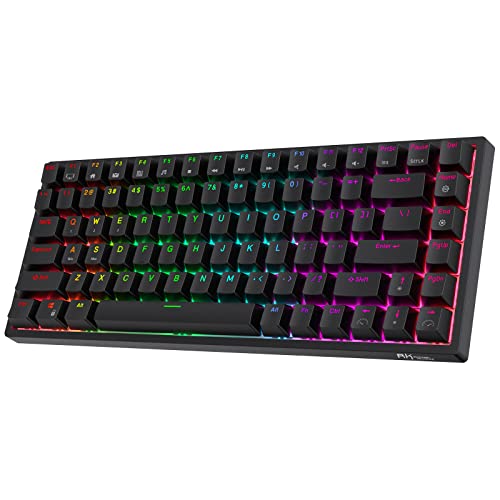
Royal Kludge RK84
The RK84 offers Bluetooth, wireless receiver and wired connection with a hot swap socket set, which is unusual at this level. The 75 percent layout suits smaller desks and it still includes a full arrow cluster. Build quality does not match premium boards, but the feature list is hard to beat for the outlay.
Pros
- Three connection modes included
- Hot swap at a low entry point
- Compact arrow key layout
Cons
- Case flexes more than premium boards
- Software is basic
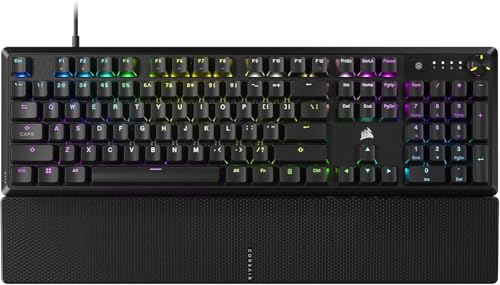
Corsair K70 CORE
A full size board with a number pad, a media wheel and sound dampening foam inside the case. It targets people who want gaming features without giving up the number pad for spreadsheets. Owners report it sounds fuller than earlier Corsair boards thanks to the added dampening layers.
Pros
- Keeps a full number pad
- Dampened case sounds better
- Useful media wheel
Cons
- Takes up significant desk width
- Switches are not hot swappable

Redragon K552 Kumara
The K552 has been a default budget mechanical recommendation for years, with a metal top plate and a compact tenkeyless layout. There are no wireless options and the keycaps are basic, but the typing feel is a large step up from a membrane board. A sensible way to find out whether mechanical switches suit you.
Pros
- Very affordable mechanical entry
- Sturdier than expected at this level
- Compact desk footprint
Cons
- Basic keycaps and stabilisers
- Wired only with a fixed cable
How they compare
| # | Model | Layout | Best for | Score | Price |
|---|---|---|---|---|---|
| 1 | Keychron K8 Pro | Tenkeyless, 87 keys | Best overall | 9.4 | Check price |
| 2 | Logitech MX Keys S | Full size | Best for office typing | 9.2 | Check price |
| 3 | SteelSeries Apex Pro TKL Gen 3 | Tenkeyless | Best for gaming | 9.1 | Check price |
| 4 | Razer BlackWidow V4 75% | 75 percent | Best for customisation | 8.8 | Check price |
| 5 | Royal Kludge RK84 | 75 percent | Best value wireless | 8.6 | Check price |
| 6 | Corsair K70 CORE | Full size | Best full size gaming board | 8.3 | Check price |
| 7 | Redragon K552 Kumara | Tenkeyless, 87 keys | Best budget | 8.0 | Check price |
Frequently asked questions
What keyboard switch is best for typing?
Tactile switches are the usual recommendation because the bump confirms the keypress without the noise of a clicky switch. Linear switches suit people who prefer a smooth stroke, and many typists move between the two after trying a hot swap board.
Is a mechanical keyboard worth it for office work?
For typing feel and longevity, yes, but noise is the limiting factor in shared spaces. A quiet low profile board like the MX Keys S is often the better office choice, with a mechanical board reserved for a home desk.
What does hot swappable mean?
The switches sit in sockets rather than being soldered, so you can pull them out and fit different ones with a small tool. It lets you change typing feel without buying another keyboard or learning to solder.
Should I get a tenkeyless or full size keyboard?
If you enter numbers regularly, keep the number pad. If you game or want more mouse space, tenkeyless frees several inches of desk and puts your mouse closer to your body, which is easier on the shoulder.
Do wireless keyboards add noticeable lag?
A modern 2.4 GHz receiver is fast enough that most people cannot tell the difference from wired. Bluetooth adds slightly more latency and is better suited to typing than to competitive gaming.
Why do keycaps get shiny?
Cheaper ABS plastic polishes where your fingers rest. PBT and doubleshot keycaps resist this far longer, which is why they are a common first upgrade on budget boards.
What causes a rattling spacebar?
Poorly tuned stabilisers. Better boards ship with stabilisers that are clipped and lubricated, and on any board it is a fixable problem with a small amount of lubricant and patience.
Can one keyboard work with Mac and Windows?
Many now do, including the Keychron K8 Pro and Logitech MX Keys S, which ship with both keycap sets or an operating system switch. Check that the modifier keys can be remapped if you move between systems often.
Our pick
The Keychron K8 Pro is the most flexible recommendation here, letting you change switches and layouts as your preferences develop. Office workers in shared spaces should choose the Logitech MX Keys S for its quiet low profile keys, and competitive gamers will benefit most from the adjustable actuation of the SteelSeries Apex Pro TKL Gen 3. The Redragon K552 Kumara remains the low risk way to find out if mechanical switches suit you.