Self-Leveling vs Manual Laser Levels: Which One to Buy
The DeWalt DW088K leads this lineup with a rugged housing and dependable self-leveling cross lines. Klein Tools’ 93LCLS delivers similar accuracy for less money, suited to DIY projects. Huepar’s 603CG switches to a green beam, giving it the widest visible coverage in bright rooms.
DeWalt’s DW088K stands out among these seven for its drop-resistant housing and crisp, dependable cross lines. Budget-conscious buyers get nearly the same accuracy from the Klein Tools 93LCLS at a lower cost. Anyone working in a bright or larger room should look at the Huepar 603CG, since its green beam stays visible where red beams wash out.
Green beams read brighter to the eye, yet that clarity adds cost and drains batteries faster than red diodes. Self-leveling range and stated accuracy also vary more between brands than most buyers expect, and outdoor work often needs a detector that many kits skip. We compared manufacturer accuracy specs, beam color, working range, self-leveling behavior, and the durability patterns owners describe after months of use.
The best picks, ranked

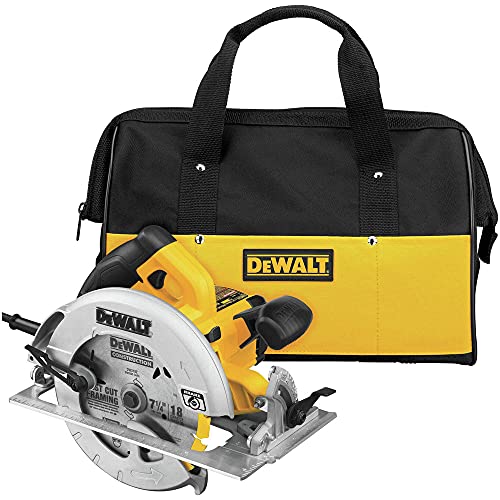
DeWalt DW088K
DeWalt’s over-molded housing survives job-site drops better than most cross-line levels in this price range. Self-leveling horizontal and vertical red lines stay sharp indoors, and a pendulum lock protects the mechanism during transport. Bright daylight washes out the red beam, which is why outdoor crews often pair it with a detector.
Pros
- Rugged over-molded housing
- Dependable self-leveling lines
- Transport lock guards the pendulum
Cons
- Red beam fades in daylight
- Needs a detector for long range
Bosch GLL 55
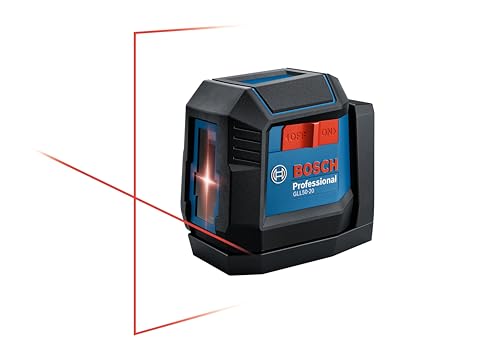
Bosch built the GLL 55 around a self-leveling pendulum plus a switchable manual mode for setting deliberate angles. Cabinet and tile installers rely on its accuracy and a visual indicator that confirms level status at a glance. Its red beam limits daylight visibility unless paired with the optional receiver.
Pros
- Professional-grade accuracy
- Manual mode sets angled lines
- Indicator confirms level status
Cons
- Limited visibility in bright light
- Receiver sold separately

Huepar 603CG
Huepar swapped in a green beam that reads far brighter than red across a mid-size room. Wide horizontal and vertical fan angles wrap the lines around walls, and a magnetic pivoting bracket adjusts the mount on the fly. Green diodes pull more power, so runtime is shorter and the unit can overheat in direct sun.
Pros
- Bright, easy-to-see green lines
- Wide angles cover a full room
- Magnetic bracket adjusts on the fly
Cons
- Shorter battery runtime
- Can overheat in direct sunlight

Klein Tools 93LCLS
Electricians reach for the 93LCLS because it clamps to conduit or a stud and throws a plumb spot alongside its cross lines. Compact size makes it easy to stash in a tool bag between jobs. Its red beam and shorter working range suit interior rooms rather than long outdoor layouts.
Pros
- Strong accuracy for the price
- Clamps easily to studs or conduit
- Adds a plumb spot
Cons
- Red beam limits outdoor use
- Shorter range than pro-grade units

SKIL LL932301
A built-in lithium battery with USB charging means the LL932301 never needs AA cells. Its green self-leveling cross line stays visible indoors, and the included pivoting mount adds flexibility. Downtime hits once the battery drains, and its range trails detector-based professional systems.
Pros
- Bright green beam indoors
- USB rechargeable, no AA batteries
- Pivoting mount included
Cons
- Downtime when the battery drains
- Shorter range than detector systems

Johnson Level 40-6543
Trim carpenters have relied on this Johnson Level for years, thanks to a manual leveling lock and tripod-ready mounting. Interior accuracy stays dependable at a moderate price point. Its red beam and basic feature set make bright outdoor jobs a stretch without a green model or detector.
Pros
- Trusted by trim carpenters
- Mounts to a tripod
- Simple, dependable operation
Cons
- Red beam struggles in daylight
- Fewer features than newer models
Tacklife SC-L01
Tacklife’s entry-level cross-line laser switches between self-leveling and locked manual modes for occasional home projects. Mounted on a stable surface, it holds enough accuracy for hanging shelves and pictures. Its red beam, shorter range, and lighter build keep it a starter tool rather than a job-site workhorse.
Pros
- Affordable entry point
- Self-level and manual modes
- Compact for home projects
Cons
- Red beam works best indoors
- Lighter build, less durable
How they compare
| # | Model | Beam | Best for | Score | Price |
|---|---|---|---|---|---|
| 1 | DeWalt DW088K | Red cross-line | Best overall | 9.4 | Check price |
| 2 | Bosch GLL 55 | Red cross-line | Best for professionals | 9.1 | Check price |
| 3 | Huepar 603CG | Green cross-line | Best green beam | 8.9 | Check price |
| 4 | Klein Tools 93LCLS | Red cross-line plus plumb spot | Best value | 8.7 | Check price |
| 5 | SKIL LL932301 | Green cross-line | Best rechargeable | 8.5 | Check price |
| 6 | Johnson Level 40-6543 | Red cross-line | Best for trim and layout | 8.3 | Check price |
| 7 | Tacklife SC-L01 | Red cross-line | Best budget starter | 8.0 | Check price |
Before you buy
Green laser vs red laser: which is easier to see? Green diodes appear several times brighter to the human eye than red, which is why bright rooms and short outdoor runs favor a green laser level like the Huepar 603CG. That brightness costs more and drains batteries faster, and heat can affect a green diode’s stability. Red beams such as the DeWalt DW088K and Bosch GLL 55 cost less and sip power, though a detector is often needed to spot them across a room or outdoors.
How accurate does a laser level need to be? Pendulum-based self-leveling typically works within about 4 degrees of level, then locks out or flashes a warning past that range. Accuracy is usually listed as a tolerance per meter or at a set distance, and tighter numbers matter most for tile, cabinets, and long walls. A transport lock is worth checking for, since it protects the pendulum in a bag and extends the tool’s working life.
Do you need a laser detector for outdoor work? Indoor line-of-sight range covers most DIY jobs without extra gear. Long runs and outdoor layouts almost always need a laser detector that reads a pulsing beam invisible to the naked eye, and many kits leave that detector out. Confirm a model is detector-compatible before buying if your projects go beyond a single room.
How we compared these laser levels We compared stated accuracy tolerances, beam color, and how visible each beam is in real rooms and daylight. Working range with and without a detector, self-leveling behavior, mounting options, and durability ratings all factored into the ranking. Manufacturer specifications and the reliability patterns owners report over months of use carried more weight than a single quick look.
Common questions
Is a green laser level better than red?
Green beams show up more clearly in bright rooms and short outdoor runs, which explains the popularity of models like the Huepar 603CG. Red beams such as the DeWalt DW088K cost less and last longer per charge, and pair well with a detector for extra distance.
How accurate should a laser level be?
Quality levels typically state accuracy near plus or minus 0.2 to 0.3 mm per meter, or a few millimeters at 30 feet. Tile, cabinetry, and long walls call for the tighter end of that range, while shelf hanging tolerates more drift.
Do I need a self-leveling laser level?
Most projects benefit from self-leveling, since it removes guesswork and warns you when the tool sits outside its working range. A manual mode still helps for projecting deliberate angles like stair rails or ramps.
Can laser levels be used outdoors?
Yes, though the beam is hard to see in daylight without help. Outdoor and long-range work usually calls for a laser detector that reads a pulsing beam, so check that your model supports one before buying.
What does self-leveling range mean on a laser level?
It describes how far off level the tool can sit and still correct itself, typically around 4 degrees. Past that point the lines flash or shut off to warn that the surface is too steep.
Are rechargeable laser levels worth buying?
They skip the need for AA batteries and suit frequent use, as with the SKIL LL932301. The tradeoff is downtime once the battery runs flat, so heavy daily users sometimes prefer swappable cells instead.
What accuracy is needed for tiling with a laser level?
Tile and cabinetry benefit from tolerances near plus or minus 0.2 to 0.3 mm per meter paired with a stable mount. Small errors compound across a wall, so both accuracy and a solid tripod or bracket matter.
Do laser levels need calibration?
Self-leveling models calibrate automatically within their working range each time they power on. A hard drop can still cause drift, which you can check against a known reference, and some professional units allow factory recalibration.
What is the difference between a line laser and a rotary laser?
Line lasers project fixed horizontal and vertical lines suited to interior layout work. Rotary lasers spin a point into a full 360-degree plane for grading and large construction jobs, at a higher price.
Our pick
DeWalt’s DW088K remains the strongest all-around choice, pairing a rugged housing with dependable self-leveling cross lines. Step up to the Huepar 603CG for a bright green beam in larger or sunnier rooms, or choose the Klein Tools 93LCLS for reliable interior lines at a friendlier price.