How to Pick LED Bulbs That Actually Look Good at Home
Philips Ultra Definition A19 leads for everyday rooms thanks to strong colour rendering and smooth dimming. Cree Lighting TW Series renders skin tones and wood the most accurately, and Amazon Basics A19 covers utility spaces where light quality matters less.
Living rooms and bedrooms benefit most from the Philips Ultra Definition A19, which combines high colour rendering with dimming that stays smooth near the bottom of the range. Cree Lighting TW Series pushes colour accuracy further still, while Amazon Basics A19 handles closets, basements and garages sensibly.
Shopping for LED bulbs is frustrating because the numbers that matter print smallest. Watts tell you almost nothing now. Lumens describe brightness, kelvins describe colour temperature, and the colour rendering index describes how honest the light looks on skin, food and wood. Two bulbs with identical headline specs can feel completely different once dimmer compatibility and flicker enter the picture. We compared published output, colour rendering, dimming behaviour and rated lifespan across the standard A19 shape.
The top picks, ranked

Philips Ultra Definition A19 LED Bulb
A high colour rendering index pairs with dimming that holds steady down to a low level instead of flickering or cutting out. A living room lamp looks good at full brightness and stays good in the evening as a result. Philips sells the same bulb across several colour temperatures, so a whole house can be matched.
Pros
- Excellent colour rendering for a mainstream bulb
- Dims low without flicker on most dimmers
- Consistent colour across the range
Cons
- Costs more than basic utility bulbs
- Not every colour temperature is stocked everywhere
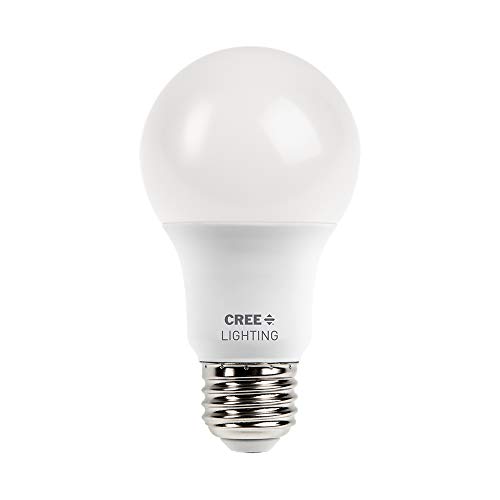
Cree Lighting TW Series A19 LED Bulb
Cree built the TW Series specifically around colour accuracy, and it shows on wood floors, artwork and skin tones where cheaper LEDs look flat. Rendering colour well costs some efficiency, so lumens per watt trail the mainstream picks. Rooms where people sit suit this bulb better than storage areas.
Pros
- Best colour rendering in this group
- Warm tone flatters wood and skin
- Smooth dimming behaviour
Cons
- Lower efficiency than standard LEDs
- Limited colour temperature choices

GE Relax HD Soft White A19 LED Bulb
A warm soft white tone closely mimics the incandescent bulbs most people remember, addressing the main complaint about cheap LEDs. Wide availability makes it a straightforward choice for bedrooms and lounges. Colour rendering is good rather than exceptional, since warmth is the actual selling point here.
Pros
- Genuinely warm incandescent-like tone
- Easy to buy in matching multipacks
- Good for bedrooms and living spaces
Cons
- Not all versions are dimmable
- Colour rendering trails the top picks
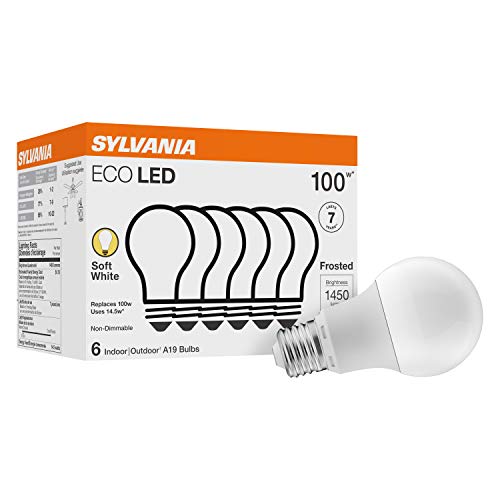
Sylvania ECO A19 LED Bulb
Large multipacks at low cost make relamping a whole house realistic in one purchase. Hallways, kitchens and utility areas suit the light quality well, and efficiency stays good throughout. Most versions do not dim, so check the packaging before use on a dimmer circuit.
Pros
- Cheapest way to relamp a whole house
- Good efficiency per watt
- Available in warm and daylight tones
Cons
- Most versions will not dim
- Modest colour rendering
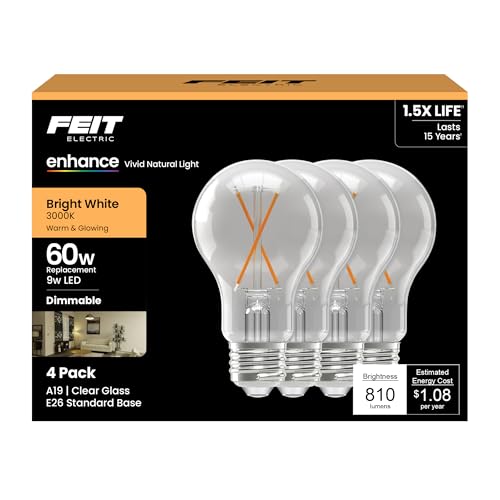
Feit Electric Enhance A19 LED Bulb
Higher colour rendering than standard bulbs makes a visible difference where you prepare food and judge whether meat is cooked or produce is fresh. Common dimmers work reasonably well with this line. Buy the quantity needed at once, since availability varies more than with major multipack brands.
Pros
- Noticeably better rendering than standard bulbs
- Useful in kitchens and workspaces
- Several colour temperatures available
Cons
- Stock availability varies
- Dimming performance depends on the dimmer
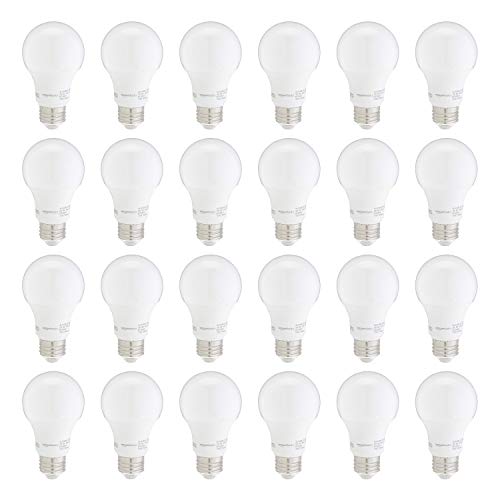
Amazon Basics A19 LED Light Bulb
Closets, basements, garages and anywhere nobody judges the light get a plain, cheap LED that simply does the job. Efficiency stays fine and rated life is respectable for the cost. Colour rendering and dimming refinement fall well short of the bulbs above it, since that is not the intended use.
Pros
- Very low cost per bulb
- Fine for utility and storage areas
- Both dimmable and non dimmable versions exist
Cons
- Basic colour rendering
- Owners report more variation between units

Philips Hue White and Color Ambiance A19 Bulb
Colour temperature shifts through the day and colour changes entirely on demand, controlled from an app or a voice assistant. The Hue ecosystem remains the most mature of its kind, with reliable scheduling and scenes. Expect a higher cost per socket, and power must stay on at the fixture at all times to respond.
Pros
- Colour temperature can shift through the day
- Mature and reliable smart platform
- Scenes and schedules without rewiring
Cons
- Expensive per socket
- Wall switch must stay on for control to work
How they compare
| # | Model | Shape and base | Best for | Score | Price |
|---|---|---|---|---|---|
| 1 | Philips Ultra Definition A19 LED Bulb | A19 with standard E26 base | Best overall | 9.4 | Check price |
| 2 | Cree Lighting TW Series A19 LED Bulb | A19 with E26 base | Best light quality | 9.2 | Check price |
| 3 | GE Relax HD Soft White A19 LED Bulb | A19 with E26 base | Best warm light | 9.0 | Check price |
| 4 | Sylvania ECO A19 LED Bulb | A19 with E26 base | Best value multipack | 8.7 | Check price |
| 5 | Feit Electric Enhance A19 LED Bulb | A19 with E26 base | Best for kitchens | 8.5 | Check price |
| 6 | Amazon Basics A19 LED Light Bulb | A19 with E26 base | Best budget | 8.2 | Check price |
| 7 | Philips Hue White and Color Ambiance A19 Bulb | A19 with E26 base | Best smart bulb | 8.0 | Check price |
What to look for
How to compare LED bulbs by lumens, not watts Watts measure energy consumed, which mattered when all bulbs were equally inefficient. Lumens measure light produced, and that is the number to shop by now. A traditional 60 watt bulb produced around 800 lumens, a 75 watt around 1100 and a 100 watt around 1600, roughly. LED packaging usually prints that equivalence, but the lumen figure stays the honest one for comparing brands.
What colour temperature to choose for each room Kelvins describe whether light looks warm and yellow or cool and blue. Around 2700K matches old incandescent bulbs and suits bedrooms and living rooms. 3000K reads slightly crisper and works well in kitchens and bathrooms. 4000K and above feels neutral to cool, better suited to garages, workshops and task lighting. Mixing temperatures within one room is the most common mistake and always looks wrong.
Why colour rendering matters more than most buyers realize The colour rendering index scores how accurately a light source shows colour against natural light, on a scale to 100. Cheap LEDs often sit in the low 80s, making wood look flat, food look grey and skin look tired. Bulbs rated 90 and above cost more but pay off in rooms where you cook, eat, read or spend time with people. A storage cupboard makes none of that difference noticeable.
Fixing dimmer flicker and buzz Not every LED bulb dims, and those that do can buzz, flicker or cut out early depending on the dimmer paired with them. Older dimmers were built for incandescent loads and often behave poorly with the small load LEDs draw. Buy bulbs explicitly rated as dimmable, and consider swapping the dimmer for an LED compatible model, which resolves most complaints in one step.
Common questions
How many lumens replace a 60 watt bulb?
Around 800 lumens covers a 60 watt equivalent. Look for roughly 1100 lumens for a 75 watt equivalent, and around 1600 for 100 watt. Comparing lumens across brands proves more reliable than trusting the wattage equivalence printed on the box.
What colour temperature is best for a living room?
2700K suits bedrooms and living rooms where warmth matters most, while 3000K works better in kitchens and bathrooms. Garages, workshops and task areas benefit from 4000K or higher. Keep every bulb in one room at the same temperature, since mismatched tones stand out far more than a slightly wrong overall choice.
Why do my LED bulbs flicker on a dimmer?
Older dimmers were designed for incandescent loads and cannot regulate the much smaller current an LED draws. Confirm the bulbs are rated as dimmable first, then replace the dimmer with one specified for LED loads. That combination resolves most flicker and buzz complaints.
Do LED bulbs really last as long as claimed?
Rated lifespans assume ideal conditions, and heat is what shortens them in practice. A bulb in an enclosed fixture runs much hotter and fails sooner, which is why some bulbs carry a specific enclosed fixture rating. Good bulbs in open fixtures should last years, while sealed ceiling cans shorten that considerably.
Can I use any LED bulb in an enclosed fixture?
Only bulbs marked as suitable for enclosed fixtures should go there. Trapped heat degrades the driver electronics, which is usually the first part to fail. Using an unrated bulb in a sealed fixture is the most common reason people conclude LEDs do not last.
What does CRI mean and does it actually matter?
CRI, or colour rendering index, scores how faithfully colours appear under a light source. It matters a great deal where you look at food, artwork, clothing or people, and hardly at all in a garage. Bulbs at 90 and above look noticeably better than the low 80s common in budget multipacks.
Are smart LED bulbs worth the extra cost?
Scheduling, colour temperature that shifts through the day, and control without rewiring justify smart bulbs where those features get used. Cost per socket runs far higher, and the wall switch must stay on. Most homes do well with a few smart bulbs in key rooms plus ordinary LEDs elsewhere.
LED vs incandescent bulbs: is the switch still worth it?
LEDs use a fraction of the energy an incandescent bulb needs for the same brightness and last many times longer. Early complaints about harsh light and poor dimming mostly trace back to low CRI or non dimmable bulbs on incompatible dimmers. Buying a high CRI, dimmable-rated bulb avoids both problems.
How should I dispose of old LED bulbs?
LEDs contain no mercury and can generally go in household waste where local rules allow, though electronics recycling remains preferable. Old compact fluorescent bulbs do contain mercury and need a proper recycling point rather than the bin. Local authority guidance varies by area, so check before disposing of a full box.
What is the best LED bulb for a nursery or bedroom?
A dimmable bulb around 2700K, like the Philips Ultra Definition A19 or GE Relax HD Soft White, keeps evenings calm without harsh blue light. High colour rendering helps a nursery feel warm rather than clinical. Avoid daylight-temperature bulbs above 4000K in these rooms.
The verdict
Philips Ultra Definition A19 bulbs belong in the rooms you actually spend time in, since good colour rendering and clean dimming separate pleasant light from merely adequate light. Cree Lighting TW Series goes further still when accuracy matters most. Fill closets, basements and garages with Amazon Basics A19 bulbs and spend the savings where the difference actually shows.