How to Pick a Whole House Fan for Your Climate
The QuietCool QC CL-3100 Advanced Whole House Fan leads this comparison for its insulated, low-noise ducted design. Cold-climate homes do better with the Tamarack Technologies HV1000 and its R38 insulated damper. Renters or attic-limited homes should look at the Air King 9166F window fan instead.
Insulated ducting and variable-speed control put the QuietCool QC CL-3100 Advanced Whole House Fan ahead for noise-conscious households. Cold-climate homes are better matched to the Tamarack Technologies HV1000, which carries an R38 insulated damper. Anyone without attic access can skip installation entirely with the Air King 9166F window-mounted fan.
A whole house fan sized for a small ranch home will underperform in a large two-story house, and a direct-mount unit installed without attic insulation can leak heated air all winter. We compared drive type, insulation rating, noise design and installation method, then weighed owner reports on airflow and winter draft complaints.
What matters most
What does a whole house fan actually do? Mounted in the ceiling, it pulls cooler outside air through open windows and pushes hot attic air out through roof or gable vents. That exchange happens far faster than a window fan alone and can cool a house in minutes during mild weather. It works best when outdoor temperature drops below indoor temperature, typically morning and evening. It is not a replacement for air conditioning on the hottest afternoons.
Ducted vs direct-mount, what’s the difference? Ducted designs like the QuietCool QC CL-3100 place the fan motor away from the ceiling grille, reducing the noise heard in the room below. Direct-mount units like the Broan 355 or Air Vent 54301 put the fan right at the ceiling opening, which simplifies installation but sits closer to the noise source. Ducted models generally cost more and take longer to install. Choose ducted if noise is the priority, direct-mount if budget and installation speed matter more.
Which whole house fan suits a home without easy attic access? The Air King 9166F window-mounted fan skips attic work entirely by mounting in a standard window frame. It moves less total air than a ceiling-mounted fan but requires no cutting or ductwork. Renters or homes with finished, inaccessible attics are the main audience for this style. Anyone planning a longer-term installation should still consider a ceiling-mounted option if attic access becomes available.
Does insulation matter on a whole house fan in winter? An insulated damper, like the R38 rating on the Tamarack HV1000, closes off the ceiling opening when the fan is off. Without that insulation, a whole house fan can act as a direct path for heated indoor air to escape into a cold attic. Homes in colder climates benefit most from this feature. Warmer climates with mild winters can prioritize airflow and noise over insulation rating.
The shortlist, ranked

QuietCool QC CL-3100 Advanced Whole House Fan
Insulated ductwork routes air from the ceiling grille to a remote-mounted fan unit, which cuts down the motor noise heard inside the room. QuietCool builds this for ceiling installation in an attic space above the living area. A variable-speed controller lets the airflow adjust to outdoor temperature and time of day.
Pros
- Insulated duct design lowers indoor noise level
- Variable-speed control adjusts to conditions
- Remote fan placement keeps motor away from living space
Cons
- Installation is more involved than a single ceiling unit
- Higher cost than direct-mount whole house fans

Tamarack Technologies HV1000 Whole House Fan
Tamarack insulates the intake damper to an R38 rating, which closes off attic air loss when the fan is not running. That insulation level is higher than most competing whole house fans offer. A lifetime warranty on the unit reflects the company’s confidence in the sealed-damper design.
Pros
- R38 insulated damper reduces energy loss in winter
- Backed by a lifetime warranty
- Sealed design cuts drafts when fan is off
Cons
- Premium price compared to basic direct-mount fans
- Installation still requires attic access and ceiling cutting
iLiving ILG8SF301A Hybrid Smart Whole House Fan
iLiving pairs a variable-speed motor with remote and app-based control, so airflow can be scheduled without a wall switch. The housing includes sound-dampening material aimed at reducing motor hum in the attic. Ceiling mount installation suits homes with accessible attic space above the target room.
Pros
- App and remote control add scheduling flexibility
- Variable speed adjusts airflow to conditions
- Sound-dampening housing reduces attic motor noise
Cons
- Smart features add setup complexity for some owners
- Depends on attic access for installation like other ceiling models

Air King 9166F Whole House Window Fan
Mounting in a window frame, this fan skips attic installation entirely, which suits renters or homes with limited attic access. A 20-inch blade moves air across three speed settings, reversible between intake and exhaust. Expandable side panels adjust to fit varying window widths.
Pros
- No attic installation or ductwork required
- Reversible airflow for intake or exhaust
- Expandable panels fit multiple window widths
Cons
- Moves less total air than a ceiling-mounted whole house fan
- Blocks window use while installed
Cool Attic CX1500 Belt Drive Whole House Fan
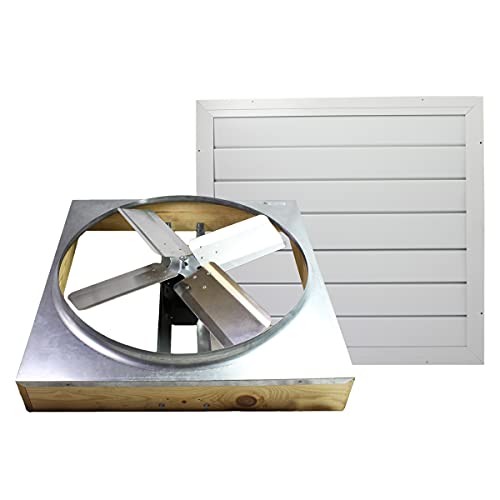
A belt-drive motor separates the motor vibration from the fan blade, which Cool Attic markets for higher airflow output than direct-drive units of similar size. That output suits larger homes or open floor plans that need faster air exchange. The belt-drive setup does need periodic belt inspection, unlike sealed direct-drive motors.
Pros
- Belt-drive design targets higher airflow output
- Motor vibration separated from the fan blade
- Suits larger homes or open layouts
Cons
- Belt requires periodic inspection and eventual replacement
- Generally louder than insulated-duct designs

Broan 355 Whole House Fan
Broan keeps this unit direct-drive, which means fewer moving parts than a belt-drive fan and no belt to inspect or replace. Two-speed operation covers both a gentle overnight setting and a faster daytime exchange. It mounts directly in the ceiling joist space above the target room.
Pros
- Direct-drive design needs no belt maintenance
- Two-speed control covers day and night use
- Simple joist-mounted installation
Cons
- Fewer speed options than variable-speed competitors
- Less insulated than the Tamarack HV1000
Air Vent 54301 24-Inch Whole House Fan
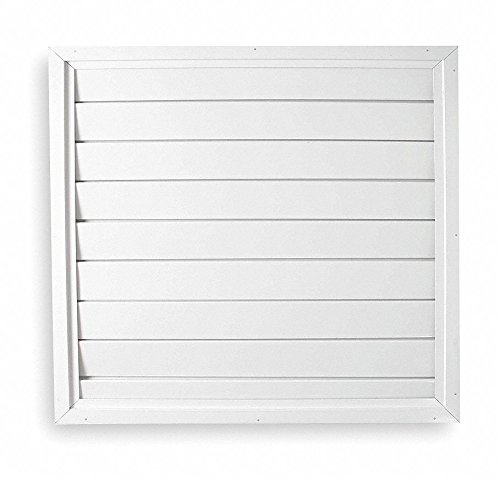
At 24 inches, this Air Vent fan covers a wide ceiling opening for its price point, aimed at buyers replacing an aging unit on a budget. Shutter blades open automatically when the fan runs and close afterward to block outside air. Direct-mount installation keeps the setup straightforward for a single-story attic.
Pros
- Wide 24-inch blade for the price point
- Automatic shutter blocks outside air when off
- Straightforward direct-mount installation
Cons
- Lacks the insulation of premium ducted models
- Single-speed operation on base configuration
How they stack up
| # | Model | Installation | Best for | Score | Price |
|---|---|---|---|---|---|
| 1 | QuietCool QC CL-3100 Advanced Whole House Fan | Ceiling-mounted with insulated ducting | Best overall | 9.4 | Check price |
| 2 | Tamarack Technologies HV1000 Whole House Fan | R38 insulated damper | Best for insulated, energy-efficient operation | 9.1 | Check price |
| 3 | iLiving ILG8SF301A Hybrid Smart Whole House Fan | Remote and app-based speed control | Best for app or remote-controlled operation | 8.8 | Check price |
| 4 | Air King 9166F Whole House Window Fan | 20 inches | Best for homes without attic access | 8.5 | Check price |
| 5 | Cool Attic CX1500 Belt Drive Whole House Fan | Belt-drive motor | Best for large homes needing high airflow | 8.3 | Check price |
| 6 | Broan 355 Whole House Fan | Direct-drive motor | Best for simple direct-drive installation | 8.1 | Check price |
| 7 | Air Vent 54301 24-Inch Whole House Fan | 24 inches | Best budget direct-mount option | 8.0 | Check price |
Frequently asked questions
What is the best whole house fan overall?
The QuietCool QC CL-3100 combines insulated ducting with variable-speed control, which keeps noise down while still moving significant air. The Tamarack HV1000 is a strong alternative where winter energy loss is the bigger concern.
How does a whole house fan differ from an attic fan?
A whole house fan pulls air from inside the living space through open windows and exhausts it through the attic and roof vents. An attic fan only moves air within the attic itself and does not directly cool the rooms below.
Is a whole house fan worth it if I already have air conditioning?
Yes, for mild-weather months when outdoor air is cooler than indoor air, since it uses far less electricity than running an air conditioner. Owners often run it in the morning and evening and reserve air conditioning for peak afternoon heat.
What size whole house fan do I need for a two-story home?
Larger or two-story homes often need higher airflow output, which points toward a belt-drive option like the Cool Attic CX1500. A licensed installer can calculate the needed airflow based on square footage and attic ventilation area.
Can I install a whole house fan myself?
Direct-mount models like the Broan 355 or Air Vent 54301 are simpler for an experienced DIYer familiar with attic wiring and joist spacing. Ducted models like the QuietCool generally call for a licensed installer due to the added ductwork.
Do whole house fans work without opening windows?
No. The fan needs open windows or vents to pull in replacement air, otherwise it struggles to exhaust attic air efficiently and can strain the motor.
What is the quietest whole house fan?
Insulated-duct designs like the QuietCool QC CL-3100 and well-insulated models like the Tamarack HV1000 run quieter than direct-mount units, since the motor sits farther from the room below.
Is a window-mounted whole house fan as effective as a ceiling-mounted one?
A window unit like the Air King 9166F moves less total air than a ceiling-mounted fan of similar price, but it requires no attic installation. It suits smaller spaces or temporary setups better than whole-home cooling.
The bottom line
Households prioritizing quiet operation should choose the QuietCool QC CL-3100 Advanced Whole House Fan for its insulated ducted design. Colder climates benefit more from the R38 insulated damper on the Tamarack Technologies HV1000. Renters or homes without attic access can get similar relief from the window-mounted Air King 9166F.