Grams vs Lumens: Choosing a Lightweight Headlamp
Black Diamond Spot 400 balances lumens and beam distance for most hikers, running on simple AAA power. Want a rechargeable cell with an AAA backup? Petzl Actik Core covers that. Runners chasing minimal bounce should pick the Petzl Bindi, since it weighs just 35 grams.
Black Diamond Spot 400 leads this comparison for hikers and campers wanting balanced lumens and beam distance without fuss. Its 3 AAA design keeps spares cheap at any gas station, though it skips a built-in rechargeable cell that frequent night runners might prefer.
Lumens, battery chemistry and IP ratings compete for attention once headlamp shopping starts. We compared specifications and owner feedback across seven current listings, weighing grams on the head against runtime, beam reach and waterproofing for each real use case.
The shortlist, ranked

Black Diamond Spot 400
A 400 lumen max output covers most trail and camp tasks without extra bulk. Proximity and distance dimming adjust brightness automatically while you look around, saving battery on close tasks. Red night vision mode protects your eyes and any tent mates nearby.
Pros
- AAA batteries are easy to replace anywhere
- Automatic dimming saves power on close tasks
- IP67 rating handles rain and dust
Cons
- No built-in rechargeable option
- Beam distance trails the higher lumen Storm 500

Petzl Actik Core
A Petzl CORE battery ships in the box and recharges over USB, cutting disposable battery waste. That same compartment still accepts 3 AAA batteries when a charger is not around, suiting multi day trips. Red lighting preserves night vision at camp.
Pros
- Switches between rechargeable and AAA power
- 450 lumens tops most rivals on this list
- Red mode protects night vision at camp
Cons
- CORE battery adds cost over standard AAA models
- Runtime drops faster than AAA at max output

Black Diamond Storm 500
A 500 lumen ceiling and roughly 100 meter beam reach suit route finding after dark on multi day trips. Low mode stretches runtime past 100 hours, useful when resupply sits days away. Rugged housing shrugs off drops on rocky trail.
Pros
- Longest beam distance of the group
- Low mode runtime suits multi day trips
- Rugged housing tolerates rough handling
Cons
- Heavier than the minimalist options here
- Max output drains AAA batteries quickly
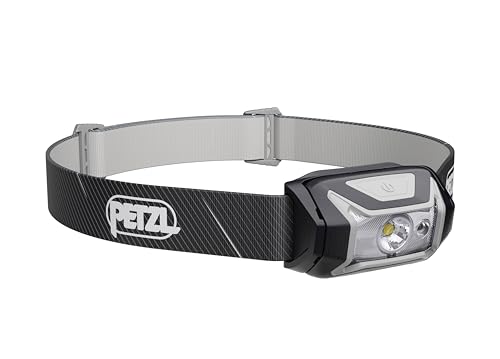
Petzl Tikka
350 lumens covers camp chores, dog walks and casual trail use without a premium price tag. A wide angle lens lights up close tasks like reading a map or cooking. Owners report the single button interface works fine with gloves on.
Pros
- Costs less than most rechargeable rivals
- Wide beam suits close camp tasks
- Single button works with gloves on
Cons
- IPX4 handles splashes but not full submersion
- Beam distance is the shortest on this list

Nitecore NU25
A built-in 700mAh cell recharges over USB-C, removing any AAA stockpile to manage. At 28 grams for the headlamp alone, it barely registers on a cap or helmet. Low battery indicator warns before the light dies mid hike.
Pros
- Lightest build of any model here
- USB-C charging skips disposable batteries
- Low battery warning avoids surprise shutoffs
Cons
- No swappable battery for long trips off grid
- Beam throw is shorter than the AAA models

Petzl Bindi
A low profile 35 gram body barely bounces on a headband during a fast trail run. Its rechargeable cell charges directly over USB, skipping a separate battery pack to carry. Output tops out lower than the hiking focused models, fitting its close range running role.
Pros
- Lightest, lowest bounce fit for running
- Slim shape works well under a cap brim
- Simple USB charging with no loose batteries
Cons
- 200 lumens falls short for slow technical hiking
- Shorter beam distance than the backpacking picks

Black Diamond Astro 300
A single AAA battery keeps this the simplest and lightest AAA powered option here. Output caps at 300 lumens, plenty for camp chores and short after dark walks. Owners report the strap and buckle feel basic next to pricier models, matching its minimalist role.
Pros
- Lightest AAA powered model on this list
- Single battery keeps spares minimal
- IPX8 rating tolerates full submersion
Cons
- Beam distance is short next to 3 AAA models
- Basic strap feels less refined than pricier picks
Compared at a glance
| # | Model | Max output | Best for | Score | Price |
|---|---|---|---|---|---|
| 1 | Black Diamond Spot 400 | 400 lumens | Best overall | 9.4 | Check price |
| 2 | Petzl Actik Core | 450 lumens | Best rechargeable | 9.2 | Check price |
| 3 | Black Diamond Storm 500 | 500 lumens | Best for backpacking and battery life | 8.9 | Check price |
| 4 | Petzl Tikka | 350 lumens | Best value | 8.8 | Check price |
| 5 | Nitecore NU25 | 400 lumens | Best budget | 8.6 | Check price |
| 6 | Petzl Bindi | 200 lumens | Best for trail running | 8.4 | Check price |
| 7 | Black Diamond Astro 300 | 300 lumens | Best ultralight and minimalist | 8.2 | Check price |
How to pick the right one
What to look for in a lightweight headlamp Weight and lumens trade against each other more than most buyers expect. A single AAA design like the Astro 300 saves grams but caps output near 300 lumens, while 3 AAA models push past 400 at the cost of extra weight on the headband. Waterproof rating matters just as much: IP67 and IPX8 models handle rain and stream crossings, while an IPX4 rating like the Tikka only shrugs off splashes.
How many lumens and how much beam distance do you need? Camp chores and reading a map need very little light, so 200 to 300 lumens with a wide beam works fine. Route finding on technical trail after dark benefits from a longer throw, where the Storm 500 and its roughly 100 meter beam distance pull ahead. Match the number to the terrain rather than chasing the highest lumen figure on the box.
Best headlamps for trail runners vs backpackers Runners want the lowest possible weight and a low profile that will not bounce, favoring the Petzl Bindi at 35 grams over bulkier hiking lights. Backpackers on multi day routes care more about runtime and beam reach, since resupply and recharging opportunities stay limited. Extended low mode runtime on the Black Diamond Storm 500 suits that longer trip profile better than a running focused light.
AAA or rechargeable: which battery holds up in cold weather? Alkaline AAA batteries lose capacity fast in freezing temperatures, though they swap easily on the trail when a spare pair sits in your pocket. Lithium AAA cells hold up far better in the cold and fit the same 3 AAA headlamps. Rechargeable built-in batteries like the Nitecore NU25 and Petzl Bindi need a power bank on longer winter trips, since no swap option exists once the charge runs out.
Common questions
How many lumens do I need for a lightweight headlamp?
For camp chores and short walks, 200 to 300 lumens works fine. Technical night hiking or fast trail running benefits from 400 lumens or more, since a longer beam helps you spot obstacles sooner.
What is a good weight for a running headlamp?
Look for 35 to 65 grams if bounce during running matters to you. The Petzl Bindi at 35 grams and the Black Diamond Astro 300 at 62 grams both sit in that lighter range compared to full featured hiking headlamps.
Petzl Actik Core vs Black Diamond Spot 400: which fits hiking better?
Actik Core offers higher max output at 450 lumens and a rechargeable CORE battery with an AAA backup slot. Spot 400 sticks to simple AAA power only, keeping it cheaper and easier to resupply on a long trip.
Can lightweight headlamps handle rain or snow?
Most current models carry an IP67 or IPX8 rating, meaning they handle heavy rain or brief submersion. Check the specific rating before buying, since a lighter budget model like the Petzl Tikka only carries an IPX4 splash rating.
Is a rechargeable headlamp better than one with AAA batteries?
Rechargeable models like the Nitecore NU25 cut down on disposable battery waste and often weigh less. AAA models stay easier to power on multi week trips, since spare batteries are simple to carry or buy along the way.
Which headlamp is best for ultramarathon or night trail running?
The Petzl Bindi suits that use case best, thanks to its 35 gram weight and low profile fit under a cap or hat. Its 200 lumen output runs lower than hiking focused models, fitting closer range running rather than slow technical terrain.
How long do lightweight headlamps last on a single charge?
Rechargeable models like the Nitecore NU25 and Petzl Bindi run several hours at max output and much longer on low settings. AAA powered models such as the Black Diamond Storm 500 can stretch past 100 hours on their lowest setting.
Are lightweight headlamps bright enough for backpacking at night?
Yes, models like the Black Diamond Storm 500 reach 500 lumens with roughly a 100 meter beam distance, enough for route finding on marked trail after dark. Pair a bright model with fresh lithium AAA batteries for reliable cold weather performance.
What is the lightest headlamp with a rechargeable battery?
The Nitecore NU25 weighs just 28 grams for the headlamp alone and runs off a built-in 700mAh cell charged over USB-C. The Petzl Bindi comes close at 35 grams with its own built-in rechargeable cell.
Our take
Hikers and campers get the widest coverage from the Black Diamond Spot 400, thanks to 400 lumens and simple AAA power that keeps costs down on long trips. Runners chasing minimal bounce should reach for the Petzl Bindi instead, given its 35 gram weight and low profile fit. Multi night backpackers get more mileage from the Black Diamond Storm 500, since its longer beam and extended low mode runtime suit resupply-limited routes.