Lightweight Snowboards Ranked by Core and Camber
Burton Custom Flying V blends a poplar and paulownia core with Flying V camber for all-mountain versatility. K2 Broadcast delivers similar catch-free handling at a lower cost. Lib Tech Skate Banana suits park riders wanting a soft, buttery paulownia-core board.
Burton Custom Flying V is the strongest all-around lightweight snowboard, built for riders who want one board for groomers, powder, and park laps. Flying V camber and a paulownia-blend core keep it playful, though medium-stiff flex asks more of true beginners.
Core construction, camber, weight, flex rating, and terrain fit separated these seven current boards, and owner comments on stability and float confirmed what the spec sheets suggested.
What we recommend
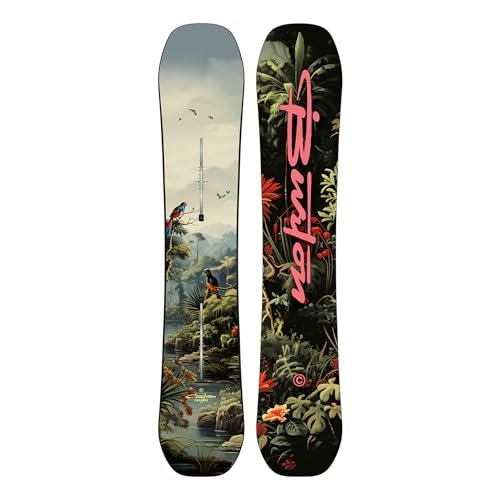
Burton Custom Flying V
A poplar and paulownia core keeps swing weight down without sacrificing durability. Flying V camber blends rocker between the feet with camber near the tips, so the nose flexes through variable snow while the edges still hold on hardpack. Seven length options from 150 to 166 cm fit a wide range of riders.
Pros
- Paulownia blend cuts swing weight
- Flying V camber suits groomers and park laps
- Wide length range fits most riders
Cons
- Medium flex is less forgiving for new riders
- Costs more than entry-level twins

K2 Broadcast
Full-grain aspen forms a light, low-density core that stays easy to carry between runs. Catch-free rocker lifts the contact points to reduce edge catches during a turn. Directional flex handles groomers and mellow powder without demanding a steep learning curve.
Pros
- Catch-free rocker forgives sloppy edges
- Lighter swing weight than stiffer all-mountain boards
- Lower cost than premium twin shapes
Cons
- Softer flex loses stability at higher speed
- Base graphics show wear over a season

Lib Tech Skate Banana
Rocker-between-camber shaping, branded Banana Tech, loosens the ride for butters and jib tricks. A paulownia core with basalt stringers keeps weight down while adding torsional strength. Serrated Magne-Traction edges bite into icy park rails that a smoother edge would skate across.
Pros
- Loose feel suits jibbing and butters
- Magne-Traction edges bite on firm park snow
- Twin shape rides the same switch
Cons
- Soft flex washes out above moderate speed
- Less stable in variable backcountry snow
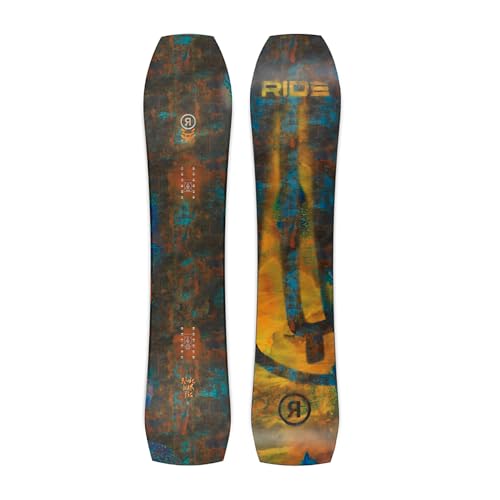
Ride Warpig
A tapered swallowtail and setback stance lift the nose for float in deep snow. Poplar paired with carbon stringers keeps the stiffer flex from adding much weight. Traditional camber underfoot restores pop and edge hold once the trail firms up.
Pros
- Tapered swallowtail floats in deep snow
- Setback stance keeps the nose riding high
- Carbon stringers add pop without much weight
Cons
- Stiff flex tires out riders on a full park lap
- Directional shape rides worse switch

GNU Ladies Choice
Pro rider Elena Hight helped shape this board’s C3 camber, which blends a flat center with rockered contact points. A lightweight whitewood core suits shorter, lighter frames without feeling flimsy. Magne-Traction edges add grip through variable snow that would otherwise demand more muscle.
Pros
- Lighter build suits smaller frames
- C3 camber stays stable yet forgiving
- Magne-Traction grips icy patches
Cons
- Shorter length range limits taller riders
- Not built for big park hits

Burton Ripcord
Flat Top profile sits flat underfoot with a rockered nose and tail, a stable base for learning turns. Poplar keeps the core simple and the price down. Directional twin shaping rides evenly whether facing forward or switch.
Pros
- Flat Top profile is easy to learn on
- Poplar core keeps cost and weight low
- Directional twin rides evenly both ways
Cons
- Soft flex limits high-speed stability
- Base and edges wear faster than premium builds
K2 Standard
Catch-free rocker raises the contact points to prevent the edge catches that trip up new riders. Full-grain aspen keeps the board light enough to swing through turns without much effort. Soft flex forgives the late or early edge transitions that come with learning.
Pros
- Catch-free rocker forgives beginner mistakes
- Light aspen core is easy to turn
- Twin shape works for switch practice
Cons
- Soft flex gets outgrown quickly as skill improves
- Not stable enough for high-speed groomers
Before you buy
What decides how a lightweight snowboard actually rides Core material sets the baseline weight before anything else changes it. Poplar is the standard wood core, durable but heavier than paulownia, which many brands blend in to shave grams. Camber profile matters just as much: full camber holds an edge and pops off jumps, while rocker-heavy hybrids like catch-free rocker or Flying V forgive mistakes and float better in soft snow. Flex rating, usually shown on a 1 to 10 scale, decides whether a board feels playful or planted at speed. Matching flex and camber to your usual terrain beats chasing the lightest spec sheet.
Best boards for powder days Deep snow rewards a directional shape with a setback stance, keeping the nose riding high. Ride Warpig tapers its swallowtail and pairs it with traditional camber for edge hold once the powder clears. Carbon stringers in the core add stiffness for stability without piling on weight. Twin-shaped park boards plane less efficiently in fresh snow, since their symmetric shape skips that nose lift.
How to pick a board for park and freestyle riding Jibbing and rail work favor soft flex and a twin shape that rides the same switch as regular. Lib Tech built the Skate Banana around rocker-between-camber shaping for a loose, buttery feel underfoot. Serrated Magne-Traction edges grip icy takeoffs without adding weight. Stiffer freeride boards like the Warpig can still catch air, but their directional shape and firmer flex make spins and switch landings harder.
Sizing a snowboard by weight, not height Manufacturers list a length range tied to rider weight rather than height alone. A board that runs short for your weight feels twitchy at speed, while an oversized board turns sluggishly. Riders with boots larger than a men’s size 10 often need a wide version to avoid toe and heel drag. Within a brand’s suggested range, the shorter end suits park riding and the longer end suits powder float.
How they stack up
| # | Model | Core | Best for | Score | Price |
|---|---|---|---|---|---|
| 1 | Burton Custom Flying V | Poplar and paulownia blend | Best overall | 9.4 | Check price |
| 2 | K2 Broadcast | Full-grain aspen | Best value | 9.1 | Check price |
| 3 | Lib Tech Skate Banana | Paulownia with basalt stringers | Best for park and freestyle | 8.8 | Check price |
| 4 | Ride Warpig | Poplar with carbon stringers | Best for powder | 8.6 | Check price |
| 5 | GNU Ladies Choice | Whitewood (aspen and paulownia) | Best for women | 8.4 | Check price |
| 6 | Burton Ripcord | Poplar | Best budget | 8.2 | Check price |
| 7 | K2 Standard | Full-grain aspen | Best for beginners | 8.0 | Check price |
Questions worth asking
How much does core material affect a snowboard’s weight?
Core material drives most of the swing weight difference. Full poplar, like the Burton Ripcord’s core, is durable but denser than the paulownia blend in the Burton Custom Flying V. Carbon or basalt stringers add stiffness without much extra mass.
What is the lightest camber profile for a snowboard?
No single profile wins on weight alone, since camber shapes ride feel more than it trims grams. Rocker-heavy profiles like K2’s catch-free rocker use slightly less material at the tips, but the core still drives most of the weight.
Which snowboard handles deep powder best?
Ride Warpig is built for it, with a tapered swallowtail and setback stance that lift the nose in deep snow. Traditional camber underfoot restores edge hold once the trail packs down.
Can a lightweight snowboard stay stable at speed?
Yes, if flex and camber support it. Burton Custom Flying V stays composed because Flying V camber keeps contact near the tips despite its light paulownia-blend core.
Is a softer flex better for snowboarding beginners?
Generally yes. A soft flex, like the K2 Standard’s, forgives late or early edge transitions while balance is still developing. Stiffer boards demand more precise input.
Flying V vs catch-free rocker: what changes on the snow?
Flying V mixes rocker between the feet with camber near the tips for pop and edge hold. Catch-free rocker lifts contact points along the whole board for a more forgiving feel.
What size snowboard fits my weight?
Match length to the weight range each brand lists, not to height. Burton Ripcord and K2 Standard both run from around 150 to 158 cm for lighter to average riders.
Are women’s specific snowboards actually different from unisex boards?
Yes, beyond graphics. GNU Ladies Choice uses a shorter length range, a lighter whitewood core, and a camber profile tuned for lower rider weights, with a softer average flex.
Best lightweight snowboard for park and freestyle riding?
Lib Tech Skate Banana leads here, with rocker-between-camber shaping and a soft twin flex built for butters, jibs, and switch landings.
The bottom line
Burton Custom Flying V remains the pick for most riders, since its paulownia-blend core and Flying V camber cover groomers, powder, and moderate park laps without excess weight. Riders chasing deep snow should look at the Ride Warpig instead, and beginners will progress faster on the forgiving K2 Standard. Park-focused riders on a budget get the most playful ride from the Lib Tech Skate Banana.