Which Mesh Wi-Fi System Actually Kills Dead Zones?
TP-Link Deco XE75 suits most homes, pairing tri-band Wi-Fi 6E with wide coverage and a simple app. Amazon eero 6+ sets up fastest for beginners who want a hands-off network. Google Nest Wifi Pro fits households already running Google Nest cameras and speakers best.
TP-Link Deco XE75 pairs tri-band Wi-Fi 6E, a dedicated 6 GHz backhaul and broad coverage inside an app that stays simple. Amazon eero 6+ suits anyone who wants a truly hands-off setup over raw specs. Google Nest Wifi Pro fits naturally into a Google smart-home household.
Coverage claims assume open floor plans, so real walls and floors always cut into the advertised square footage. Band counts alone do not tell the full story either, since dedicated backhaul quietly shapes real-world speed. We compared seven current systems using published specifications and recurring themes in owner reviews, focused on performance across walls and many connected devices rather than best-case marketing numbers.
The top picks, ranked

TP-Link Deco XE75 Mesh System
A dedicated 6 GHz band handles backhaul traffic separately from your devices, so speed holds up even in busy homes. Wi-Fi 6E performance, generous coverage and an approachable app combine in one three-pack. Setup and daily management stay simple through the Deco app.
Pros
- Dedicated 6 GHz backhaul preserves speed
- Wide coverage from a three-pack
- Clean, beginner-friendly app
Cons
- Ports are Gigabit, not multi-gig
- Some features sit behind a subscription

Amazon eero 6+ Mesh System
A guided app walks through setup in minutes and manages the network quietly afterward. Owners praise its stability and how well it pairs with Alexa and other smart devices. A built-in Zigbee hub adds smart-home control without extra hardware.
Pros
- Extremely simple guided setup
- Reliable day-to-day performance
- Doubles as a smart-home hub
Cons
- Dual-band shares backhaul with devices
- Advanced features need eero Plus

Google Nest Wifi Pro
Wi-Fi 6E and a rounded, living-room-friendly design set this system apart visually. Google Home app ties every unit into existing Nest devices without a separate app to manage. Households already running Google smart-home gear benefit most, based on specifications.
Pros
- Wi-Fi 6E in a living-room-friendly design
- Tight Google Home integration
- No mandatory subscription for core features
Cons
- Only one spare Ethernet port per unit
- Not backward compatible with older Nest Wifi

ASUS ZenWiFi XT9 Mesh System
Deep settings expose QoS controls, guest networks and parental tools most mesh apps hide from view. Lifetime AiProtection security ships included, with no recurring fee attached. Tinkerers who want to fine-tune their network get more knobs to turn here than on rival systems.
Pros
- Deep settings for advanced users
- Included security with no subscription
- Solid multi-band throughput
Cons
- App can overwhelm beginners
- Larger units are less discreet

Netgear Orbi RBK763S Mesh System
A dedicated 5 GHz backhaul keeps tri-band speed high across multiple floors. Coverage stretches further per three-pack than most rivals here, which suits bigger houses. A multi-gig port on the router unit keeps pace with faster internet plans.
Pros
- Excellent range for large homes
- Dedicated backhaul keeps speeds high
- Multi-gig port on the router unit
Cons
- Premium price for the coverage
- Bulky satellites take up shelf space
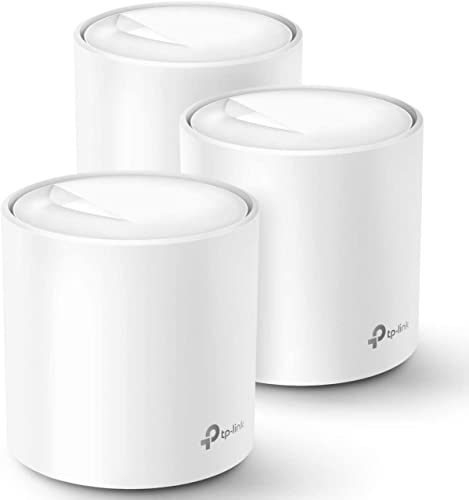
TP-Link Deco X20 Mesh System
Dual-band Wi-Fi 6 coverage comes at an approachable price, making this a sensible entry into mesh. The same easy Deco app carries over from pricier models in the lineup. Smaller homes gain dependable coverage without paying for a 6 GHz band they may not need.
Pros
- Affordable way into Wi-Fi 6 mesh
- Same simple Deco app experience
- Good coverage for the price
Cons
- Dual-band limits peak throughput
- No 6 GHz band

Amazon eero Pro 6E Mesh System
A 6 GHz band relieves congestion in homes running many simultaneous devices. The familiar eero app and setup flow carry over unchanged from cheaper models. A 2.5 Gbps port on one unit keeps pace with faster internet plans.
Pros
- 6 GHz band relieves crowded networks
- Same effortless eero setup
- Multi-gig port for fast plans
Cons
- Higher price than the eero 6+
- Best features still tied to eero Plus
How they compare
| # | Model | Wi-Fi standard | Best for | Score | Price |
|---|---|---|---|---|---|
| 1 | TP-Link Deco XE75 Mesh System | Wi-Fi 6E | Best overall | 9.4 | Check price |
| 2 | Amazon eero 6+ Mesh System | Wi-Fi 6 | Best for easy setup | 9.1 | Check price |
| 3 | Google Nest Wifi Pro | Wi-Fi 6E | Best for Google homes | 8.9 | Check price |
| 4 | ASUS ZenWiFi XT9 Mesh System | Wi-Fi 6 | Best for power users | 8.8 | Check price |
| 5 | Netgear Orbi RBK763S Mesh System | Wi-Fi 6 | Best for large homes | 8.6 | Check price |
| 6 | TP-Link Deco X20 Mesh System | Wi-Fi 6 | Best budget | 8.3 | Check price |
| 7 | Amazon eero Pro 6E Mesh System | Wi-Fi 6E | Best for dense device homes | 8.1 | Check price |
How to choose
What problem does mesh Wi-Fi actually solve? Several units share one network name, so devices roam between them without dropping the connection. Dead zones disappear far more reliably than with a single router or an old-style range extender, which usually creates a separate, slower network. Multi-floor homes, thick walls and any room with weak signal benefit most from switching to mesh.
How do bands and backhaul affect speed? Dual-band systems share the same airwaves between your devices and the traffic hopping between mesh units, which slows things down when the network gets busy. Tri-band models add a third band, and the best ones reserve it purely for backhaul so device speed stays high. Wi-Fi 6E adds a clean 6 GHz band that reduces congestion in homes packed with gadgets.
How much coverage do you actually need? Square-footage figures assume open, single-story spaces, so real homes with walls and floors see less range in practice. Buy based on your layout rather than the headline number, and remember a third unit often helps more than chasing a bigger spec. Check for multi-gig Ethernet ports if your internet plan already runs fast.
Do apps, subscriptions or privacy matter to you? Daily life with your network runs through the setup app, so an easy, stable one is worth paying attention to. Some brands lock parental controls, security or ad-blocking behind a monthly plan, which adds an ongoing cost. A system that ties into your existing smart-home platform simplifies device management, and each brand’s data policy is worth a quick check before buying.
Good to know
How many mesh units do I need?
Two units cover many small to mid-size homes, while three suit larger or multi-floor houses with thick walls. Coverage claims assume open space, so start with the size matching your layout. Add a unit later if specific rooms still lag.
Is Wi-Fi 6E worth it over Wi-Fi 6?
A 6 GHz band reduces congestion, which helps most in homes with many devices or crowded nearby networks. A modest device count and a slower internet plan mean a good Wi-Fi 6 system may serve just as well. Extra cost buys headroom you may not need yet.
Will a mesh system speed up my internet?
No, a mesh system spreads your existing connection more evenly and removes dead zones, but cannot exceed what your provider delivers. Weak signal causing slow rooms is exactly what it fixes. A slow plan stays slow no matter how many mesh units you add.
Can I mix mesh units from different brands?
Generally no, since mesh systems rely on brand-specific software to coordinate units. Roaming and management only work as intended within one brand, and ideally compatible models within it. Mixing brands usually means running two separate networks instead of one mesh.
Do I still need my old router?
Most mesh systems replace your router entirely and connect straight to your modem. A combined modem-router from your provider can often switch into bridge or pass-through mode so the mesh handles Wi-Fi. Check your provider’s settings menu for that option.
Do mesh systems require a subscription?
Core Wi-Fi works without any subscription on every system compared here. Some brands charge monthly for extras like advanced parental controls, security or ad-blocking. Check what ships included before buying if those features matter to you.
Should I use wired backhaul if I can?
Running Ethernet between units frees the wireless bands for your devices and usually improves performance. It stays optional, since most systems work well wirelessly. Homes already wired for Ethernet gain a nice upgrade by using it.
Where should I place the mesh units?
Set the main unit near your modem, then spread the others so each sits within strong range of the last. Open placement works better than a cabinet or shelf tucked behind furniture. Large metal appliances nearby block signal and hurt performance.
TP-Link Deco XE75 vs Amazon eero 6+: which mesh system fits your home?
Deco XE75 wins on raw specs, with tri-band Wi-Fi 6E and a dedicated 6 GHz backhaul. eero 6+ wins on simplicity, with a guided app that finishes setup in minutes. Choose based on whether you value performance headroom or a hands-off experience more.
Final word
TP-Link Deco XE75 remains the mesh system to beat for most homes, pairing Wi-Fi 6E performance with wide coverage and an app anyone can use. Amazon eero 6+ suits anyone who wants a truly effortless setup above all else. Google Nest Wifi Pro fits best if your home already runs on Google smart devices.