Painting Tools That Give Walls a Clean Finish
The Purdy XL Glide angled brush is the single tool that most improves cutting in, and the Wooster Pro/Doo-Z roller cover lays off walls without heavy stipple. For larger jobs the Wagner Flexio 3000 sprayer covers ground far faster than any roller can.
A Purdy XL Glide brush and a Wooster Pro/Doo-Z roller cover will lift the quality of almost any paint job immediately, and the Wagner Flexio 3000 is the addition worth making once the area gets large enough that rolling becomes the bottleneck.
Painting tools are hard to compare because the differences show up in the finished wall rather than on the packaging, and nap length or bristle type matters more than brand. We compared current tools on materials, published specifications and what painters report about shedding, brush marks, tape bleed and how each survives repeated cleaning.
The shortlist, ranked

Purdy XL Glide 2.5 in Angled Paint Brush
The XL Glide is the brush most professional decorators reach for when cutting in, holding a generous load while keeping a crisp edge along the ferrule. The nylon and polyester blend suits water based paints and springs back rather than splaying after a few days of use. Painters report it releases paint smoothly enough that brush marks flatten out as the coat levels.
Pros
- Holds a crisp line when cutting in
- Excellent paint release and levelling
- Springs back to shape after cleaning
Cons
- Not the right filament for oil based paint
- Needs proper cleaning to keep its shape

Wooster Pro/Doo-Z Roller Cover 9 in
Wooster’s Doo-Z fabric is the roller cover that quietly separates a decent wall from a stippled one, laying paint down evenly without shedding fibres into the finish. It carries a heavy load, meaning fewer trips to the tray on a large wall. Painters report it cleans up well enough to reuse repeatedly, which is unusual at this level.
Pros
- Leaves very little stipple
- Minimal shedding into the paint film
- Reusable after proper cleaning
Cons
- Nap choice must match the surface texture
- Costs more than throwaway covers

Wagner Spraytech Flexio 3000 HVLP Paint Sprayer
Once a job moves past a couple of rooms, spraying stops being a luxury and starts being the fastest route to a finished coat. The Flexio 3000 handles both thin and unthinned latex through two nozzle options and lets you adjust pattern and flow. Owners report the masking and cleanup time is the real cost, so it earns its place on big jobs rather than small ones.
Pros
- Covers large areas far faster than rolling
- Handles unthinned latex with the wall nozzle
- Adjustable pattern suits trim and walls
Cons
- Masking and cleanup take real time
- Overspray demands careful preparation

ScotchBlue Original Multi-Surface Painter’s Tape
The blue original remains the tape most decorators trust for standard interior work, adhering well enough to block bleed while releasing without pulling paint off the wall. It handles a reasonable stretch of time on the surface before removal becomes risky. Painters report burnishing the edge with a putty knife before painting is what actually prevents bleed, regardless of tape brand.
Pros
- Reliable clean removal from painted walls
- Blocks bleed when properly burnished
- Widely available in several widths
Cons
- Struggles on rough textured surfaces
- Leaves residue if left on too long in sun

Wooster Sherlock GT Javelin Extension Pole
A good extension pole turns ceiling painting from an exercise in ladder shuffling into something you do from the floor. The Sherlock GT locks positively rather than slipping under load, and the Javelin tip accepts brushes as well as rollers. Painters report the rigidity is what separates it from cheap poles that flex and skip across the surface.
Pros
- Locks solidly without slipping
- Accepts brushes as well as roller frames
- Rigid enough to avoid skipping
Cons
- Heavier than basic aluminium poles
- Javelin tip needs matching accessories
HANDy Paint Pail
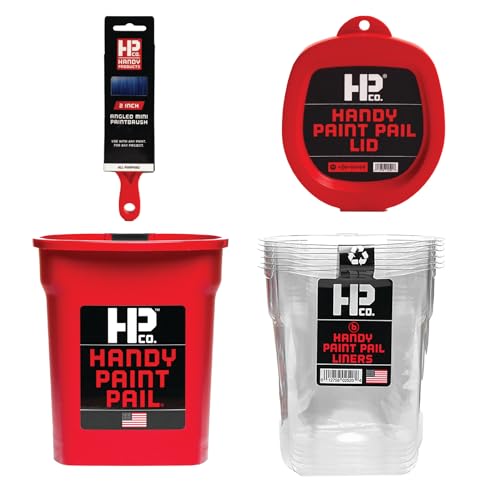
Holding a full paint tin up a ladder is how most spills happen, and the HANDy pail fixes it with a magnet that holds the brush and an adjustable strap that takes the weight. Disposable liners mean cleanup is a matter of seconds. Owners report it is one of those tools that seems trivial until the first job you use it on.
Pros
- Magnet keeps the brush out of the paint
- Strap reduces hand fatigue on ladders
- Liners make cleanup nearly instant
Cons
- Small capacity means frequent refilling
- Liners are an ongoing consumable

Shur-Line Paint Edger Pro
The edger runs a pad along guide wheels to produce a straight line against a ceiling or trim without tape or a steady hand. It suits anyone who finds cutting in with a brush intimidating. Painters report the results depend heavily on keeping the wheels clean, since a spot of paint on a wheel transfers straight onto the ceiling.
Pros
- Produces straight edges without tape
- Approachable for first time painters
- Replaceable pads
Cons
- Wheels transfer paint if not wiped often
- Less precise than a good brush in skilled hands
How they stack up
| # | Model | Width | Best for | Score | Price |
|---|---|---|---|---|---|
| 1 | Purdy XL Glide 2.5 in Angled Paint Brush | 2.5 in angled sash | Best overall | 9.4 | Check price |
| 2 | Wooster Pro/Doo-Z Roller Cover 9 in | 9 in | Best value | 9.2 | Check price |
| 3 | Wagner Spraytech Flexio 3000 HVLP Paint Sprayer | Handheld HVLP sprayer | Best for large areas | 9.0 | Check price |
| 4 | ScotchBlue Original Multi-Surface Painter’s Tape | Multi surface painter’s tape | Best for clean lines | 8.7 | Check price |
| 5 | Wooster Sherlock GT Javelin Extension Pole | Telescoping, multiple length options | Best for ceilings and high walls | 8.5 | Check price |
| 6 | HANDy Paint Pail | Around 1 qt | Best for cutting in | 8.2 | Check price |
| 7 | Shur-Line Paint Edger Pro | Guided edging pad | Best for beginners | 8.0 | Check price |
What matters most
Match the brush filament to the paint Synthetic filaments made from nylon and polyester are the right choice for water based and latex paints, because natural bristle absorbs water and goes limp. Natural China bristle belongs with oil based paints and varnishes, where it lays off beautifully. Using the wrong one is the most common reason a new brush feels unexpectedly poor, and no amount of technique fixes it.
Nap length decides your roller finish Short nap of around three sixteenths to a quarter inch suits smooth walls, doors and cabinets, leaving minimal texture. Three eighths to half an inch is the general purpose range for typical drywall. Three quarters of an inch and above is for stucco, brick and heavy texture where the roller needs to reach into low spots. Using too long a nap on a smooth wall is what creates the orange peel look people blame on their paint.
Preparation beats every tool in the list Filling, sanding, cleaning and priming determine more of the final appearance than the brush you use. Tape only works if the edge is burnished down and the surface is clean and dry, and even the best roller cover will telegraph a rough patch of unfilled wall. Budget more time for preparation than for painting and the finish improves without buying anything.
Cleaning tools so they last Quality brushes and roller covers are reusable for years if they are washed out immediately rather than left to stiffen. Rinse water based paint out under warm water until it runs clear, work the filaments with a brush comb, then hang or store the brush in its original keeper so it dries in shape. A brush allowed to dry with paint in the heel never recovers its edge.
Frequently asked questions
What size brush should I use for cutting in?
A two and a half inch angled sash brush is the most versatile choice for walls and trim. Narrower brushes suit fine detail and window bars, while wider brushes hold more paint but are harder to control along a ceiling line.
What roller nap do I need for a smooth wall?
Three eighths of an inch is the usual choice for typical drywall, and a quarter inch or shorter for very smooth surfaces like doors and cabinets. Longer naps are for textured surfaces and will add stipple to a smooth wall.
Is a paint sprayer worth it for one room?
Usually not. The masking, setup and cleanup time outweighs the speed advantage on small jobs. Sprayers make sense for whole houses, exteriors, fences, cabinets and anything with a lot of surface area or awkward detail.
How do I stop paint bleeding under tape?
Press the tape edge down firmly with a putty knife, then seal the edge by painting the existing wall colour over the tape line first. Any bleed goes under with that colour, so the finish coat leaves a sharp line.
Can I reuse roller covers?
Quality woven covers can be washed and reused many times. Rinse until the water runs clear, spin out the excess and stand the cover on end to dry so the nap does not flatten. Cheap covers usually shed too much to be worth saving.
How long can painter’s tape stay on the wall?
Most multi surface tapes give a clean removal window of several days on interior surfaces. Leave it longer, especially in direct sun, and the adhesive can transfer or pull paint away when removed.
Do I need to prime before painting?
Prime bare surfaces, patched areas, stains and any dramatic colour change. Over a sound existing coat of similar colour, a quality paint often covers in two coats without a separate primer.
Why does my wall look patchy after painting?
Common causes are an uneven first coat, rolling over a partly dried edge, or a surface that absorbs paint unevenly because it was not primed. Keeping a wet edge and applying two full coats resolves most patchiness.
The bottom line
The Purdy XL Glide and a Wooster Pro/Doo-Z cover are the two purchases that change how a finished wall looks, and together they cost far less than the paint for a single room. Add the Sherlock GT pole for ceilings and the HANDy pail for ladder work. Bring in the Wagner Flexio 3000 only once the area is large enough to justify the masking time.