Pannier Bags Compared: Waterproof Roll Top vs Zip
The Ortlieb Back-Roller Classic is our top overall pannier bag for genuinely waterproof roll top protection. The Thule Shield Pannier is the best value alternative with a slimmer profile, and the Rhinowalk Bike Pannier Bag is the budget commuting choice.
For commuting or touring in real weather, the Ortlieb Back-Roller Classic is still the pannier to buy, because a welded roll top keeps rain out where zips eventually fail. The Thule Shield Pannier is close behind and sits slightly slimmer against the rack.
Pannier bags are hard to compare because water resistant and waterproof are used loosely, and mounting systems vary in how firmly they lock onto a rack. We compared closure types, hook and rail hardware, stated capacities, heel clearance and off bike carry options, plus what owners report after seasons of daily commuting.
What matters most
Waterproof means welded, not coated There is a real difference between water resistant and waterproof. A coated fabric bag with a zip will hold off a shower and let water through in a sustained downpour, because zips and stitched seams both leak. A welded seam roll top has no needle holes and no zip, which is why touring riders accept the slower closure. If your commute is short and mostly dry, a zip bag with a rain cover is fine, and if you ride through winter, buy welded.
Check the mounting system against your rack Panniers hang from hooks that must match your rack’s top tube diameter, and a hook that is too loose rattles and can jump off over a pothole. Better systems let you swap or adjust the hook inserts and add a locking mechanism that releases only when you lift the handle. Also check the lower attachment, since a bungee hook is the simplest and a fixed rail is the most secure. Measure your rack tube before ordering.
Heel clearance decides whether you kick the bag Every rider has kicked a pannier at some point. Clearance depends on the rack’s rearward offset, your frame size and shoe length. Panniers with a tapered lower front corner and a mount that lets you slide the bag backwards along the rail solve most of it. If you ride a small frame or have large feet, prioritize a slim bag with an adjustable rail position over raw capacity.
Capacity, balance and off bike carrying Twenty liters per side is the standard commuting and touring size, and a pair gives forty liters, which is more than most riders need daily. Load the two sides to similar weights, since an imbalanced rack makes low speed steering unpleasant. Think about what happens off the bike too: touring panniers have simple carry handles, while convertible models add a backpack harness that makes the walk from the bike rack to your desk far less annoying.
The best picks, ranked

Ortlieb Back-Roller Classic
Ortlieb welds rather than stitches the seams, so there are no needle holes for water to find, and the roll top closure seals the opening completely. The QL2.1 mounting hooks adjust to the rack tube diameter and lock when the carry handle is down. Owners report a decade or more of daily commuting from a single pair.
Pros
- Genuinely waterproof in sustained rain
- Locking mount is very secure
- Exceptional longevity
Cons
- Single main compartment with no pockets
- Roll top is slower than a zip

Thule Shield Pannier
Thule uses a welded waterproof body with a roll top closure and adds a slimmer profile that keeps the bag closer to the rack, which reduces the chance of clipping it with a heel. The magnetic closure on the top flap keeps things tidy at traffic lights. It fits a wide range of rack tube diameters without tools.
Pros
- Slim against the rack
- Magnetic top is quick to use
- Tool free mount adjustment
Cons
- Fewer accessory options than Ortlieb
- Magnet catches grit over time
Two Wheel Gear Pannier Backpack Convertible
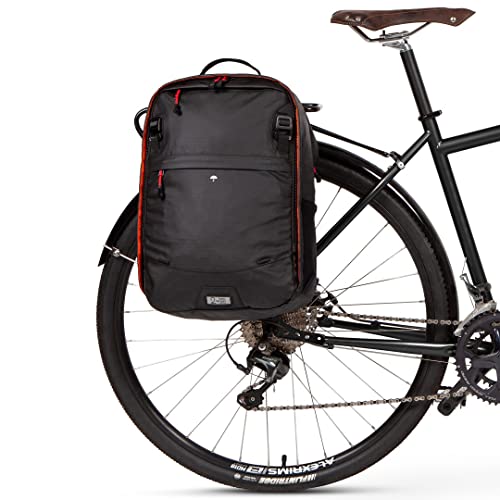
This solves the problem every commuter has: what to do with the bag once you are off the bike. The harness folds out from a rear panel and turns the pannier into a proper backpack rather than an awkward shoulder bag. Inside there is a padded laptop sleeve and real organization, which the touring bags deliberately skip.
Pros
- Genuinely comfortable as a backpack
- Proper laptop protection
- Good internal organization
Cons
- Water resistant rather than waterproof
- Heavier empty than a plain pannier

Ibera PakRak Bicycle Trunk Bag with Panniers
This sits on top of the rack as a trunk bag, then unzips into two side panniers when you need the extra volume for a shopping run. That flexibility means you are not carrying empty bags on the days you have nothing to put in them. Based on specifications it uses a dedicated rack clip system for a rattle free fit.
Pros
- Only takes the space you need
- Secure clip mount
- Rain cover included
Cons
- Clip system suits certain racks best
- Zips are the weak point in heavy rain
Banjo Brothers Grocery Pannier
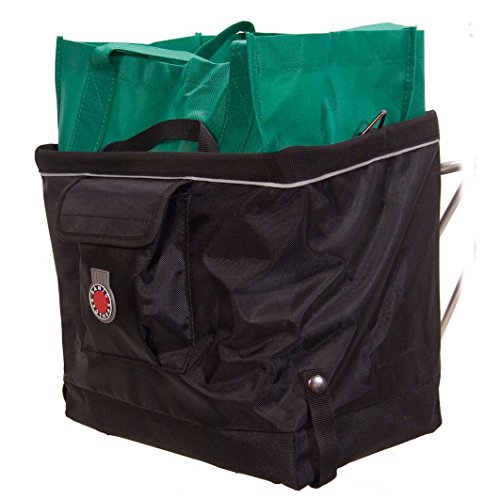
Banjo Brothers sized this to swallow a standard paper grocery bag upright, which sounds mundane until you have tried to balance shopping in a touring pannier. Internal stiffeners keep the shape so contents do not collapse against the wheel. It folds flat when empty and mounts with simple hooks and a bungee hook below.
Pros
- Purpose built for groceries
- Keeps its shape when loaded
- Folds away when unused
Cons
- Not waterproof
- Simple hooks rattle on rough roads

Roswheel Bicycle Rear Seat Pannier
Roswheel keeps weight down with lighter fabrics and a simpler hook system, which suits riders who use panniers occasionally rather than daily. There is enough space for a change of clothes, a lock and lunch. Treat the water resistance as adequate for showers rather than a downpour, and use the included cover when it turns.
Pros
- Light for the volume
- Rain cover supplied
- Reflective detailing
Cons
- Straps need retightening
- Fabric is thinner than touring bags

Rhinowalk Bike Pannier Bag
Rhinowalk covers commuter needs at the lowest outlay here, with a coated fabric body, adjustable hooks and a shoulder strap for carrying it into the office. The build is not up to loaded touring, but for a few miles each way with a laptop and lunch it works. Check hook fit against your rack before committing.
Pros
- Lowest outlay of the group
- Shoulder strap included
- Adjustable hook spacing
Cons
- Hardware wears faster
- Not suited to heavy touring loads
The lineup, side by side
| # | Model | Capacity | Best for | Score | Price |
|---|---|---|---|---|---|
| 1 | Ortlieb Back-Roller Classic | 20 liters per pannier | Best overall | 9.4 | Check price |
| 2 | Thule Shield Pannier | About 17 to 25 liters per side | Best value | 9.2 | Check price |
| 3 | Two Wheel Gear Pannier Backpack Convertible | About 22 liters | Best for commuters | 9.0 | Check price |
| 4 | Ibera PakRak Bicycle Trunk Bag with Panniers | Trunk bag with expandable side panniers | Best expandable capacity | 8.8 | Check price |
| 5 | Banjo Brothers Grocery Pannier | Fits a standard grocery bag | Best for shopping | 8.6 | Check price |
| 6 | Roswheel Bicycle Rear Seat Pannier | About 20 liters combined | Best lightweight option | 8.3 | Check price |
| 7 | Rhinowalk Bike Pannier Bag | About 20 liters | Best budget | 8.0 | Check price |
Good to know
Are panniers better than a backpack for cycling?
For anything beyond a short ride, yes. Panniers put weight on the bike rather than your spine, which removes the sweaty back and shoulder ache that comes with carrying a loaded pack. A backpack is only preferable when you have no rack or need to keep the bike light for lifting.
Do panniers fit any bike rack?
Most fit standard rear racks, but hook size and spacing vary. Measure the diameter of your rack’s top tube and check the pannier’s stated compatibility. Adjustable hook systems cover the widest range, while fixed hooks may not clip securely onto oversized tubing.
How much can a pannier carry?
Twenty liters per side is typical, giving forty liters across a pair. The real limit is usually the rack’s rated load rather than the bag, and most rear racks are rated for somewhere between twenty and thirty kilograms including the rack hardware.
Are roll top panniers really waterproof?
Welded roll top bags with no zips are, provided you roll the top at least three times before buckling. Bags described as water resistant with zip closures will let water in during prolonged rain, which is why touring riders favour welded construction.
Will panniers hit my heels while pedalling?
It depends on your frame size, shoe length and how far back the rack sits. Choose a bag with a tapered lower front corner and a mount you can slide rearwards, and if you ride a small frame, favour slimmer bags over maximum capacity.
Can I use one pannier instead of two?
Yes for light loads, and most commuters do. The bike steers slightly asymmetrically but it is barely noticeable under about five kilograms. For heavier loads or touring, split the weight across both sides.
How do I stop panniers rattling?
Rattling almost always means the hooks are too large for the rack tube or the lower attachment is loose. Fit the correct hook inserts, tension the lower bungee or rail, and add a strip of inner tube around the rack tube as a cheap damper.
Are panniers secure when I leave the bike?
They are not theft proof. Some mounting systems lock onto the rack to deter opportunists, but the bag itself can be opened. Take valuables with you, and choose a convertible pannier if you want to carry the bag away rather than leaving it.
The verdict
The Ortlieb Back-Roller Classic is the pannier to buy if you ride through winter, since welded seams and a roll top keep contents dry when zip bags give up. The Thule Shield Pannier is the better choice if heel clearance is tight, and the Two Wheel Gear Pannier Backpack Convertible is the practical answer for commuters who have to carry the bag into an office.