What Flex And Camber Reveal About A Snowboard’s Ride
Burton Custom leads for all-mountain versatility that advanced riders have trusted for two decades. Lib Tech T.Rice Pro suits freestyle and park riders chasing pop and playful flex. Never Summer Proto Type Two fits riders who want stable, aggressive carving at speed.
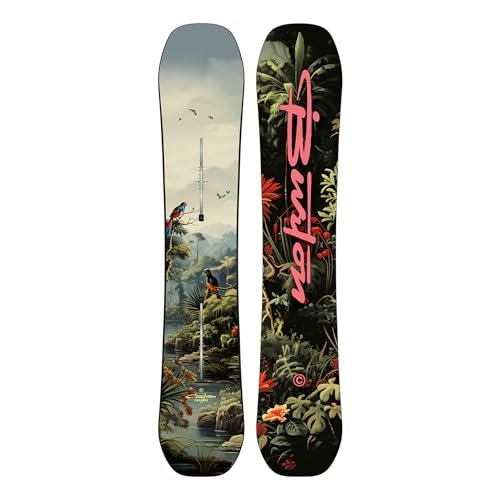
Burton Custom tops this list as a directional twin that has served as an all-mountain benchmark for advanced riders for two decades. Its traditional camber rewards correct technique but punishes sloppy landings. Lib Tech T.Rice Pro answers riders chasing pop and playful flex in the park, and Never Summer Proto Type Two suits riders who want stable, aggressive carving over playful flex.
Flex rating and camber profile decide how a board behaves at speed and in the air, more than graphics or brand name ever will. A stiff directional board carves confidently but punishes mistakes in the park, while a soft twin forgives landings yet washes out on hardpack. We compared core construction, camber type, stated flex rating and shape, then weighed owner reports of durability and edge hold across seasons.
What we recommend

Burton Custom Snowboard
A directional twin shape with Burton’s traditional camber holds an edge through variable snow while still riding switch competently in the park. A poplar wood core with carbon highlights keeps the ride lively without extra weight. Advanced riders often run it as a one-board quiver across most mountain terrain.
Pros
- Handles variable snow and hardpack confidently
- Rides switch well despite its directional shape
- Durable construction holds up over many seasons
Cons
- Camber demands correct technique from newer riders
- Costs more than entry-level all-mountain boards

Lib Tech T.Rice Pro Snowboard
Serrated Magne Traction edges bite into icy park features where a straight edge skates out. C2 camber blends rocker and camber zones, adding pop off jumps without losing edge hold on rails. Riders chasing deep powder days will find other shapes on this list better suited.
Pros
- Magne Traction edges hold on icy features
- C2 camber balances pop and stability
- Rides equally well regular or switch
Cons
- Not the deep powder specialist in this group
- Carries a premium price for a park focused board

Never Summer Proto Type Two Snowboard
A rocker camber rocker profile stays stable at high speed while floating through fresh snow better than a pure camber board. Never Summer’s Vario Power Grip base adds extra edge contact points for grip on ice. It rewards an aggressive, confident riding style more than a relaxed cruising pace.
Pros
- Stable at high speed on groomed runs
- Vario Power Grip base improves ice edge hold
- Floats reasonably well in fresh snow
Cons
- Stiff flex punishes hesitant riding
- Feels less forgiving for casual park laps
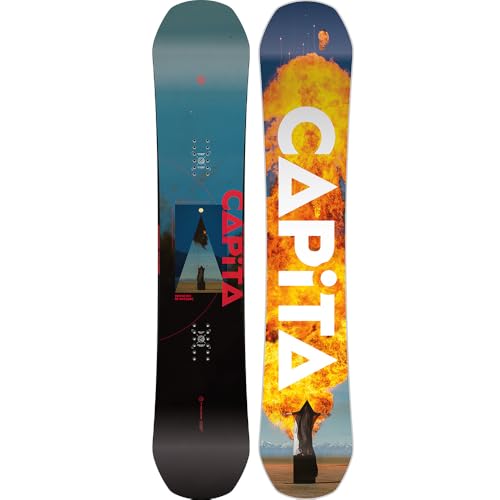
Capita Defenders of Awesome Snowboard
A true twin shape blending camber and rocker handles park, groomers and moderate powder without feeling out of place anywhere. Medium flex suits riders who move between terrain types in a single day. It lacks the specialization of a dedicated park or powder board for riders who stick to one style.
Pros
- Handles park, groomers and powder reasonably well
- Medium flex suits varied riding styles in one day
- True twin rides identically regular or switch
Cons
- Not specialized for dedicated park or powder days
- Middle-of-the-road flex lacks a standout strength

Rome Agent Snowboard
A directional shape with a stiffer tail and softer nose floats through backcountry powder while staying responsive on the way down. Camrock profile adds rocker at the nose for effortless float in deep snow. Park riders will find the directional shape less suited to switch riding than a true twin.
Pros
- Floats well through backcountry powder
- Stiffer tail improves control at speed
- Directional shape suits freeride terrain
Cons
- Switch riding feels less natural than on a twin shape
- Feels less playful in the park than freestyle boards

K2 Manifest Snowboard
Triple 8 camber places camber zones between the feet and rocker at the tip and tail, blending pop, float and stability. The directional shape favors riding forward over switch, suiting all-mountain riders more than park specialists. It handles chopped up snow later in the day better than a full rocker board.
Pros
- Handles chopped up afternoon snow well
- Balanced camber profile suits varied terrain
- Provides a stable platform for advanced all-mountain riding
Cons
- Directional shape limits switch riding comfort
- Skips dedicated park or powder specialization

GNU Riders Choice Snowboard
C3 camber combines a rockered center with camber zones near the feet, giving forgiving float without losing edge grip entirely. It costs less than most boards in this group while still using a full wood core rather than cheaper foam. Advanced riders chasing maximum edge hold at speed may prefer a stiffer, fully cambered board instead.
Pros
- Costs less than most boards in this comparison
- Forgiving flex suits varied snow conditions
- Full wood core outperforms foam-core budget boards
Cons
- Offers less edge hold at speed than full-camber boards
- Softer flex trades some precision for forgiveness
How to choose
What camber profile does for your ride Traditional camber arcs upward between the bindings, delivering the most edge hold and pop but forgiving fewer mistakes. Rocker profiles curve the opposite way at the tip and tail, floating better in powder and forgiving catch free landings. Hybrid profiles like C2, C3 and Camrock blend both, keeping some edge hold while adding float.
Matching flex rating to riding style A board rated 7 or higher out of 10 holds an edge at high speed and suits aggressive carving or backcountry lines. A softer board, rated 5.5 or lower, forgives mistakes and suits park laps or riders still refining technique. Medium flex around 6 aims for versatility across groomers, moderate powder and occasional park runs.
Directional versus true twin shapes A true twin shape rides identically forward or switch, since the nose and tail share the same length and flex. Directional shapes set the bindings back slightly and stiffen the tail, improving float and stability riding forward at the cost of switch performance. Freestyle riders favor twins, while freeride and all-mountain riders often prefer directional shapes.
Choosing a board for your primary terrain Park and pipe riders benefit most from a twin shape with hybrid camber and a serrated edge for icy features. Powder and backcountry riders want a directional shape with rocker at the nose for float. Riders splitting time across groomers, moderate powder and occasional park laps do best with a medium flex directional twin like the Burton Custom or Capita Defenders of Awesome.
Side by side
| # | Model | Core | Best for | Score | Price |
|---|---|---|---|---|---|
| 1 | Burton Custom Snowboard | Poplar wood with carbon highlights | Best overall | 9.4 | Check price |
| 2 | Lib Tech T.Rice Pro Snowboard | Paulownia and bamboo wood blend | Best for freestyle and park | 9.1 | Check price |
| 3 | Never Summer Proto Type Two Snowboard | Sustainably sourced wood core | Best for aggressive all mountain carving | 8.9 | Check price |
| 4 | Capita Defenders of Awesome Snowboard | Aspen wood core | Best for terrain versatility | 8.7 | Check price |
| 5 | Rome Agent Snowboard | Full wood core | Best for freeride and backcountry | 8.5 | Check price |
| 6 | K2 Manifest Snowboard | Aspen and fir wood core | Best for advanced all mountain riders | 8.3 | Check price |
| 7 | GNU Riders Choice Snowboard | Full wood core | Best value | 8.0 | Check price |
Questions worth asking
What is the difference between camber and rocker snowboards?
Camber boards arc upward between the feet for edge hold and pop. Rocker boards curve the opposite way for float in powder and a more forgiving, catch free feel.
What flex rating is best for advanced riders?
Advanced riders often prefer medium to stiff flex, roughly 6 to 8 out of 10, since stiffer boards hold an edge better at speed. The right rating still depends on whether a rider favors park, freeride or all-mountain terrain.
Is a directional or twin snowboard better for all mountain riding?
Directional twins, which favor riding forward slightly while still handling switch reasonably, are a common all-mountain choice. True twins suit riders who spend real time riding switch in the park.
How often should a professional level snowboard be waxed?
Regular riders typically wax every 4 to 6 days on snow to maintain glide and protect the base. Riders on rough or rocky terrain should check the base for damage more often.
What core material do professional snowboards use?
Most use a wood core, often poplar, aspen, bamboo or paulownia, sometimes reinforced with carbon or fiberglass for added pop and durability compared to foam core budget boards.
Can one snowboard handle both park and powder well?
Hybrid camber all-mountain boards like the Capita Defenders of Awesome handle both reasonably well. A dedicated park board or dedicated powder board will still outperform a generalist in its specialty.
Freeride vs all mountain snowboards, what is the real difference?
Freeride boards use a stiffer directional shape optimized for backcountry powder and speed. All-mountain boards balance groomers, moderate powder and occasional park use in one shape.
How long does a professional snowboard last with regular use?
A well maintained wood core board can last 100 or more days on snow across several seasons before the base, edges or camber degrade enough to affect performance.
Our pick
Choose the Burton Custom if you want one board that handles most mountain conditions without a dedicated park or powder specialty. Park and freestyle riders chasing pop and edge hold on icy features should pick the Lib Tech T.Rice Pro instead. Riders who mostly carve fast groomers and want maximum stability at speed should lean toward the Never Summer Proto Type Two over a softer all-mountain shape.