Rabbit Litter Boxes That Keep Bedding Where It Belongs
The Kaytee Hi-Corner Litter Pan is the most practical choice for most single rabbits, pairing a raised back with a corner shape that fits standard hutches. The Van Ness Cat Litter Pan CP2 suits larger breeds needing floor space, and the Ware Scatterless Lock-N-Litter Pan handles enthusiastic diggers.
For a typical house rabbit the Kaytee Hi-Corner Litter Pan is the sensible default, with the Van Ness Cat Litter Pan CP2 for giant breeds and the Ware Scatterless Lock-N-Litter Pan when digging is the problem.
Rabbit litter boxes are harder to choose than cat boxes because rabbits eat while they toilet, so the pan has to sit next to hay and stay large enough for the animal to turn around in. We compared usable floor area, rim heights, corner and rectangular layouts, and how each design handles the scatter that comes with digging, then weighed that against how easy each is to empty and scrub.
How to choose
Size the box to the rabbit, not the cage The rule most rescues repeat is that a rabbit should be able to sit, turn around fully and stretch out in the pan without stepping over the rim. That means most dedicated small animal trays are too small for anything larger than a Netherland Dwarf, and a large cat pan is often the honest answer for a Rex, Lop or Flemish Giant.
High backs solve spraying, high fronts cause problems Unneutered rabbits and some neutered males spray backwards up a wall, which a raised rear panel catches neatly. What you do not want is a tall front lip, since an older rabbit with stiff joints will simply stop using the box rather than climb it. Look for asymmetric designs with a low entry and a high back.
Plan for hay above the litter Rabbits eat and toilet at the same time, so the practical setup is a hay rack or feeder positioned at one end of the box rather than hay thrown directly onto the litter. That keeps the hay clean, reduces waste and encourages the rabbit to spend time in the box, which speeds up training.
Litter choice matters as much as the box Paper based pellets and compressed wood pellets absorb well and are safe if nibbled. Clumping clay cat litter and cedar or pine shavings are widely advised against for rabbits because of ingestion and respiratory concerns. Whatever you use, a thin layer works better than a deep bed, since a deep bed invites digging.
The best picks, ranked

Kaytee Hi-Corner Litter Pan
The high back wall is the point here, catching the spray that lower trays miss while the front stays low enough for an easy hop in. The corner shape tucks into the angle of a hutch or pen and leaves the middle of the enclosure clear. Owners report it suits small and medium breeds well but is tight for anything giant.
Pros
- High back contains urine spray
- Clips to cage bars so it cannot be tipped
- Corner shape frees up floor space
Cons
- Too small for giant breeds
- Corner geometry makes scrubbing fiddly

Van Ness Cat Litter Pan CP2
A plain rectangular cat pan is what many experienced rabbit keepers end up using, and the CP2 is the size most recommend for Flemish Giants and other large breeds. There is genuine room to sit, turn and eat hay without stepping out. It is basic, but the smooth moulded interior makes it one of the quickest boxes here to clean.
Pros
- Plenty of room for large breeds
- Smooth interior wipes clean fast
- Low sides suit older or arthritic rabbits
Cons
- Low walls do little to stop scatter
- Takes a lot of enclosure floor space

Ware Manufacturing Scatterless Lock-N-Litter Pan
Ware designed this one around the rabbit that treats litter as a digging medium, with tall sides and a locking attachment that stops the pan being flipped. The inward curved lip catches most of what a determined kicker throws. Owners of persistent diggers report a noticeable drop in floor sweeping after switching.
Pros
- Genuinely reduces scattered litter
- Locks in place against tipping
- Tall sides suit spraying rabbits
Cons
- Higher entry is awkward for elderly rabbits
- Needs cage bars for the locking fixture

Oxbow Enriched Life Small Animal Litter Pan
Oxbow built this pan around the reality that rabbits graze while they toilet, with a design that pairs neatly with a hay feeder at one end. That keeps hay off the soiled litter and cuts waste considerably. Based on specifications it sits between the small corner pans and full cat trays in usable area.
Pros
- Keeps hay clean and separate
- Raised back handles spraying
- Sensible middle size for most breeds
Cons
- Hay rack is a separate purchase
- No locking attachment for cage bars
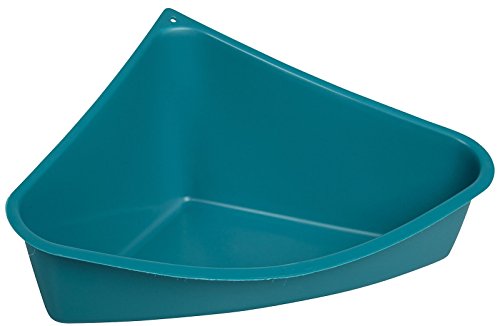
Living World Rabbit Corner Litter Pan
A straightforward corner tray with a fitted grate that keeps feet out of soiled litter, useful for rabbits prone to hock problems. It is a light unit, so it works best clipped in rather than free standing. Owners note the grate is optional and many remove it once the rabbit is reliably trained.
Pros
- Removable grate keeps paws dry
- Very easy to lift out and rinse
- Compact in small hutches
Cons
- Light enough to be tipped if unclipped
- Small capacity needs daily emptying

Trixie Corner Litter Tray with Rim
The wider corner footprint gives two bonded rabbits room to share without one blocking the entrance, which is a common flashpoint in pairs. The moulded rim runs the full perimeter to catch kicked litter. It needs a corner to sit in properly, so it is less flexible in an open pen layout.
Pros
- Enough width for two rabbits
- Perimeter rim limits scatter
- Bracket keeps it anchored
Cons
- Only works properly in a corner
- Rim collects debris and needs scrubbing

Petmate Basic Cat Litter Pan
Sometimes the right answer is the cheapest rectangular pan you can buy several of, one for each favoured corner of a free roam setup. The Petmate Basic is exactly that, with smooth sides and no fittings to break. Owners with multi room rabbits report that placing several pans is more effective for training than buying one premium box.
Pros
- Cheap enough to buy several
- Nothing to break or unclip
- Very quick to empty and rinse
Cons
- No scatter control at all
- Slides easily on smooth flooring
Compared at a glance
| # | Model | Shape | Best for | Score | Price |
|---|---|---|---|---|---|
| 1 | Kaytee Hi-Corner Litter Pan | Corner triangle | Best overall | 9.4 | Check price |
| 2 | Van Ness Cat Litter Pan CP2 | Rectangular | Best for large rabbits | 9.2 | Check price |
| 3 | Ware Manufacturing Scatterless Lock-N-Litter Pan | Corner with high sides | Best for diggers | 9.0 | Check price |
| 4 | Oxbow Enriched Life Small Animal Litter Pan | Rectangular with raised back | Best for hay feeding setups | 8.8 | Check price |
| 5 | Living World Rabbit Corner Litter Pan | Corner triangle | Best budget corner pan | 8.6 | Check price |
| 6 | Trixie Corner Litter Tray with Rim | Wide corner | Best for bonded pairs | 8.3 | Check price |
| 7 | Petmate Basic Cat Litter Pan | Rectangular | Best value multipack option | 8.0 | Check price |
Common questions
Can I use a cat litter box for a rabbit?
Yes, and for medium and large breeds it is often the better choice. A large rectangular cat pan gives more usable floor area than most small animal trays. Avoid covered hooded boxes, which trap ammonia and discourage use.
How many litter boxes does one rabbit need?
One in the enclosure at minimum, plus one in each room the rabbit has free access to. Rabbits will use the nearest available box, so extra pans usually solve accidents faster than retraining does.
Why does my rabbit dig all the litter out?
Digging is normal foraging behaviour, especially with a deep litter bed. A high sided pan such as the Ware Scatterless Lock-N-Litter Pan helps, as does using a thinner litter layer and giving the rabbit a separate dig box filled with shredded paper.
How often should the litter box be cleaned?
Spot clean daily and do a full empty and wash every two to three days for a single rabbit. Rabbits are fastidious and owners report that a soiled box is one of the most common reasons a trained rabbit starts going elsewhere.
What litter is safe for rabbits?
Paper based pellets, compressed wood pellets and plain kiln dried aspen are the commonly recommended options. Clumping clay litter, cedar shavings and pine shavings are widely avoided because of ingestion and respiratory risk.
Does neutering help with litter training?
It usually helps a great deal. Territorial marking drops significantly after neutering or spaying, and many owners report that a rabbit who scattered droppings everywhere becomes reliably box trained within a few weeks of the procedure.
Should the box have a grate?
A grate keeps feet out of wet litter, which is useful for rabbits prone to sore hocks. Many rabbits dislike the surface though, and plenty of owners remove the grate from the Living World pan once training is established.
Where should I put the litter box?
Wherever the rabbit has already chosen. Rabbits pick a corner and stick to it, so putting the box in that corner works far better than trying to move the habit. Once it is used reliably you can shift the box a few inches at a time.
Our take
The Kaytee Hi-Corner Litter Pan handles the two things that matter most for an average house rabbit, spray containment and a corner footprint, which is why it leads here. Large breeds are better served by the plain space of the Van Ness Cat Litter Pan CP2, and if litter ends up across the floor every morning the Ware Scatterless Lock-N-Litter Pan is the targeted fix.