Reptile Terrariums Compared: Glass vs Screen Builds
The Exo Terra Glass Natural Terrarium is the strongest all round enclosure for humidity loving species. The REPTI ZOO Reptile Glass Terrarium gives more floor space for the outlay, and the Zoo Med ReptiBreeze screen cage is the right call for chameleons that need constant airflow.
The Exo Terra Glass Natural Terrarium is the enclosure to buy for most humidity loving reptiles because the front opening doors make daily maintenance safe, the sealed glass holds moisture and the raised base leaves room for a substrate heater. The REPTI ZOO Reptile Glass Terrarium offers more floor space for the money, and the Zoo Med ReptiBreeze screen cage is the correct choice for chameleons and other species that need constant air movement.
Terrarium choice is not really a shopping decision, it is a husbandry decision, because the wrong build will fight you for the life of the animal. Glass holds heat and humidity, which suits crested geckos and tropical species but traps stagnant air. Screen ventilates freely, which arboreal chameleons need but which makes holding humidity nearly impossible in a dry room. We compared construction type, ventilation design, front opening access, usable floor and height against common species requirements, and lid strength for mounting lighting, then weighed those against what keepers report about seals, sliding doors and long term durability.
The shortlist, ranked

Exo Terra Glass Natural Terrarium
Exo Terra set the pattern most other glass terrariums copy, with dual front opening doors that let you work at the animal’s level instead of reaching down from above, which reduces stress for species that read overhead movement as a predator. The raised bottom frame allows a substrate heater underneath and the stainless mesh top passes UVB and infrared. A patterned background comes fitted, which many keepers replace with a custom build.
Pros
- Front doors reduce stress during maintenance
- Sealed glass holds humidity well
- Wiring ports make lighting and misting tidy
Cons
- Heavy and awkward to reposition once planted
- Costs more than screen or plastic enclosures
REPTI ZOO Reptile Glass Terrarium
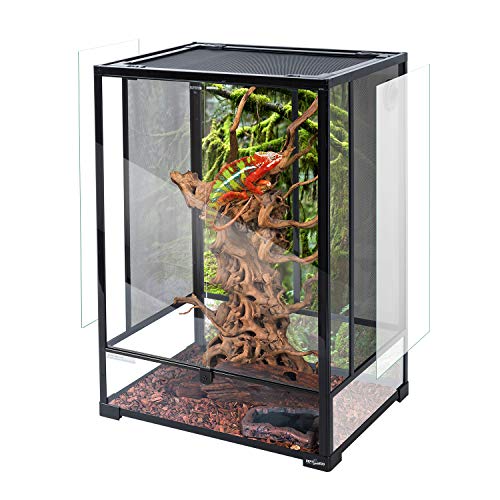
REPTI ZOO delivers a similar front opening glass layout with a wider footprint per unit of outlay, which matters because floor space is the constraint for terrestrial species like bearded dragons and leopard geckos. The screen top is strong enough to carry a lighting fixture and the doors lock. Keepers report that assembly needs care with the door alignment and that the silicone seams benefit from inspection before setup.
Pros
- More usable floor area for the outlay
- Top holds lighting fixtures securely
- Doors lock for escape prone species
Cons
- Door alignment needs care during assembly
- Seam quality varies between units

Zoo Med ReptiBreeze Open Air Screen Cage
Chameleons develop respiratory problems in stagnant air, so an all screen enclosure is the standard recommendation rather than a compromise. The aluminium frame keeps weight low enough to move a tall enclosure alone, and the screen gives climbing grip on every surface. Humidity escapes almost immediately, so this only works with an automated misting system or very frequent hand misting.
Pros
- Airflow suited to chameleons and arboreal lizards
- Light enough to move when fully furnished
- Screen surfaces give climbing grip everywhere
Cons
- Cannot hold humidity without automated misting
- Screen catches feeder insects and needs cleaning
Carolina Custom Cages Terrarium
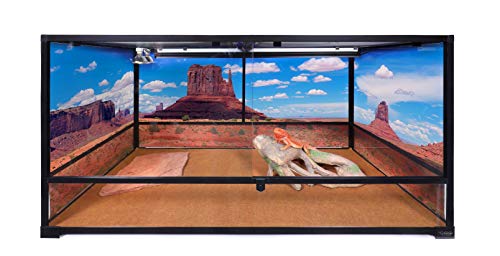
Carolina Custom Cages builds in the larger footprints that adult bearded dragons, uromastyx and monitors actually need, rather than the standard sizes most brands stop at. Front sliding or hinged doors give access along the full width. Assembly is a two person job and the shipping weight is substantial, so plan where it will live before it arrives.
Pros
- Footprints large enough for adult lizards
- Full width access for cleaning and handling
- Sturdy frame for the size
Cons
- Heavy and awkward to assemble alone
- Needs a dedicated stand rated for the weight
Zilla Front Opening Terrarium
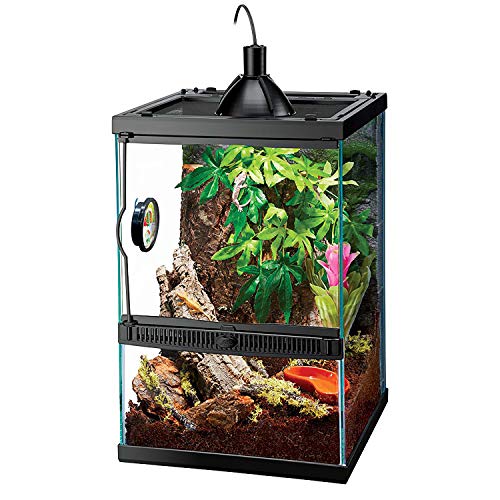
Zilla keeps this straightforward, with a front opening door, a locking screen top and a raised base, which covers the essentials for a first snake or gecko without extra complication. The included ventilation is adequate for temperate species. It is less refined than the premium glass enclosures and the background is basic, but the fundamentals are correct.
Pros
- Covers the essentials for a first reptile
- Locking top for escape prone species
- Raised base suits an under tank heat mat
Cons
- Basic background and fittings
- Door seal is less tight than premium glass units

Tetra Fauna Deluxe ReptoHabitat
Tetra bundles a tank with a screen top and basic furnishings so a first time keeper has something functional on day one rather than a list of missing parts. It is a top opening design, which is less ideal for nervous species but easier to clean thoroughly. Most keepers upgrade the heating and lighting quickly, since kit components tend to be entry level.
Pros
- Functional out of the box for a first setup
- Top opening makes deep cleaning easy
- Low outlay for a complete starting point
Cons
- Top access stresses nervous species
- Included heating and lighting need upgrading

Exo Terra Faunarium
A faunarium is not a permanent home for most species, but every keeper needs one for quarantine, transport, feeding separation or raising hatchlings. The plastic body is light, easy to sterilise and has a hinged flap in the lid for feeding without opening the whole top. Ventilation is generous, so it holds humidity poorly and is unsuitable as a long term tropical enclosure.
Pros
- Easy to sterilise between animals
- Feeding flap avoids opening the full lid
- Light enough to carry to a vet appointment
Cons
- Not a permanent enclosure for most species
- Vented lid loses humidity quickly
What matters most
Glass or screen depends entirely on the species This is the first decision and it is not a matter of preference. Species from humid environments, including crested geckos, tropical snakes and dart frogs, need glass because it holds moisture and heat. Chameleons and some arboreal lizards need constant fresh air and are prone to respiratory infection in stagnant conditions, which is why all screen enclosures are the standard recommendation for them. Combination builds with a glass base and screen upper section exist for species that need both, but check the specific requirements of the animal before choosing.
Floor space, height and the direction the animal lives in Terrestrial species such as bearded dragons and leopard geckos use floor area, so a long, wide enclosure serves them far better than a tall one of the same volume. Arboreal species including chameleons, crested geckos and many tree snakes use vertical space and want height with branches. Buying by gallon capacity hides this distinction entirely, so always check the length, depth and height figures and compare them against a care sheet for the adult size of the animal, not its size at purchase.
Front opening access is worth the extra outlay Reaching down through a top opening mimics how a bird of prey approaches, and many reptiles read it as a threat every single time. Front opening doors let you clean, feed and handle at the animal’s level, which lowers stress and makes taming easier. They also work better on a shelf, since you do not need clearance above the enclosure. The tradeoff is that doors must latch securely, because a determined snake will exploit any gap.
Plan lighting, heating and humidity before you buy The enclosure has to physically support the equipment your species needs. Check the top will carry the weight of a UVB fixture and a basking lamp, that there are ports or gaps for a thermostat probe and misting lines, and that the base is raised if you intend to use an under tank heater. Humidity is the hardest variable to control after the fact, so if your room is dry and the animal needs high humidity, choose glass and plan for an automated mister rather than assuming hand misting will keep up.
Compared at a glance
| # | Model | Construction | Best for | Score | Price |
|---|---|---|---|---|---|
| 1 | Exo Terra Glass Natural Terrarium | Glass with front opening doors | Best overall | 9.4 | Check price |
| 2 | REPTI ZOO Reptile Glass Terrarium | Glass with hinged front doors | Best value glass | 9.2 | Check price |
| 3 | Zoo Med ReptiBreeze Open Air Screen Cage | Aluminium frame with black screen | Best for chameleons | 9.0 | Check price |
| 4 | Carolina Custom Cages Terrarium | Glass with screen top | Best for large lizards | 8.8 | Check price |
| 5 | Zilla Front Opening Terrarium | Glass with front door | Best for beginners | 8.6 | Check price |
| 6 | Tetra Fauna Deluxe ReptoHabitat | Glass tank with screen cover | Best starter kit | 8.3 | Check price |
| 7 | Exo Terra Faunarium | Moulded plastic with vented lid | Best for juveniles and quarantine | 8.0 | Check price |
Common questions
What size terrarium does my reptile need?
Size by the adult dimensions of the species and its orientation, not by its size when you buy it. Terrestrial lizards need length and width, arboreal species need height. Check a species specific care sheet for minimum floor area, since general gallon figures hide whether the space is usable.
Is glass or screen better for a reptile?
It depends on the animal. Glass holds heat and humidity and suits tropical and temperate species. Screen provides constant airflow and is the standard choice for chameleons, which are prone to respiratory problems in still air. Neither is generally superior.
Do I need a front opening terrarium?
It is not essential but it is a real improvement. Reaching in from above resembles a predator approach and stresses many species. Front doors also let you place the enclosure on a shelf without needing clearance overhead. Top opening tanks are easier to deep clean.
How do I keep humidity up in a screen enclosure?
It is difficult, which is why screen suits species that do not need high humidity. Options include an automated misting system on a timer, a fogger, live plants and a moisture retaining substrate, plus partially covering some screen panels with acrylic if the species tolerates reduced airflow.
Can I use a fish tank as a reptile terrarium?
For some terrestrial species, yes, with a secure screen lid. The drawbacks are top only access, poor cross ventilation and glass depth that is often unsuitable for mounting equipment. Purpose built terrariums handle heating, wiring and access far better.
How often should a terrarium be cleaned?
Spot clean waste and uneaten food daily, change water daily, and do a full substrate change and disinfection on a schedule that suits the species and substrate, commonly monthly for simple setups. Bioactive enclosures with a clean up crew need far less frequent full changes.
Do reptile terrariums need a lock?
For snakes and any climbing species, yes. Snakes are persistent about testing gaps and a lost animal in a house is a serious problem. Locking screen tops and door latches are standard on better enclosures, and clips can be added to those without them.
What should go under the terrarium?
A stand or surface rated well above the filled weight, because glass terrariums with substrate, water and decor get heavy quickly. The surface must be flat, since an unsupported glass base can crack. If you use an under tank heater, ensure the base is raised and the heater is controlled by a thermostat.
Our take
The Exo Terra Glass Natural Terrarium is the enclosure to buy for most humidity loving reptiles because front opening access, sealed glass and thoughtful wiring ports make daily husbandry easier for years. Choose the REPTI ZOO Reptile Glass Terrarium if floor space per unit of outlay matters more than finish detail. For chameleons, ignore both and use the Zoo Med ReptiBreeze screen cage, since airflow is a health requirement rather than a preference.