Reptile Heat Lamps: Basking Bulbs vs Ceramic Emitters
The Zoo Med Repti Basking Spot Lamp is our top overall reptile heat lamp thanks to a tight, focused beam that creates a proper basking gradient. The Fluker’s Ceramic Heat Emitter is the best choice for night heat without light, and the Simple Deluxe Ceramic Heat Emitter is the budget option.
The Zoo Med Repti Basking Spot Lamp is the reptile heat lamp we would fit above the basking platform, because the double reflector concentrates heat into a defined spot rather than warming the whole enclosure evenly. For overnight heat with no light, the Fluker’s Ceramic Heat Emitter is the standard answer, with the Simple Deluxe emitter doing the same job for less. Whichever bulb you choose, it needs a ceramic socket fixture rated for the wattage.
Heating a reptile enclosure is about creating a gradient, not a temperature, and that is where most setups go wrong. A basking bulb should produce a hot spot at one end so the animal can thermoregulate by moving, while the cool end stays meaningfully cooler. Coloured night bulbs disturb sleep cycles, which is why ceramic emitters exist. We compared these on wattage range, beam spread, whether they emit light, dimmer compatibility and fixture requirements, based on manufacturer specifications and keeper reports. Always confirm the exact temperature range your species needs with a reptile veterinarian or a reliable care sheet.
What we recommend
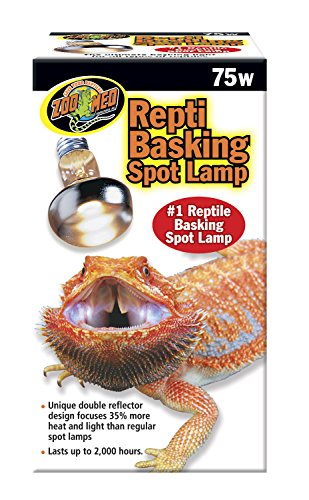
Zoo Med Repti Basking Spot Lamp
A double reflector incandescent bulb that concentrates heat and light into a tight basking spot rather than spreading it thinly. That focus is what lets you build a proper hot end without cooking the whole enclosure. Available across a wide wattage range so you can tune it to the tank size and ambient room temperature.
Pros
- Tight focused beam creates a defined basking spot
- Broad wattage range suits most enclosure sizes
- Widely stocked so replacements are easy
Cons
- Emits light, so unsuitable for night heat
- Incandescent bulbs have a shorter life than emitters

Fluker’s Ceramic Heat Emitter
A ceramic element that produces infrared heat with no visible light at all, which is what makes it appropriate for maintaining overnight temperatures without disrupting a day and night cycle. It lasts far longer than a filament bulb. It gets extremely hot, so a ceramic socket and a guard are not optional.
Pros
- Provides heat with zero light disturbance
- Very long service life compared with bulbs
- Works well with a thermostat for stable overnight temperatures
Cons
- Surface temperature is dangerously high without a guard
- Provides no light or UVB, so it cannot be the only fixture

Simple Deluxe Ceramic Heat Emitter
A lower cost ceramic emitter that covers the same job as the name brands at a price that makes buying spares realistic. Output is consistent and the wattage options cover small tanks through larger enclosures. Build finish is more basic, so inspect the element and threads before first use.
Pros
- Cheap enough to keep a spare on hand
- Consistent infrared output for the price
- Several wattages for different enclosure sizes
Cons
- Finish quality is less consistent than premium brands
- Still requires a properly rated ceramic fixture

Exo Terra Sun Glo Basking Spot Lamp
Exo Terra’s basking spot uses a reflector to push heat and bright light downward, which suits diurnal species that respond to a strong visible basking cue. It runs slightly broader than the Zoo Med beam, which some keepers prefer in wider enclosures. Wattage choice matters more than brand here.
Pros
- Bright visible light encourages natural basking behaviour
- Broader beam suits wider basking platforms
- Good value across the wattage range
Cons
- Daytime use only
- Filament bulbs need replacing periodically

Zoo Med Deep Dome Dual Lamp Fixture
A deep dome fixture with two ceramic sockets, which lets you run a basking bulb and a UVB bulb from one housing. The extra depth keeps the bulb recessed so it cannot contact a screen top directly. Ceramic sockets mean it can take heat emitters as well as standard bulbs.
Pros
- Runs two bulbs from a single fixture
- Ceramic sockets accept heat emitters safely
- Deep dome reduces contact risk with screen tops
Cons
- Heavy when loaded with two bulbs
- Needs a secure mount or stand above the enclosure

Zilla Mini Halogen Bulb
A compact halogen bulb that produces more heat per watt than a standard incandescent, useful in smaller enclosures where a large dome would be overkill. The small format fits mini dome fixtures neatly. Halogen runs hot and bright, so pair it with a thermostat or dimmer and check surface temperatures.
Pros
- More heat per watt than standard incandescent
- Small format suits compact fixtures
- Good choice for smaller enclosures and juveniles
Cons
- Runs very hot for its size
- Bright light is unsuitable for nocturnal species

Fluker’s Repta-Clamp Lamp with Dimmer
A clamp lamp with a built in dimmer switch, letting you fine tune basking temperature without swapping bulbs every time the room temperature shifts. The ceramic socket handles heat emitters as well as incandescent bulbs. Clamp lamps must be secured properly, since a fallen lamp is a genuine fire risk.
Pros
- Dimmer lets you tune temperature without swapping bulbs
- Ceramic socket takes heat emitters
- Clamp mounting suits varied enclosure setups
Cons
- Clamp must be secured with a backup, never relied on alone
- Dimmer should not be used with thermostat controlled bulbs simultaneously
How to pick the right one
Build a gradient, not a temperature Reptiles regulate their body temperature by moving between warm and cool areas, so the goal is a hot basking spot at one end and a distinctly cooler zone at the other. Position the heat source over one side only and never in the centre. Measure with a digital probe or an infrared thermometer at the surface where the animal actually sits, not the air temperature in the middle of the tank, since those numbers differ considerably.
Day heat versus night heat Basking spot bulbs provide daytime heat and light together, which mimics sun and encourages natural behaviour. At night most species need darkness, and coloured red or blue night bulbs still emit visible light that can disturb sleep. Ceramic heat emitters solve this by producing infrared heat with no light at all. Many species also tolerate or need a modest night time drop, so check your specific animal’s requirements rather than heating around the clock by default.
Fixtures, wattage and thermostats Heat bulbs and especially ceramic emitters demand a ceramic socket rated for the wattage, since plastic sockets can melt. Choose wattage based on enclosure size and room temperature, and be prepared to adjust seasonally. A thermostat is the single most valuable accessory in this category because it holds temperature steady rather than leaving output at the mercy of the room. Use a dimming thermostat with basking bulbs and a pulse or dimming unit with emitters as the manufacturer specifies.
Safety and heat lamps do not replace UVB Guard every heat source so the animal cannot make contact, and secure clamp lamps with a chain or bracket rather than trusting the clamp alone. Keep bulbs clear of screen tops and away from anything flammable. Critically, heat lamps are not UVB lamps: most diurnal species need a separate UVB source for calcium metabolism, and a basking bulb does not provide it. Confirm species specific temperature and lighting requirements with a reptile veterinarian or a trusted care sheet before setting up.
Compared at a glance
| # | Model | Type | Best for | Score | Price |
|---|---|---|---|---|---|
| 1 | Zoo Med Repti Basking Spot Lamp | Incandescent basking spot | Best overall | 9.4 | Check price |
| 2 | Fluker’s Ceramic Heat Emitter | Ceramic infrared heat emitter | Best for night heat | 9.2 | Check price |
| 3 | Simple Deluxe Ceramic Heat Emitter | Ceramic infrared heat emitter | Best budget | 9.0 | Check price |
| 4 | Exo Terra Sun Glo Basking Spot Lamp | Incandescent basking spot | Best value basking bulb | 8.8 | Check price |
| 5 | Zoo Med Deep Dome Dual Lamp Fixture | Dual socket dome fixture | Best fixture | 8.6 | Check price |
| 6 | Zilla Mini Halogen Bulb | Mini halogen basking bulb | Best for small enclosures | 8.3 | Check price |
| 7 | Fluker’s Repta-Clamp Lamp with Dimmer | Clamp lamp fixture with dimmer | Best adjustable fixture | 8.0 | Check price |
Good to know
What is the difference between a basking bulb and a ceramic heat emitter?
A basking bulb produces heat and visible light together, which suits daytime use and encourages natural basking. A ceramic heat emitter produces infrared heat with no light at all, which is why it is the standard choice for maintaining night time temperatures without disturbing a sleep cycle.
Do reptiles need heat at night?
It depends entirely on the species. Many tolerate or benefit from a modest overnight temperature drop, while others need supplemental heat if the room gets cold. Check a species specific care sheet or ask a reptile veterinarian rather than assuming, since both overheating and chilling cause real harm.
Are red or blue night bulbs safe to use?
They emit visible light, and coloured night bulbs are increasingly discouraged because they can disrupt day and night cycles. A ceramic heat emitter paired with a thermostat is the more widely recommended way to add night heat.
What wattage heat lamp do I need?
It depends on enclosure size, height, ventilation and the ambient room temperature, so there is no single correct answer. Start with the manufacturer’s guidance for your tank size, measure the basking surface temperature with a digital probe, and adjust wattage or use a thermostat until the reading matches your species requirement.
Do heat lamps provide UVB?
No. Standard basking bulbs and ceramic emitters provide heat, not usable UVB. Most diurnal species require a separate UVB lamp for calcium metabolism, and skipping it leads to serious health problems over time.
Can I use a normal household bulb instead?
It is not recommended. Reptile basking bulbs use reflectors designed to concentrate heat into a defined spot, and their output is characterised for enclosure use. Household bulbs, particularly modern low energy types, produce very little usable basking heat.
Do I need a thermostat with a heat lamp?
It is strongly advisable. A thermostat holds the basking temperature steady rather than letting it drift with room conditions, and it prevents overheating if conditions change. Match the thermostat type to the heat source, using a dimming unit for bulbs and the manufacturer specified type for emitters.
How often should I replace a heat bulb?
Incandescent and halogen basking bulbs are consumables and typically need replacing every few months of daily use, sooner if they are switched frequently. Ceramic heat emitters last considerably longer. Keeping a spare on hand avoids a cold enclosure when one fails unexpectedly.
Our pick
The Zoo Med Repti Basking Spot Lamp is the strongest daytime heat lamp here because its focused beam creates the defined hot spot a proper thermal gradient needs. Pair it with a Fluker’s Ceramic Heat Emitter if your species requires overnight warmth without light, and run both through a suitable thermostat. Confirm the target temperatures for your particular species with a reptile veterinarian before finalising the setup.


