Random Orbital Sanders That Leave a Swirl Free Finish
The DeWalt DWE6423K takes the top spot for its smooth start and steady pad speed under load. Makita’s BO5041K is the value choice thanks to its adjustable front handle and quiet motor. For cord free work, the Milwaukee M18 FUEL 2648-20 keeps pad speed consistent across a battery charge.
The DeWalt DWE6423K is our overall pick because its counterweighted motor and controlled pad braking make swirl marks far less likely, while the Makita BO5041K delivers similar refinement with better handle options and the Milwaukee M18 FUEL 2648-20 does it without a cord.
Random orbital sanders look interchangeable on a shelf, yet small differences in orbit size, pad brake design and dust port fit decide whether you get a glassy surface or a field of pigtail scratches. We compared published orbit diameters, speed ranges, weight and dust extraction systems across current models, then weighed what owners report about hook and loop pad wear and long session comfort.
How to choose
Orbit size decides speed versus smoothness A larger orbit, around three millimetres, removes material faster and suits stripping old paint or levelling rough boards. A smaller orbit near two millimetres leaves a finer scratch pattern for finish work. Most general purpose sanders sit in between, which is why a fine orbit machine such as the Festool ETS 125 feels slow on heavy jobs even though it produces a better surface.
Dust extraction affects finish, not just cleanliness Sanding dust trapped under the pad grinds into the surface and creates scratches deeper than the grit should produce. Bags catch coarse dust, canisters do better, and a shop vacuum with the right adapter is best. Check the port diameter before you buy, because a poor hose fit undoes the benefit and pulls the sander sideways.
Pad braking prevents the classic pigtail scratch When a free spinning pad touches the work at full speed it can dig in and leave curled swirls. Systems described as pad control or pad dampening slow the disc when it lifts off, so contact is gentler. Owners report this feature makes the biggest practical difference between a frustrating sander and a reliable one.
Weight and vibration matter more than horsepower Random orbital sanders do their work through abrasive contact rather than raw force, so pressing harder mostly adds heat and swirl marks. A balanced, low vibration machine lets you guide it lightly for an hour without numb hands. If you sand regularly, prioritise comfort and counterbalancing over headline speed figures.
Our top picks

DeWalt DWE6423K Variable Speed Random Orbit Sander
This five inch sander pairs a variable speed dial with a controlled finishing system that keeps the pad from gouging when it first touches the work. The rubber overmould shell lets you grip it in several positions without hot spots. Owners report it stays comfortable through long cabinet door sessions.
Pros
- Pad brake reduces swirl marks on start up
- Low profile height keeps hands close to the work
- Dust port adapts to shop vacuum hoses
Cons
- Included dust bag fills quickly on drywall
- Hook and loop pad wears with heavy stock removal

Makita BO5041K Random Orbit Sander Kit
Makita’s five inch sander includes a three position front grip so you can work flat panels, vertical surfaces and tight corners without changing tools. The pad control system limits gouging, and the sealed switch resists dust ingress. It runs noticeably quieter than most sanders in its class.
Pros
- Wide speed range suits paint stripping and finishing
- Front handle helps on vertical surfaces
- Sealed switch improves dust resistance
Cons
- Slightly heavier than bare palm sanders
- Case latches feel basic

Bosch ROS20VSC Random Orbit Sander
The ROS20VSC is forgiving because its pad dampening system reduces swirl marks even if your technique is uneven. A microfilter canister traps fine dust better than a cloth bag, which matters when sanding indoors. The soft grip top makes single hand control natural.
Pros
- Very tolerant of imperfect technique
- Canister collects fine dust well
- Comfortable palm grip shape
Cons
- Canister needs emptying often
- Pad brakes can feel abrupt at low speed

Milwaukee M18 FUEL 2648-20 Random Orbit Sander
Milwaukee’s brushless sander holds pad speed steady as you press into the work, which is where many cordless sanders fade. The dust canister seals cleanly and a hose adapter is included for shop vacuum use. Freedom from a cord makes overhead trim and outdoor rail work far easier.
Pros
- Brushless motor maintains speed under load
- No cord to snag on workpieces
- Fits an existing M18 battery collection
Cons
- Battery and charger add cost and weight
- Runtime drops on aggressive stock removal
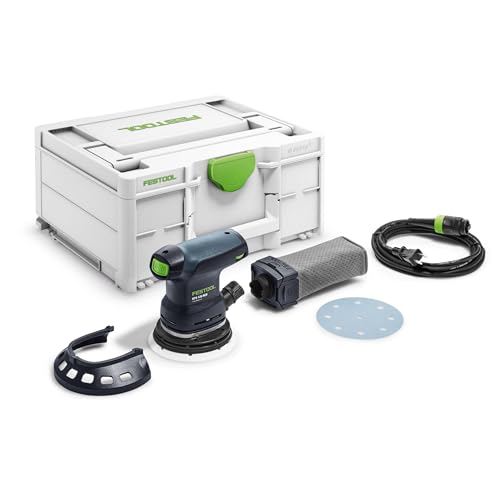
Festool ETS 125 REQ Random Orbit Sander
The ETS 125 uses a small two millimetre orbit designed for finish sanding rather than heavy removal, so it leaves an unusually clean surface. Vibration is very low, which helps on long detail sessions. It integrates with Festool dust extractors for near dust free work.
Pros
- Exceptionally smooth finish quality
- Very low vibration for long sessions
- Excellent dust capture with an extractor
Cons
- Small orbit removes material slowly
- Works best with matching extraction gear

Ryobi P411 ONE+ 18V Random Orbit Sander
This cordless five inch sander fits the widely owned ONE+ battery system, so households already invested in Ryobi tools skip the extra charger. It is light enough for one handed work on furniture and shelving. Output suits refinishing projects rather than daily production sanding.
Pros
- Shares batteries with a large tool range
- Light and easy to handle overhead
- Simple single speed operation
Cons
- No variable speed control
- Dust bag capture is modest

Black+Decker BDERO100 Random Orbit Sander
The BDERO100 is a straightforward corded sander for people who sand a few weekends a year. Its compact body suits smaller hands and light furniture projects. Expect basic dust collection and a single speed, which is a fair trade at this level.
Pros
- Light and easy to control one handed
- Corded power means no battery investment
- Straightforward for first time users
Cons
- Single speed limits delicate finishing
- More vibration than premium models
How they compare
| # | Model | Pad size | Best for | Score | Price |
|---|---|---|---|---|---|
| 1 | DeWalt DWE6423K Variable Speed Random Orbit Sander | 5 inch hook and loop | Best overall | 9.4 | Check price |
| 2 | Makita BO5041K Random Orbit Sander Kit | 5 inch hook and loop | Best value | 9.2 | Check price |
| 3 | Bosch ROS20VSC Random Orbit Sander | 5 inch hook and loop | Best for beginners | 9.0 | Check price |
| 4 | Milwaukee M18 FUEL 2648-20 Random Orbit Sander | 5 inch hook and loop | Best cordless | 8.8 | Check price |
| 5 | Festool ETS 125 REQ Random Orbit Sander | 5 inch hook and loop | Best for fine finishing | 8.6 | Check price |
| 6 | Ryobi P411 ONE+ 18V Random Orbit Sander | 5 inch hook and loop | Best for occasional DIY | 8.3 | Check price |
| 7 | Black+Decker BDERO100 Random Orbit Sander | 5 inch hook and loop | Best budget | 8.0 | Check price |
Good to know
What grit sequence should I use?
For bare wood, a common progression is 80 grit to flatten, 120 to refine and 180 or 220 before finishing. Skipping more than one step leaves scratches the next grit cannot remove, so the sequence saves time overall.
Why is my sander leaving curly swirl marks?
Usually the pad is touching the work at full speed, the abrasive is clogged, or you are pressing too hard. Start the sander on the surface at a lower speed, replace loaded discs and let the tool’s own weight do the work.
Is five inch or six inch better?
Five inch pads are more common, cheaper to feed with abrasives and easier to control on smaller pieces. Six inch pads cover large flat panels faster and suit workshop use where speed matters more than manoeuvrability.
Do I need a variable speed sander?
Variable speed helps when sanding softwoods, veneers and painted surfaces that can burn or load up. If you mostly sand hardwood before finishing, a fixed speed model handles it fine.
Can I use a random orbital sander on drywall?
You can for small patches, but the dust is extremely fine and fills bags quickly. Connect a shop vacuum with a fine dust filter, and expect to change abrasives often because joint compound clogs discs fast.
How long do hook and loop pads last?
Pad life depends on heat and pressure. Heavy stock removal and sharp edges wear the hooks, so replacement pads are a normal maintenance item rather than a defect. Keeping the sander flat extends pad life considerably.
Cordless or corded for home projects?
Corded models give unlimited runtime for large refinishing jobs. Cordless makes sense for outdoor railings, furniture in the driveway or anywhere dragging an extension lead is a nuisance.
Should the dust port match my vacuum hose exactly?
Ideally yes. A loose adapter leaks dust and reduces suction at the pad. Many owners add a stepped adapter or tape the joint, which noticeably improves collection and reduces surface scratching.
Our take
For most workshops the DeWalt DWE6423K offers the best balance of control, comfort and dust handling at a sensible level of complexity. Pick the Makita BO5041K if you want the widest speed range and an adjustable grip, or the Milwaukee M18 FUEL 2648-20 when cords are the main obstacle to getting work done.