Reflective Vests for Runners Who Train After Dark
The Noxgear Tracer2 is our top reflective vest overall because its illuminated fibre optic tubes make you visible from every angle. The Nathan Sports Streak Reflective Vest is the best value for road runners, while the Amphipod Xinglet is the lightest option for summer training.
If you run before sunrise or after dusk, the Noxgear Tracer2 is the vest that makes the biggest difference to how early drivers see you, with the Nathan Sports Streak as the value pick and the Amphipod Xinglet for hot weather when you want almost nothing on your torso. The seven vests below split into lit designs, high visibility panels and minimal harness styles.
Choosing a reflective vest is trickier than it looks because plain reflective tape only lights up when a headlight beam hits it directly, which leaves you invisible from side roads and driveways. We compared reflective surface area, whether the vest emits its own light, weight, adjustment range and how each design sits over a jacket, then weighed what owners report about bounce, chafing and battery life.
The shortlist, ranked
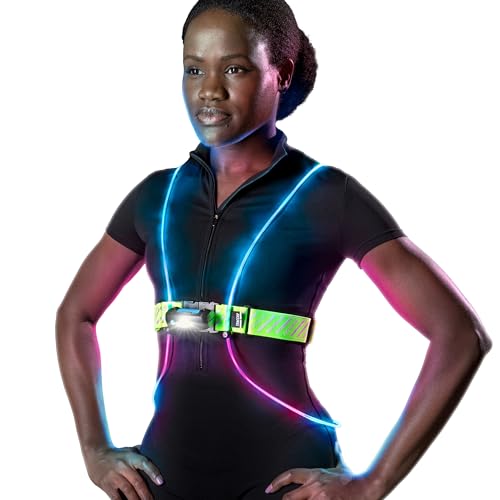
Noxgear Tracer2
The Tracer2 uses illuminated fibre optic tubes that emit their own colour rather than waiting for headlights, so you are visible from side streets and driveways as well as head on. The harness style frame sits close to the body and adjusts to fit over a winter jacket or a summer singlet. Owners report drivers give noticeably wider berth.
Pros
- Visible from all angles without headlights
- Adjusts easily over jackets
- Bright colour options and modes
Cons
- Needs charging before long runs
- Heavier than plain reflective vests

Nathan Sports Streak Reflective Vest
Nathan’s Streak vest wraps a large area of reflective material around the shoulders and back where headlights hit first, with a light mesh body that breathes on warmer nights. It slips over a base layer without adding bulk and adjusts at the waist to stop it riding up. It is the sensible default for pavement running.
Pros
- Large reflective area front and back
- Breathable mesh reduces heat build up
- No batteries to manage
Cons
- Only reflects, does not emit light
- Mesh can snag on rough zips

Amphipod Xinglet Vest
The Xinglet is a minimal reflective harness that weighs almost nothing and packs into a pocket, which makes it the vest people actually carry on unpredictable evening runs. Wide reflective bands cross the chest and back so the outline reads as human rather than as a road sign. It offers no active lighting, so pair it with a clip light on dark lanes.
Pros
- Almost unnoticeable while running
- Packs down small enough to carry
- No heat build up in summer
Cons
- Small total reflective area
- No pockets or attachment points

Proviz REFLECT360 Running Vest
Rather than adding strips, the entire outer surface of the REFLECT360 is reflective, so in headlights the whole torso lights up. In daylight it reads as plain grey, which some runners prefer over neon. It is a full garment rather than a harness, so it adds warmth that suits autumn and winter more than midsummer.
Pros
- Dramatic reflection across the full torso
- Discreet grey appearance in daylight
- Doubles as a wind layer
Cons
- Warmer than mesh vests
- Still needs headlights to work
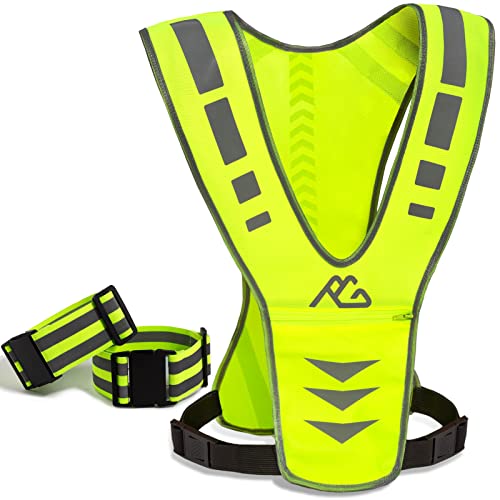
GoxRunx Reflective Running Vest
This is the straightforward high visibility vest that gets the basics right, with a fluorescent shell, broad reflective strips and an adjustable fit that works over a coat. It suits dog walkers, commuters and anyone who wants a spare in the car. Owners report it runs slightly large, so size down if you plan to wear it over a single layer.
Pros
- Very affordable spare vest
- Bright in daylight as well as at night
- Adjusts over bulky layers
Cons
- Runs large on smaller frames
- Basic materials feel less durable

BSEEN LED Reflective Vest
The BSEEN vest adds rechargeable LED strips to a lightweight elastic harness, giving you active light at a fraction of the outlay of premium lit vests. Modes include steady and flashing, which helps in traffic. Light output is lower than the Noxgear, so it works best in suburban streets rather than unlit country roads.
Pros
- Active light at a low outlay
- Simple elastic harness with no bulk
- USB charging
Cons
- Dimmer than premium lit vests
- Elastic can stretch out over time
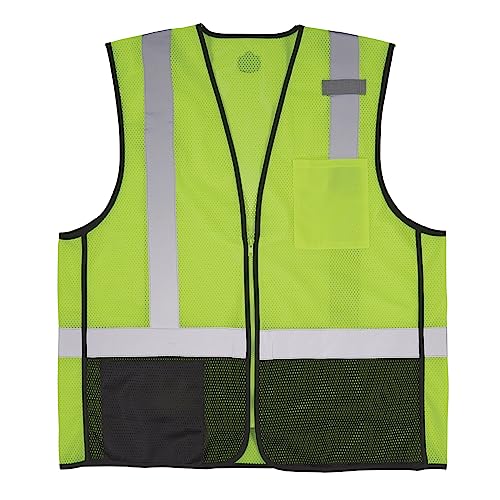
Ergodyne GloWear 8210Z Class 2 Vest
The GloWear 8210Z meets high visibility Class 2 requirements, which matters if you cycle or walk through work sites and roadside areas as well as training. Its zip front and generous reflective tape make it far more visible than a running harness, though it is cut for work rather than sport. Owners report it holds up to daily wear better than sport mesh.
Pros
- Certified high visibility construction
- Durable enough for daily use
- Zip front keeps it in place
Cons
- Cut for work rather than running
- Bulkier than sport harnesses
How they compare
| # | Model | Lighting | Best for | Score | Price |
|---|---|---|---|---|---|
| 1 | Noxgear Tracer2 | Active fibre optic tubes | Best overall | 9.4 | Check price |
| 2 | Nathan Sports Streak Reflective Vest | Passive reflective vest | Best value | 9.2 | Check price |
| 3 | Amphipod Xinglet Vest | Minimal reflective harness | Best lightweight option | 9.0 | Check price |
| 4 | Proviz REFLECT360 Running Vest | Fully reflective outer fabric | Best for maximum reflection | 8.8 | Check price |
| 5 | GoxRunx Reflective Running Vest | High visibility vest with reflective strips | Best budget option | 8.5 | Check price |
| 6 | BSEEN LED Reflective Vest | Rechargeable LED strips | Best lit budget vest | 8.2 | Check price |
| 7 | Ergodyne GloWear 8210Z Class 2 Vest | ANSI Class 2 high visibility | Best for work and commuting | 8.0 | Check price |
What matters most
Reflection and illumination are not the same thing Reflective tape only returns light that already hits it, so a driver pulling out of a side road with headlights pointed elsewhere may not see you at all. Vests with their own light source solve that blind spot. If you run on unlit lanes or cross junctions frequently, active lighting is worth the extra weight and charging.
Movement is what makes you read as a person Drivers recognise a human faster when the reflective material moves in a walking or running pattern, which is why bands across the chest, shoulders and ankles work better than a single static square. Vests that keep material near the shoulders and waist track your motion clearly. Adding reflective ankle bands compounds the effect.
Fit over layers decides whether you wear it A vest sized for a summer singlet will not close over a winter jacket, and one that bounces will be abandoned within a week. Look for adjustment at both the waist and the shoulders, and check the vest sits snug against the body rather than flapping. Owners report bounce is the top reason a vest ends up in a drawer.
Match the vest to where you actually run Lit vests earn their keep on rural roads and unlit paths, plain reflective vests are sufficient on well lit urban routes, and certified Class 2 designs suit anyone moving through work zones or roadside verges. Buying one vest for every scenario usually means it is wrong for most of them. Many runners keep a light harness for summer and a lit vest for winter.
Questions worth asking
Do reflective vests actually make a difference?
Yes. Reflective material returns headlight beams directly to the driver, which increases the distance at which you are noticed considerably compared with dark clothing. Adding active lights extends that to angles where headlights are not pointed at you.
Should I choose a lit vest or a reflective one?
Choose a lit vest such as the Noxgear Tracer2 for unlit roads and junctions, and a passive vest like the Nathan Streak for well lit urban routes. Lit vests need charging, reflective ones do not.
What colour is most visible at night?
At night the reflective material matters more than the base colour, since colour is barely perceptible in low light. Fluorescent yellow and orange help most at dawn, dusk and in overcast daylight.
Will a reflective vest fit over a winter jacket?
Most adjust enough, but check the maximum waist and shoulder settings before buying. Harness style vests like the Noxgear Tracer2 and Amphipod Xinglet adjust across the widest range.
How do I stop a vest bouncing while running?
Tighten both the waist and shoulder adjusters so the vest sits against the body, and choose a harness design rather than a loose mesh shell. Bounce almost always comes from a vest that is too large or fastened only at the waist.
Can I wash a reflective vest?
Most mesh vests can be hand washed in cool water and air dried. Lit vests should have the electronics removed or protected where the design allows, and always check the manufacturer’s care instructions.
How long do the batteries last on lit vests?
The Noxgear Tracer2 runs for several hours per charge depending on mode, and cheaper LED harnesses typically last a similar time on flashing settings. Flashing modes stretch runtime compared with steady light.
Do I need reflective gear if I run on the pavement?
Yes, because most collisions happen at junctions and driveways where vehicles cross your path. Being visible from the side is exactly where plain dark clothing fails.
The bottom line
The Noxgear Tracer2 is the reflective vest we would recommend to anyone whose training regularly starts or ends in the dark, since it lights up from every angle rather than waiting for headlights. The Nathan Sports Streak covers well lit urban routes at a much lower outlay, and the Amphipod Xinglet is the one you will still wear in July. Fit and comfort matter as much as brightness, because an uncomfortable vest gets left at home.