How to Match Reptile Lighting to Your Enclosure and Species
The Zoo Med ReptiSun 10.0 T5 HO covers most desert species in a small terrarium, the Fluker’s Ceramic Heat Emitter adds nighttime heat without disrupting sleep cycles, and the Zoo Med Nano Extreme fits enclosures under 12 inches tall.
The Zoo Med ReptiSun 10.0 T5 HO is the strongest all-around pick, delivering 10 percent UVB that matches desert species like bearded dragons. Its output is too strong for low-UVB forest species, which need a gentler bulb instead.
We compared UVB output percentage and physical fit across common tank sizes, rather than treating every reptile bulb as interchangeable.
How to choose
What to look for in reptile lighting UVB percentage should match species needs first, since desert reptiles need roughly 10 to 12 percent while tropical and nocturnal species need 5 percent or none. Wattage and fixture size then decide how much heat and coverage the enclosure gets. Output also drops well before a bulb visibly dims, which is why replacement schedules matter more than appearance.
Desert species versus forest and nocturnal species Bearded dragons and uromastyx need high-output UVB, such as the Zoo Med ReptiSun 10.0 or Arcadia ProT5 kit, to metabolize calcium properly. Crested geckos, many frogs, and nocturnal snakes need little to no UVB, making a low-output option like the Zoo Med Nano Extreme or a heat-only ceramic emitter the better fit.
Lighting for small and nano enclosures Full-size fixtures often will not clear the height of a nano tank under 12 inches, which is why a compact alternative like the Nano Extreme exists. A dimmable dual-socket fixture, such as the REPTI ZOO model, also suits small tanks by combining basking and secondary lighting in one low-profile mount.
Daytime heat and light versus nighttime heat Daytime basking relies on a spot bulb like the Zoo Med Repti Basking Spot Lamp, or a combined mercury vapor bulb for heat and UVB together. Species that need warmth around the clock should get it from a ceramic emitter instead, since it produces no light that would disrupt normal sleep cycles.
Our top picks

Zoo Med ReptiSun 10.0 T5 HO UVB Fluorescent Bulb
Ten percent UVB output matches desert species like bearded dragons and uromastyx. T5 high-output construction projects further into the enclosure than older T8 bulbs, staying effective even mounted above mesh screen tops. Owners report six to twelve months of usable UVB before replacement.
Pros
- Strong UVB penetration through mesh tops
- Suits desert species needing high UVB
- Available in multiple lengths for different tanks
Cons
- Requires a T5 HO compatible fixture, sold separately
- Too strong for low-UVB forest species

Arcadia Reptile ProT5 UVB Kit
A 12 percent UVB T5 tube ships bundled with a reflective fixture, simplifying setup for desert reptile tanks. The reflector redirects light downward instead of losing it upward, raising usable UVB at basking distance. Adult bearded dragons and desert tortoises suit its output best.
Pros
- Fixture and bulb bundled together
- Reflector boosts usable UVB at basking spot
- Suits highest-UVB-demand desert species
Cons
- Costs more than a bulb-only option
- Overkill for low-UVB tropical species

Exo Terra Solar Glo Mercury Vapor Bulb
One mercury vapor bulb replaces a separate heat bulb and UVB tube, screwing into a standard ceramic socket. UVA, UVB, and basking heat all come from the same bulb, simplifying wiring in enclosures with limited fixture space. Basking distance needs careful measurement, since it runs hot enough to cause burns.
Pros
- Replaces two fixtures with one bulb
- Simplifies wiring in small enclosures
- Multiple wattages for different tank sizes
Cons
- Runs hot enough to require careful distance setup
- Cannot pair with a dimmer or rheostat
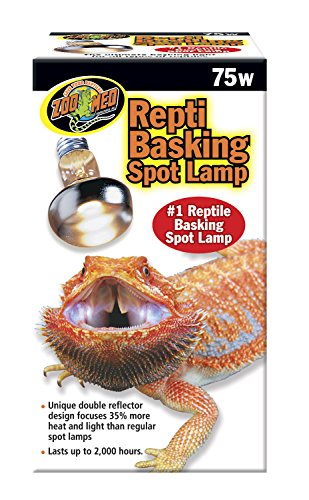
Zoo Med Repti Basking Spot Lamp
No UVB comes from this incandescent bulb, only a focused basking hot spot meant to pair with a separate UVB tube. Standard dome fixtures fit it across wattages suited to nano tanks and larger vivariums alike. Cost stays among the lowest ways to add daytime basking heat.
Pros
- Low cost for basic basking heat
- Fits standard dome fixtures
- Range of wattages for tank size
Cons
- Needs a separate UVB bulb since it produces none
- Runs less efficient than LED alternatives

Fluker’s Ceramic Heat Emitter
Heat radiates without visible light here, letting it run overnight without disrupting a reptile’s day-night cycle. A standard ceramic socket rated for high heat is required, and pairing with a thermostat is recommended. Owners of nocturnal species like leopard geckos report it as their main nighttime heat source.
Pros
- Provides heat without disrupting sleep cycles
- Works around the clock if needed
- Range of wattages for enclosure size
Cons
- Requires a ceramic-rated socket, not standard plastic
- Adds no UVB or visible basking light

REPTI ZOO Dimmable Terrarium Light Fixture
Two independently controlled sockets share one low-profile dome, letting a basking bulb and a UVB or night bulb run from a single mount. Dimming on one socket fine-tunes basking temperature without swapping bulbs. Standard 20-gallon-and-under tank rims accept its clamp mount.
Pros
- Runs two bulbs from one fixture
- Dimmer allows fine basking temperature control
- Clamps securely on small tank rims
Cons
- Combined wattage limit restricts pairing two high-wattage bulbs
- Plastic housing gets warm near the sockets

Zoo Med Nano Extreme Fluorescent UVB/UVA
Enclosures under 12 inches tall are the target here, with 5 percent UVB suited to smaller lizards, frogs, and geckos rather than desert species. Its short profile avoids the height clearance problems full-size fixtures create in nano tanks. Standard nano terrarium tops accept direct mounting.
Pros
- Fits low-clearance nano enclosures
- 5% UVB suits crested geckos and small frogs
- Compact fixture avoids height problems
Cons
- Too low UVB output for desert species
- Small coverage area for tanks over 12 gallons
The lineup, side by side
| # | Model | UVB output | Best for | Score | Price |
|---|---|---|---|---|---|
| 1 | Zoo Med ReptiSun 10.0 T5 HO UVB Fluorescent Bulb | 10% | Best overall | 9.3 | Check price |
| 2 | Arcadia Reptile ProT5 UVB Kit | 12% | Best for high-UVB desert species | 9.0 | Check price |
| 3 | Exo Terra Solar Glo Mercury Vapor Bulb | Combined with heat and UVA | Best all-in-one heat and UVB | 8.7 | Check price |
| 4 | Zoo Med Repti Basking Spot Lamp | None, heat only | Best budget basking bulb | 8.1 | Check price |
| 5 | Fluker’s Ceramic Heat Emitter | None | Best for nighttime heat | 8.5 | Check price |
| 6 | REPTI ZOO Dimmable Terrarium Light Fixture | 2, independently switched | Best fixture for small tanks | 8.3 | Check price |
| 7 | Zoo Med Nano Extreme Fluorescent UVB/UVA | 5% | Best for nano enclosures | 8.0 | Check price |
Common questions
What UVB percentage do bearded dragons need?
10 to 12 percent UVB output is standard, which is why T5 high-output bulbs in that range, like the Zoo Med ReptiSun 10.0 or Arcadia ProT5, are common recommendations.
Do all reptiles need UVB lighting?
Most diurnal, basking reptiles need UVB to synthesize vitamin D3 for calcium absorption, but many nocturnal species and some amphibians need very little or none, depending on their natural activity pattern.
How often should reptile UVB bulbs be replaced?
Most fluorescent UVB bulbs lose effective output after 6 to 12 months, even when the visible light still looks normal, so a replacement schedule matters more than brightness.
Can a ceramic heat emitter work in a small tank?
Yes, in a wattage appropriate to the tank size, though it needs a ceramic-rated socket and often a thermostat to avoid overheating a small enclosure.
Is a mercury vapor bulb better than separate heat and UVB bulbs?
The Exo Terra Solar Glo simplifies wiring by combining heat and UVB in one bulb, but separate bulbs on separate fixtures allow each to be adjusted independently.
What size fixture fits a 12 by 12 by 18 inch terrarium?
A nano or compact fixture, such as the Zoo Med Nano Extreme, fits low-clearance vertical enclosures better than a full-size dome or T5 fixture built for wider tanks.
Can reptile lights run on a dimmer?
Basic incandescent basking bulbs and dimmable fixtures like the REPTI ZOO model work with dimmers, but mercury vapor bulbs and most fluorescent UVB tubes should not be dimmed.
Do LED lights provide UVB for reptiles?
Most standard reptile LED bulbs provide visible light only, not UVB, so a dedicated fluorescent or mercury vapor UVB source is still needed for species that require it.
What is the best reptile light for a leopard gecko?
Leopard geckos need little to no UVB as nocturnal hunters, so a low-output option or a Fluker’s Ceramic Heat Emitter for nighttime warmth suits them better than a high-UVB desert bulb.
Our pick
The Zoo Med ReptiSun 10.0 T5 HO remains the strongest overall pick for desert reptile setups, delivering reliable UVB at a length that fits common tank sizes. Owners of nano enclosures should choose the Zoo Med Nano Extreme instead, and anyone keeping a nocturnal species will get more practical value from the Fluker’s Ceramic Heat Emitter than from any UVB-focused bulb.