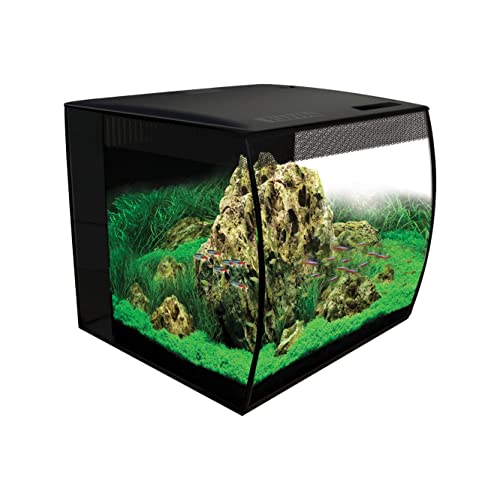
Picking the Right Terrarium for Reptiles and Amphibians
The Exo Terra Glass Terrarium works best as an all-around enclosure for most reptile keepers. Arboreal chameleons do better in the Zoo Med ReptiBreeze Screen Habitat’s open mesh walls. Budget-focused keepers get the lowest entry cost among glass tanks from the REPTI ZOO 40 Gallon Reptile Terrarium.
The Exo Terra Glass Terrarium, Large suits most first time keepers since its dual front doors simplify feeding inside a bioactive setup, though glass adds weight next to PVC cages.
Species needs pull in different directions: a chameleon needs airflow a glass tank can’t provide, while a leopard gecko needs floor space a screen habitat can’t offer. This comparison weighs dimensions, ventilation type, wattage and owner feedback across current listings to match gear to species.
How to pick the right one
Choosing a Terrarium by Species Type Glass terrariums hold heat and humidity better than mesh enclosures, favoring desert and tropical species paired with a solid heat source. Screen habitats such as the Zoo Med ReptiBreeze trade some heat retention for airflow, which suits chameleons and other climbers prone to respiratory trouble in stagnant air. Ground dwelling species like bearded dragons and leopard geckos need floor space more than height, while arboreal species need the reverse. Budget tanks such as the REPTI ZOO 40 Gallon Reptile Terrarium cover most beginner setups without cutting basic ventilation or access.
Matching UVB and Heat Output to Your Setup A species’ natural sun exposure sets its UVB needs: desert species generally need a 10.0 strength bulb, while forest species do better under a 5.0 strength bulb in a fixture like the Zoo Med ReptiSun T5 HO. Basking bulbs and ceramic heat emitters create a warm side of the enclosure, and a clamp lamp such as the Fluker’s Repta Clamp Lamp runs both bulb types through its ceramic socket. Tank size and room temperature should drive wattage choice rather than a fixed number, since a 150 watt bulb can overheat a small enclosure. Fixtures mounted on a screen top lose less UVB intensity than ones placed above solid glass or plastic lids.
Substrate and Humidity Control for Tropical Species Moisture retaining substrate matters for amphibians and tropical reptiles, which is why coconut fiber products like Zoo Med Eco Earth show up often in bioactive and naturalistic setups. Desert species and quarantine tanks do better with dry substrates such as reptile carpet or paper towel, where cleanliness outweighs humidity. Burrowing animals need several inches of loose substrate, while surface dwelling species need only a thin layer. Drainage layers or partial substrate changes help prevent mold growth when wet substrate lacks adequate ventilation.
Monitoring and Troubleshooting Temperature Swings One thermometer placed at a single spot can’t capture a full enclosure’s temperature gradient, so many keepers pair a digital combo gauge like the Zoo Med Digital Combo Thermometer Humidity Gauge on the cool side with a second thermometer near the basking spot. A burned out bulb or a loose clamp lamp connection causes most sudden temperature drops, rather than a fixture defect. Widely swinging humidity readings usually point back to inconsistent misting schedules or substrate that dried out between waterings. Adding a thermostat alongside a monitoring gauge cuts the risk of overheating when a basking bulb runs without a cutoff.
What we recommend

Exo Terra Glass Terrarium, Large (36 x 18 x 18 in)
Front opening doors span this 36 by 18 by 18 inch glass terrarium, sized for juvenile to adult leopard geckos, ball pythons and crested geckos. Both doors swing open fully for cleaning and feeding without disturbing decor. A raised bottom frame leaves room for an under tank heating pad.
Pros
- Dual doors reach every corner for feeding and spot cleaning
- Screen top holds a UVB fixture in place securely
- Raised frame fits standard under tank heat mats
Cons
- Weighs more than a comparable PVC enclosure
- Larger snakes may need locking clips on the doors

Zoo Med ReptiBreeze Screen Habitat, Large (16 x 16 x 30 in)
Mesh walls wrap this 30 inch tall screen enclosure, built for chameleons and other climbers that need vertical space. Airflow through the mesh helps animals prone to respiratory issues in sealed glass tanks. A hinged front door and side ports route misting line tubing into the enclosure.
Pros
- Mesh construction keeps airflow constant on every side
- Vertical layout gives climbing species room to move up
- Side ports route misting system tubing without extra drilling
Cons
- Holds less humidity than a glass enclosure
- Doesn’t suit burrowing or aquatic species
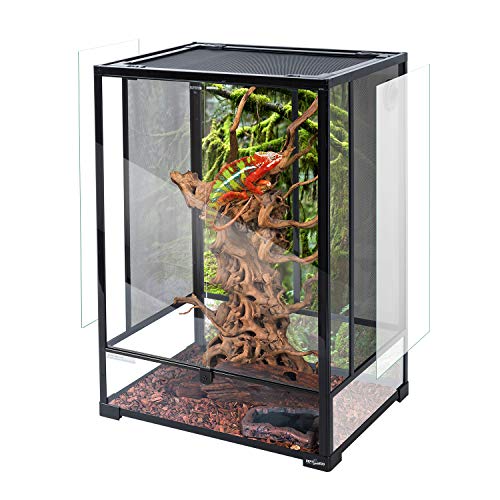
REPTI ZOO 40 Gallon Reptile Terrarium (24 x 18 x 18 in)
A 40 gallon glass terrarium measuring 24 by 18 by 18 inches, this REPTI ZOO tank adds front ventilation strips plus a top screen panel. Bearded dragons, corn snakes and similarly sized species fit without a custom built enclosure. Sliding front doors keep its footprint compact enough for shelving.
Pros
- Costs less than comparable branded terrariums
- Front ventilation strips keep airflow moving
- Sliding doors save shelf space in multi tank rooms
Cons
- Substrate can collect in the sliding door track
- Screen top flexes more than a framed metal lid

Zoo Med ReptiSun T5 HO UVB Fluorescent Fixture, 24 in (2 x 24W)
Two 24 watt T5 high output bulbs slot into this fixture, paired with a built in reflector that boosts usable UVB output. It mounts directly onto a mesh terrarium top and works with Zoo Med ReptiSun 5.0 or 10.0 bulbs depending on species. Bulbs are sold separately from the fixture itself.
Pros
- Built in reflector raises usable UVB output
- Mounts directly onto standard screen tops
- Accepts multiple ReptiSun bulb strengths for different species
Cons
- Requires buying UVB bulbs as a separate purchase
- Output fades noticeably after around 12 months of use
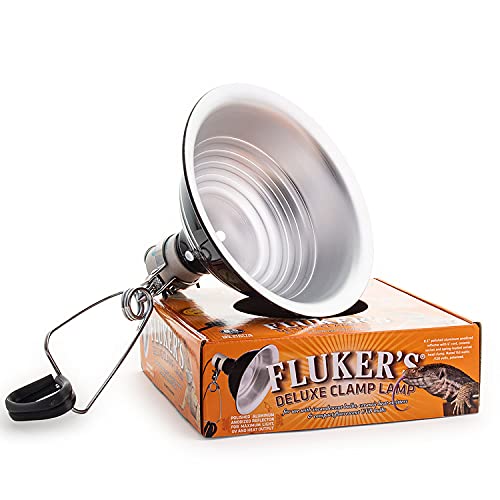
Fluker’s Professional Series Repta Clamp Lamp with Dome, 8.5 in
A ceramic socket rated for bulbs up to 150 watts sits inside this 8.5 inch clamp lamp, covering basking bulbs, ceramic heat emitters and daylight bulbs. An aluminum dome directs heat straight down onto a basking spot. The spring clamp mounts onto screen tops or tank rims without extra hardware.
Pros
- Ceramic socket handles high wattage heat bulbs safely
- Spring clamp fits most screen and glass tank rims
- Runs basking, CHE and daylight bulbs in one fixture
Cons
- Lacks a built in thermostat or dimmer
- Metal dome grows hot enough to burn bare skin
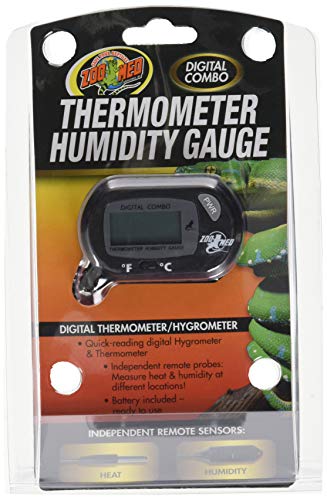
Zoo Med Digital Combo Thermometer Humidity Gauge
One LCD screen displays both temperature and humidity on this digital gauge, fed by a probe placed inside the enclosure. Readings span 32 to 122 degrees Fahrenheit and 1 to 99 percent relative humidity, covering desert and tropical setups alike. A suction cup mount keeps the display visible from outside the glass.
Pros
- Tracks temperature and humidity from a single display
- Wired probe reaches spots the display can’t sit
- Suction mount keeps readings visible from outside the tank
Cons
- One probe location misses the enclosure’s full gradient
- Battery needs periodic swaps to keep readings accurate

Zoo Med Eco Earth Compressed Coconut Fiber Substrate
Soaking this compressed coconut fiber brick in water expands it into roughly 8 quarts of loose substrate. Moisture retention here benefits amphibians and tropical reptiles that need steady humidity. Ball pythons and other burrowing species use the loose fiber to dig and tunnel naturally.
Pros
- Holds moisture longer than dry bedding options
- Lets burrowing species dig and tunnel naturally
- Contains no added dyes or chemical treatments
Cons
- Needs a full soak and drain cycle before use
- Mold can grow if the setup stays too wet and unventilated
The lineup, side by side
| # | Model | Dimensions | Best for | Score | Price |
|---|---|---|---|---|---|
| 1 | Exo Terra Glass Terrarium, Large (36 x 18 x 18 in) | 36 x 18 x 18 inches | Best overall | 9.4 | Check price |
| 2 | Zoo Med ReptiBreeze Screen Habitat, Large (16 x 16 x 30 in) | 16 x 16 x 30 inches | Best for arboreal species | 9.1 | Check price |
| 3 | REPTI ZOO 40 Gallon Reptile Terrarium (24 x 18 x 18 in) | 40 gallon equivalent | Best value | 8.8 | Check price |
| 4 | Zoo Med ReptiSun T5 HO UVB Fluorescent Fixture, 24 in (2 x 24W) | T5 High Output linear fluorescent | Best for UVB lighting | 8.6 | Check price |
| 5 | Fluker’s Professional Series Repta Clamp Lamp with Dome, 8.5 in | 8.5 inches | Best for basking heat | 8.4 | Check price |
| 6 | Zoo Med Digital Combo Thermometer Humidity Gauge | 32 to 122 degrees Fahrenheit | Best for monitoring temperature and humidity | 8.2 | Check price |
| 7 | Zoo Med Eco Earth Compressed Coconut Fiber Substrate | Compressed brick, expands with water | Best for humidity control substrate | 8.0 | Check price |
Frequently asked questions
What size terrarium does a bearded dragon need?
Adult bearded dragons generally need at least a 40 gallon terrarium with floor space around 24 by 18 inches, similar to the REPTI ZOO 40 Gallon Reptile Terrarium listed here.
Can amphibians live in a screen enclosure like the ReptiBreeze?
Most amphibians need higher humidity than an all mesh enclosure can hold, so a glass terrarium with partial ventilation usually works better than the fully screened ReptiBreeze.
Which UVB bulb pairs with the Zoo Med ReptiSun T5 HO fixture?
The fixture accepts Zoo Med ReptiSun 5.0 bulbs for forest species and 10.0 bulbs for desert species, both sold separately from the fixture itself.
Is coconut fiber substrate safe for ball pythons?
Coconut fiber substrate such as Zoo Med Eco Earth works well for ball pythons because it retains humidity and supports light burrowing without sharp particles.
How often should reptile UVB bulbs be replaced?
UVB output typically drops below effective levels after about 12 months of regular use, even when the bulb still produces visible light.
Zoo Med ReptiBreeze vs Exo Terra Glass Terrarium: which fits a chameleon better?
Mesh walls make the ReptiBreeze screen habitat the better fit for chameleons, since this species needs constant airflow that the glass Exo Terra can’t match. The Exo Terra retains too much humidity for that airflow requirement.
Does a clamp lamp need a separate thermostat?
A basic clamp lamp like the Fluker’s Repta Clamp Lamp has no built in thermostat, so pairing it with a separate thermostat helps prevent overheating.
What is the best terrarium setup for a leopard gecko?
A leopard gecko setup generally pairs a glass terrarium around 36 by 18 inches with a low strength UVB bulb, an under tank heat mat, and a dry to slightly moist substrate.
How do you control humidity in a glass reptile tank?
Moisture retaining substrate such as coconut fiber, regular misting and partial screen coverage all raise humidity inside a glass enclosure. Checking a digital combo gauge daily helps catch swings before they stress tropical species.
Our pick
The Exo Terra Glass Terrarium, Large works best for keepers who want one enclosure that adapts across several common species, since its front opening doors and screen top handle different heat and lighting setups. Chameleon owners should reach for the Zoo Med ReptiBreeze Screen Habitat instead, since only its all mesh walls deliver the airflow that species needs. Keepers watching their budget can start with the REPTI ZOO 40 Gallon Reptile Terrarium and add lighting and substrate as separate purchases.