Sewing Scissors That Cut Fabric Cleanly Every Time
Gingher 8-Inch Knife Edge Dressmaker Shears are the pick for anyone who sews regularly and wants a tool that can be sharpened for decades. Kai 7250 shears suit long cutting sessions thanks to their light body, while the Fiskars 8-Inch Original are the dependable everyday value choice.
If you sew often enough to care about clean edges, Gingher 8-Inch Knife Edge Dressmaker Shears are the ones to buy, with the Kai 7250 for comfort over long sessions and the Fiskars 8-Inch Original for reliable everyday value.
Choosing sewing scissors is trickier than it looks because most of what separates a good pair from a frustrating one is invisible in a product photo: blade hardness, how far the edge is ground, whether the pivot is adjustable and how the handle loops sit against your fingers. We compared published steel and construction details alongside patterns in long term owner feedback, giving most weight to cutting geometry, hand fatigue and whether the scissors can be professionally resharpened rather than replaced.
What to look for
Knife edge versus bevel edge is the real dividing line A knife edge is ground at a much shallower angle, so the blade slips under the fabric and severs fibres rather than squeezing them between two faces. That is why forged knife edge shears cut slippery fabrics cleanly while cheaper bevel edge scissors push the top layer ahead of the blade. If you sew apparel, especially in silk, rayon or fine linings, the knife edge is worth the extra outlay. For quilting cotton and craft work, a good bevel edge is entirely adequate.
Why the bent handle matters more than blade length On a bent handle shear the lower blade sits parallel to the table while your hand stays above it. That keeps the fabric flat and undisturbed, which is exactly what you need when cutting out a pattern piece that has to stay true. Straight handle scissors lift the fabric slightly with every stroke, and over a long cut that adds up to a wandering line. Choose bent handles for cutting out and save straight handles for trimming in hand.
Keep fabric scissors for fabric only This is the oldest rule in sewing and it is genuinely true. Paper is abrasive and dulls a fine edge much faster than cloth does, and adhesive tape leaves residue that makes blades drag. Label your fabric shears, store them separately and buy a cheap pair for paper and packaging. A good pair of shears that only ever cuts cloth will hold its edge for years between sharpenings.
Maintenance and when to sharpen Wipe the blades dry after use, particularly with high carbon steel, and put a drop of light oil on the pivot occasionally. Tighten the pivot screw if the blades start to separate mid cut, because a loose pivot feels exactly like a dull edge. When cutting genuinely does deteriorate, forged shears are worth sending to a professional sharpener, while coated or lightweight stainless scissors are usually more economical to replace than to have reground.
What we recommend

Gingher 8-Inch Knife Edge Dressmaker Shears
Gingher’s dressmaker shears are the reference point most sewists measure other scissors against, with forged steel blades and a knife edge that slides under fabric rather than pushing it. The weight is substantial, which sounds like a drawback until you notice the blades doing the work instead of your hand. Owners report keeping the same pair for decades with occasional professional sharpening.
Pros
- Knife edge gives exceptionally clean cuts on woven fabric
- Forged body can be resharpened repeatedly
- Adjustable pivot keeps the action tight over time
Cons
- Heavier than most in long sessions
- Needs proper sharpening rather than a home gadget

Kai 7250 10-Inch Professional Shears
The Kai 7250 pairs a long ten inch blade with a surprisingly light body, so it clears wide cuts across yardage in fewer strokes without loading up your wrist. High carbon steel takes a very fine edge and the smooth handle loops avoid the pressure points that cause blisters. It is a favourite among people who cut in volume rather than in short bursts.
Pros
- Long blade covers more fabric per stroke
- Notably light for the size, reducing fatigue
- Smooth loops are kind to fingers over hours
Cons
- Length is unwieldy for detail work
- Steel needs drying to avoid surface spotting

Fiskars 8-Inch Original Orange-Handled Scissors
The orange handled Fiskars are the pair that ends up in almost every sewing room, and for good reason: they cut cleanly, weigh very little and cost a fraction of forged shears. Stainless blades hold a serviceable edge for a long time on cotton and blends, though they will not take the same fine grind as forged steel. Owners report them as the pair they reach for without worrying about it.
Pros
- Very light in the hand
- Widely available and easy to replace
- Handles suit both left and right hand use
Cons
- Cannot be resharpened as effectively as forged shears
- Plastic handles flex slightly under heavy load

Mundial Red Handle 8.5-Inch Dressmaker Shears
Mundial’s red handled shears are a long standing choice in tailoring workrooms, built with hot drop forged blades and a generous handle that suits a full grip. They bite well into denim, canvas and multiple layers where lighter scissors start to push fabric ahead of the blade. Based on specifications they sit close to the premium forged options at a friendlier outlay.
Pros
- Cuts through multiple heavy layers confidently
- Forged blades can be professionally reground
- Roomy handle suits larger hands
Cons
- Heavier again than the Gingher
- Handle coating can feel slick when hands are warm

Singer ProSeries Heavy Duty Bent Handle Fabric Scissors
Singer’s ProSeries shears bring a bent handle and a comfortable cushioned grip to a price point most new sewists are happy to start at. The bent handle is the important part: it lets the lower blade stay flat on the cutting surface so the fabric is not lifted mid cut. Owners report the edge holding well on quilting cotton and lighter apparel fabric.
Pros
- Bent handle keeps fabric flat while cutting
- Cushioned grip is comfortable straight out of the box
- Affordable entry to a proper fabric shear
Cons
- Struggles on dense multi layer work
- Edge life is shorter than forged options

Westcott Titanium Bonded 8-Inch Scissors
Westcott’s titanium bonded blades resist the sticky residue that ruins ordinary scissors when you cut fusible interfacing, adhesive stabiliser or tape. That coating also helps the edge shrug off corrosion in a humid room. They are not a substitute for dedicated dressmaker shears on fine silk, but for a mixed craft table they earn their spot.
Pros
- Coating resists adhesive build up
- Corrosion resistant in humid spaces
- Comfortable soft grip loops
Cons
- Coating cannot be sharpened without removing it
- Less precise on very fine slippery fabric
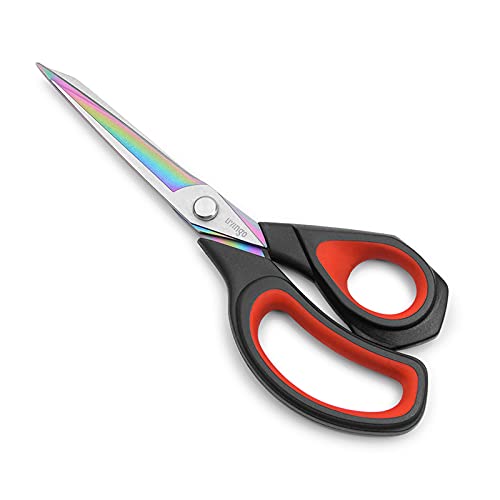
LIVINGO Premium Tailor Scissors 9.5-Inch
LIVINGO’s tailor scissors offer a long stainless blade and a weighted feel that mimics much costlier shears, which makes them a sensible second pair for cutting out patterns. The pivot screw is adjustable, so you can tighten the action as it loosens. Owners report the edge suiting cotton and mid weight fabric well, with less enthusiasm for repeated heavy canvas work.
Pros
- Long blade for pattern cutting at low outlay
- Adjustable pivot screw included
- Comfortable weight for the price
Cons
- Edge dulls faster than forged shears
- Finish quality varies between units
How they stack up
| # | Model | Blade length | Best for | Score | Price |
|---|---|---|---|---|---|
| 1 | Gingher 8-Inch Knife Edge Dressmaker Shears | 8 inches overall | Best overall | 9.4 | Check price |
| 2 | Kai 7250 10-Inch Professional Shears | 10 inches overall | Best for long cutting sessions | 9.2 | Check price |
| 3 | Fiskars 8-Inch Original Orange-Handled Scissors | 8 inches overall | Best value | 9.0 | Check price |
| 4 | Mundial Red Handle 8.5-Inch Dressmaker Shears | 8.5 inches overall | Best for heavy fabric | 8.8 | Check price |
| 5 | Singer ProSeries Heavy Duty Bent Handle Fabric Scissors | 8.5 inches overall | Best for beginners | 8.6 | Check price |
| 6 | Westcott Titanium Bonded 8-Inch Scissors | 8 inches overall | Best for mixed craft materials | 8.3 | Check price |
| 7 | LIVINGO Premium Tailor Scissors 9.5-Inch | 9.5 inches overall | Best budget | 8.0 | Check price |
Frequently asked questions
What size sewing scissors should I start with?
An eight inch bent handle shear covers the widest range of jobs, from cutting out pattern pieces to trimming seams. Longer nine or ten inch blades cut yardage faster but feel clumsy for detail work, so many people end up owning one of each.
Are expensive forged shears actually worth it?
If you sew weekly, yes, because forged steel holds a finer edge and can be resharpened many times rather than discarded. If you sew occasionally on cotton and craft fabric, a well made stainless pair will serve you perfectly well.
Can I sharpen sewing scissors at home?
Small handheld sharpeners can restore a bevel edge in a rough way, but they will ruin a knife edge and remove any bonded coating. For quality shears, a professional scissor sharpener is the right answer and costs far less than replacement.
What is the difference between shears and scissors?
By convention shears have blades longer than six inches and usually an offset or bent handle with unequal finger loops, while scissors are shorter with symmetrical loops. In practice the terms are used loosely, so judge the tool by blade length and handle shape rather than the name.
Do left handed sewists need special scissors?
Genuinely left handed shears have the blades reversed so the cutting line stays visible and the fabric is not deflected. Some brands offer true left handed versions. Ambidextrous handles alone do not fix the problem because the blade orientation is what matters.
Why do my scissors chew fabric instead of cutting it?
Usually one of three things: the edge is dull, the pivot screw has loosened so the blades no longer shear against each other, or the scissors are the wrong type for a slippery fabric. Tighten the pivot first, since that is free and fixes the problem more often than people expect.
Are pinking shears a substitute for regular shears?
No. Pinking shears cut a zigzag edge to reduce fraying on seam allowances and are a finishing tool, not a cutting out tool. They are a useful addition once you own a good straight pair, not a replacement for one.
Do I need micro serrated blades?
Micro serrations grip slippery and lofty fabrics such as fleece, satin and knits, which stops them sliding away from the blade. They are helpful if you work in those materials often, but the serrations are harder to sharpen and unnecessary for stable wovens.
The verdict
Gingher 8-Inch Knife Edge Dressmaker Shears remain the pair worth saving for if sewing is a regular part of your week, because a forged knife edge that can be resharpened outlasts several cheaper replacements. Choose the Kai 7250 if long cutting sessions leave your hand aching, and the Fiskars 8-Inch Original if you want a dependable pair that you will not resent using on the occasional awkward job.


