Soccer Balls That Hold Shape on Turf and Grass
The Adidas MLS Pro Official Match Ball tops our soccer ball ranking for its thermally bonded panels and consistent flight. The Nike Academy Team Ball is the best value for regular training, and the Adidas Starlancer Club Ball is the pick for casual play and younger players.
The Adidas MLS Pro Official Match Ball is the soccer ball to buy if you want match grade flight, with the Nike Academy Team Ball as the best value for training volume and the Adidas Starlancer Club Ball for casual kickabouts and younger players.
The difficulty is that soccer balls look the same in listings while being built for completely different jobs, and a thermally bonded match ball used on concrete will wear through faster than a training ball costs to replace. We compared panel construction, bladder material, cover thickness and stated surface suitability, alongside what owners report about shape retention and air loss over a season, then ranked balls by the use they are actually built for.
How to choose
Match, training and recreational balls are different products Match balls use thermally bonded panels with no stitched seams, which gives predictable flight and low water absorption but a cover that wears quickly on hard surfaces. Training balls use thicker machine stitched construction that survives repetition. Recreational balls prioritise price. Buying a match ball for daily wall practice is the most common and most expensive mistake in this category.
Size is set by age group, not preference Size 5 is the standard adult ball and is used from roughly age twelve upward. Size 4 covers around eight to twelve, and size 3 is for younger children. Giving a young player an oversized ball encourages poor technique because they cannot strike it properly. Check the age bands your local league uses, since they vary slightly by country.
The surface you play on decides how long a ball lasts Concrete and asphalt abrade any cover quickly, artificial turf is harsher than grass, and natural grass is gentlest. If your regular surface is a hard court, buy a ball built for it and accept that flight refinement is secondary. Owners consistently report that surface, not brand, is the biggest predictor of how long a ball stays round.
Inflation pressure matters more than most players check An underinflated ball feels dead and deforms permanently over time, while an overinflated one is harsh on the foot and stresses the seams. Check the pressure range printed near the valve and use a proper pump gauge rather than judging by squeeze. Wet a needle before inserting it, because a dry needle tears the valve and that is the failure that ends a ball’s life early.
The best picks, ranked

Adidas MLS Pro Official Match Ball
Match balls are thermally bonded rather than stitched, which removes the seams that absorb water and disturb flight, and this Adidas ball is the clearest example of what that buys you. The strike feels consistent across the surface and the flight is predictable in the air, which is exactly what players notice when stepping up from a training ball. It is built for grass, so keep it off concrete if you want the cover to last.
Pros
- Seamless construction gives predictable flight
- Consistent strike feel across the surface
- Holds pressure well between sessions
Cons
- Cover wears quickly on concrete or asphalt
- Most expensive construction type here

Nike Academy Team Soccer Ball
Training balls take a beating that match balls never see, and the Academy Team is built around that reality with a thicker, more abrasion resistant cover and a reinforced casing. Flight is slightly less refined than a match ball, which matters less than the fact that it survives a full season of drills. Owners report it holds its shape well through heavy use on both grass and artificial turf.
Pros
- Durable cover built for training volume
- Holds shape through heavy repeated use
- Works on both grass and artificial turf
Cons
- Flight less refined than a match ball
- Stitched seams absorb some water in wet conditions
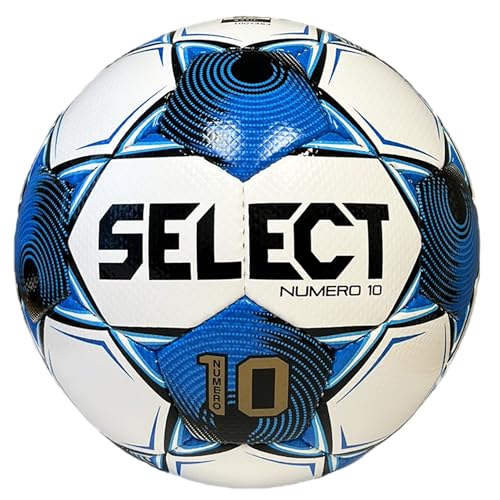
Select Numero 10 Soccer Ball
Select has a long standing reputation among players for the way its balls feel off the foot, and the Numero 10 is the model most often mentioned. The hand stitched construction and softer touch make it a favourite for technical training where control matters more than raw durability. It is a step up in feel from most mass market balls and correspondingly less suited to being kicked against a wall for hours.
Pros
- Excellent strike feel and touch
- Hand stitching holds shape well
- Well regarded by technical players
Cons
- Not built for concrete or wall work
- Costs more than a standard training ball

Puma Orbita 6 MS Soccer Ball
Artificial turf is more abrasive than grass and shreds thin covers, so the Orbita 6 MS uses a tougher outer layer aimed at exactly that surface. It sits in the training end of Puma’s Orbita range, which means durability was prioritised over the last few percent of flight refinement. It is a sensible choice for clubs whose home surface is 3G or 4G.
Pros
- Cover built to handle abrasive artificial turf
- Good air retention between sessions
- Sensible price for a club training ball
Cons
- Feel is firmer than premium match balls
- Less refined in flight than thermally bonded balls

Mikasa Serious Soccer Ball SS50
Mikasa builds sports equipment for schools and clubs where balls are used by dozens of people and stored badly, and the SS50 reflects that with a hard wearing cover that tolerates rough surfaces. Feel is functional rather than premium, which is the correct priority when the ball needs to survive a term of lessons. Owners report it as the ball that is still round when the cheaper ones have gone lopsided.
Pros
- Survives rough surfaces and heavy shared use
- Holds shape long after cheaper balls deform
- Good value for buying multiples
Cons
- Feel is firm and unremarkable
- Flight is not match ball accurate

Wilson Traditional Soccer Ball
The Wilson Traditional is the ball to keep in the boot of the car for spontaneous games, priced so that losing it over a fence is an annoyance rather than a problem. Construction is basic machine stitching with a synthetic cover, adequate for park play but not for serious training. Owners report that it needs topping up with air more often than premium balls.
Pros
- Cheapest way to have a usable ball on hand
- Fine for casual park and garden games
- Available in youth and adult sizes
Cons
- Needs reinflating more often than better balls
- Not built for regular training loads

Adidas Starlancer Club Soccer Ball
The Starlancer is Adidas at its most accessible, available across youth sizes so a younger player gets a ball that matches their age group rather than an oversized adult ball. Construction is machine stitched with a butyl bladder, so it holds air reasonably well between sessions. It is a first proper ball rather than a training tool for a serious club player.
Pros
- Available in the correct youth sizes
- Butyl bladder holds pressure between sessions
- Recognisable brand at an accessible price
Cons
- Cover wears on abrasive surfaces
- Not intended for high volume training
How they compare
| # | Model | Construction | Best for | Score | Price |
|---|---|---|---|---|---|
| 1 | Adidas MLS Pro Official Match Ball | Thermally bonded panels | Best overall | 9.4 | Check price |
| 2 | Nike Academy Team Soccer Ball | Machine stitched panels | Best value | 9.2 | Check price |
| 3 | Select Numero 10 Soccer Ball | Hand stitched panels | Best strike feel | 9.0 | Check price |
| 4 | Puma Orbita 6 MS Soccer Ball | Machine stitched | Best for artificial turf | 8.8 | Check price |
| 5 | Mikasa Serious Soccer Ball SS50 | Machine stitched | Best for physical education | 8.6 | Check price |
| 6 | Wilson Traditional Soccer Ball | Machine stitched | Best budget option | 8.3 | Check price |
| 7 | Adidas Starlancer Club Soccer Ball | Machine stitched | Best for young players | 8.0 | Check price |
Good to know
What size soccer ball do I need?
Size 5 for ages twelve and up, size 4 for roughly eight to twelve, and size 3 for younger children. Local leagues sometimes set slightly different age bands, so check before buying for competitive play.
What is the difference between a match ball and a training ball?
Match balls are thermally bonded for seamless, predictable flight and low water absorption. Training balls use thicker stitched construction that survives far more repetition but flies slightly less precisely.
Can I use a match ball on concrete?
You can, but the cover will wear through quickly. Match ball covers are optimised for grass. For hard surfaces choose a training or recreational ball with a thicker, more abrasion resistant cover.
How often should I inflate a soccer ball?
Check before each session. Butyl bladders hold pressure for weeks while latex bladders lose it in days. Use the pressure range printed near the valve rather than judging by feel.
Do I need to wet the pump needle?
Yes. A dry needle tears the valve seal as it goes in, and a torn valve means the ball will not hold air. A drop of water or valve oil on the needle takes seconds and prevents the most common ball failure.
Why does my ball go out of shape?
Usually a combination of chronic underinflation, storing it under weight, and abrasive surfaces breaking down the panels. Keep it inflated to specification and stored loose rather than crushed at the bottom of a kit bag.
Are expensive soccer balls actually better?
For flight consistency and feel, yes, and players notice it immediately. For durability under heavy training, a mid priced training ball often outlasts a premium match ball. Match the ball to the job rather than to the price.
How should I store soccer balls over winter?
Slightly deflated, somewhere dry and out of direct sun, and not stacked under heavy equipment. Full pressure for months stresses the seams and heat degrades the bladder over time.
The verdict
The Adidas MLS Pro Official Match Ball is the soccer ball we would choose when flight consistency matters, because thermally bonded panels deliver the predictability that stitched balls cannot match. Players doing high volume training will get better value and much longer life from the Nike Academy Team Ball, and the Adidas Starlancer Club is the sensible first ball for younger players in the correct size.


